
This post may contain affiliate links. Please read our disclosure policy.
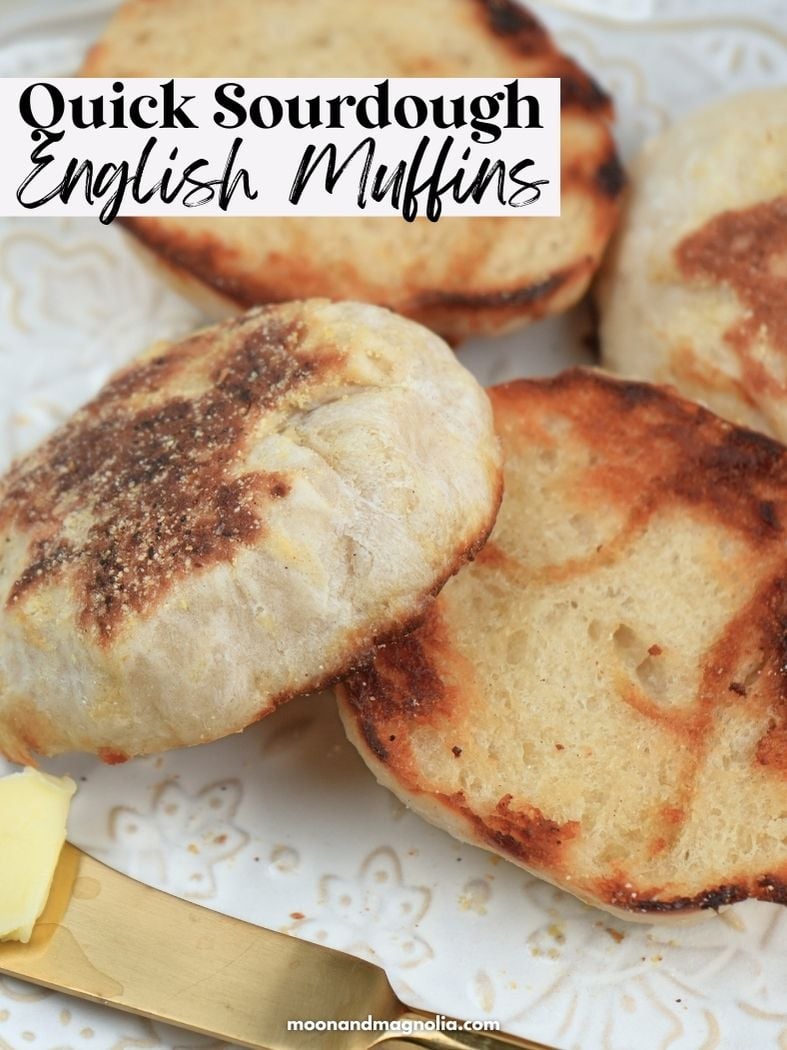
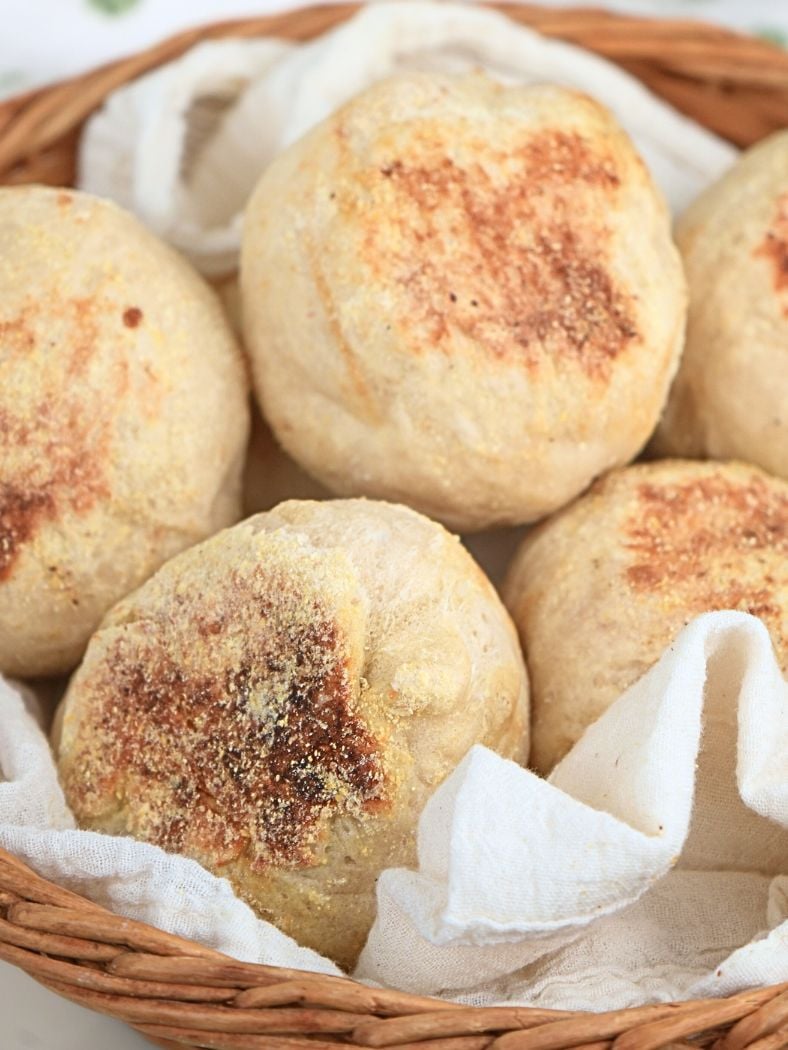
These overnight sourdough English muffins couldn't be easier-or more delicious. Make the dough before bed, then cook them up in the morning for a super quick scratch-made breakfast. There’s no intense kneading or second rise required!

I love having some sort of sourdough for breakfast, whether it’s sourdough coffee cake, sourdough toast, a batch of sourdough donuts, or my easy sourdough bagel recipe. But let’s be real here, I don’t have time to make sourdough most mornings.
That’s where these easy sourdough English muffins come in to save the day. The dough is made the night before and mixed for only 2 or 3 minutes. The next morning, a little baking soda gives them a boost so that you can skip the long second rise.
It’s the best of both worlds. You get the benefits of sourdough and fermented grains since the dough ferments while you sleep and the ease of a quick bread recipe in the morning.
Homemade overnight sourdough English muffins don't have quite the same texture as the store-bought version, but what you gain is a softer crumb and a chewy exterior without all of the artificial additives in the store-bought varieties.
These are a family favorite because they are quick and versatile. Toast and slather them with butter for breakfast, use them for sandwiches, or repurpose them for easy mini-pizzas.
Enjoy, friends!
Ps. If you are looking for other easy sourdough breakfast ideas, check out my no-flour sourdough pancakes and sourdough crepes recipes.
Why You’ll Love This Recipe
Fast: This is a quick and easy overnight recipe. You just quickly hand-mix the dough at night, then cook them in the morning.
Beginner-Friendly: There are no fancy tools or techniques needed, so this recipe is perfect for beginners.
Make-Ahead Friendly: Make an extra batch and freeze them for quick breakfasts.
No Second Rise: This sourdough English muffin recipe uses baking soda for a quick rise in the oven, so you can cook them right away in the morning without waiting for a second rise.
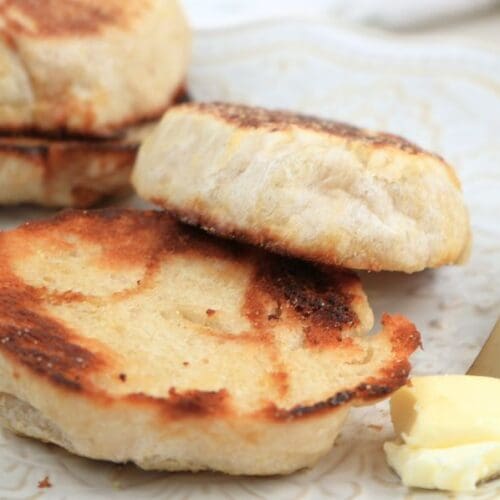
Delicious: The tangy sourdough flavor and soft, chewy texture are absolutely delicious, especially toasted with butter.
Ingredients
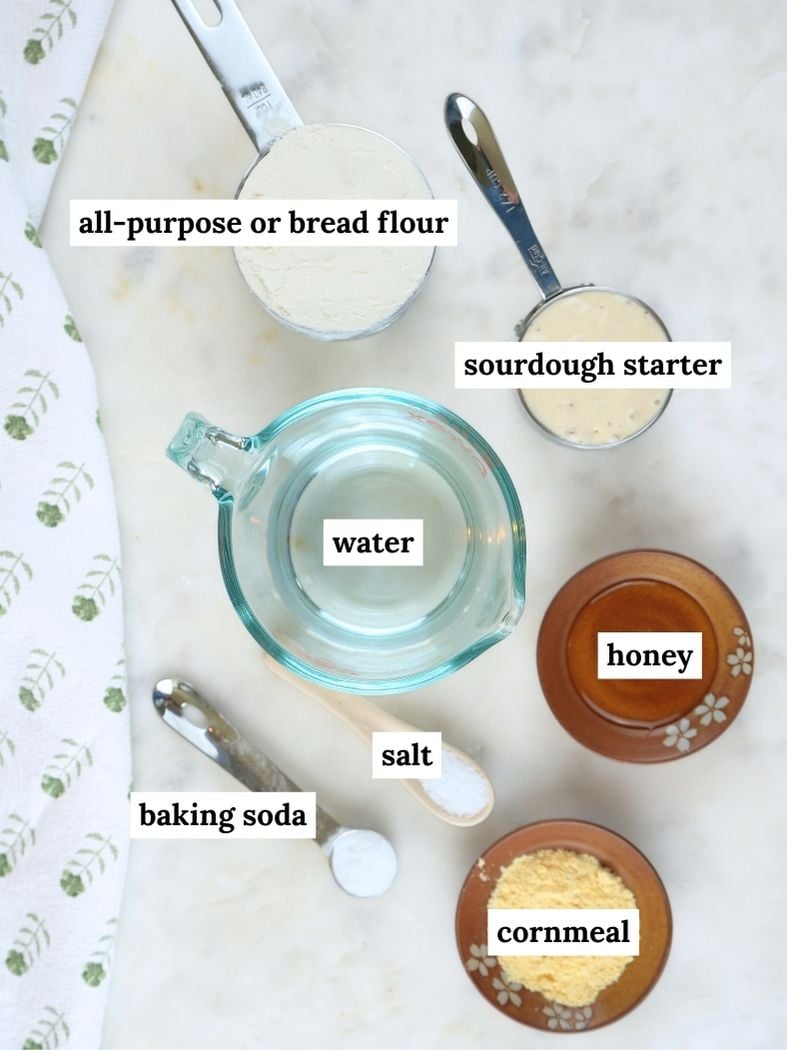
Flour: You can use all-purpose or bread flour. All-purpose makes a softer, biscuit-like muffin, while bread flour gives a chewier texture. Bread flour dough mixes with the baking soda a bit less easily, but the results are still great.
Sourdough Starter: Use active or inactive sourdough starter or even a fresh-milled starter. New to sourdough? Download my free sourdough starter eBook!
Honey: A little honey adds a touch of sweetness and helps tenderize the crumb.
Baking Soda: Baking soda is added after the bulk fermentation for a quick rise the next day.
Cornmeal: Dust the English muffins with cornmeal before cooking. I like to save and freeze the extra corn flour left from fresh-milled grits and cornbread with fresh-milled flour, and use it for dusting.
Get the full list of ingredients and measurements on the printable recipe card below.
Tools You Will Need
Mixing Bowl: Grab a large mixing bowl for making the dough.
Skillet: You’ll need a skillet for browning the English muffins. I used a 13.25″ Lodge cast iron skillet. If you aren’t sure which size you need, check out my cast iron skillet size guide.
Baking Sheet: You’ll also need a parchment-lined baking sheet to bake the English muffins.
Step-by-Step Instructions
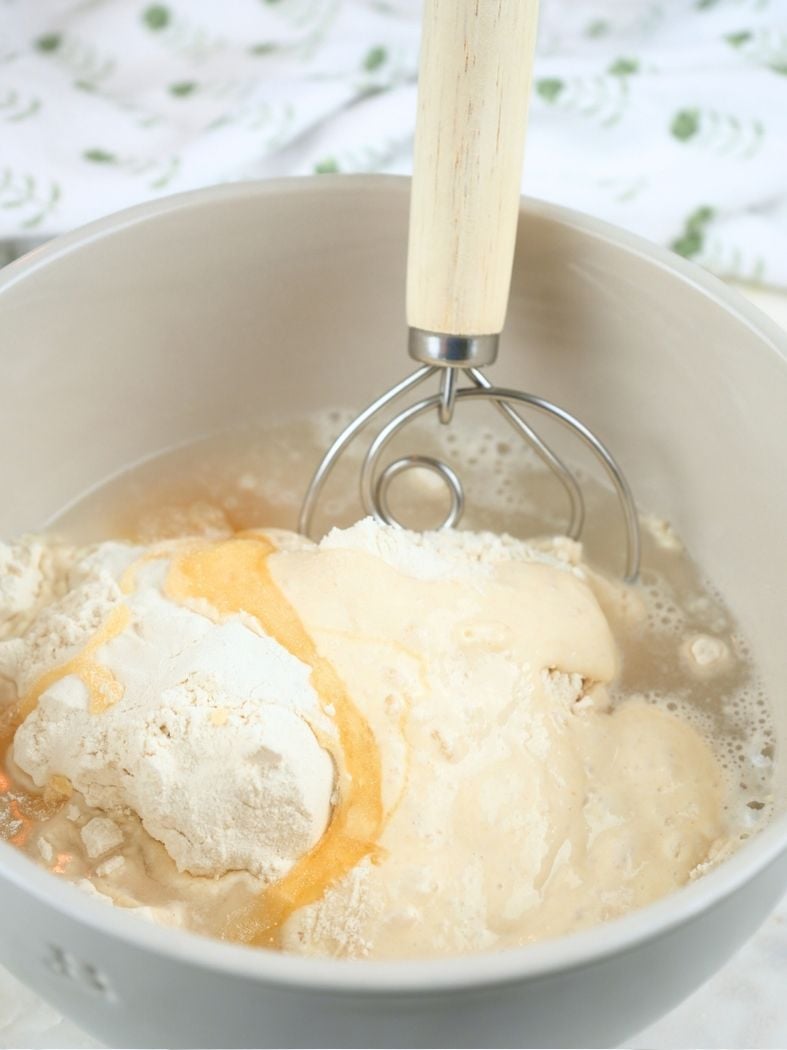
Step 1: In a large mixing bowl, combine the flour, water, starter, and honey. Mix until combined (I like using a Danish dough whisk for this).
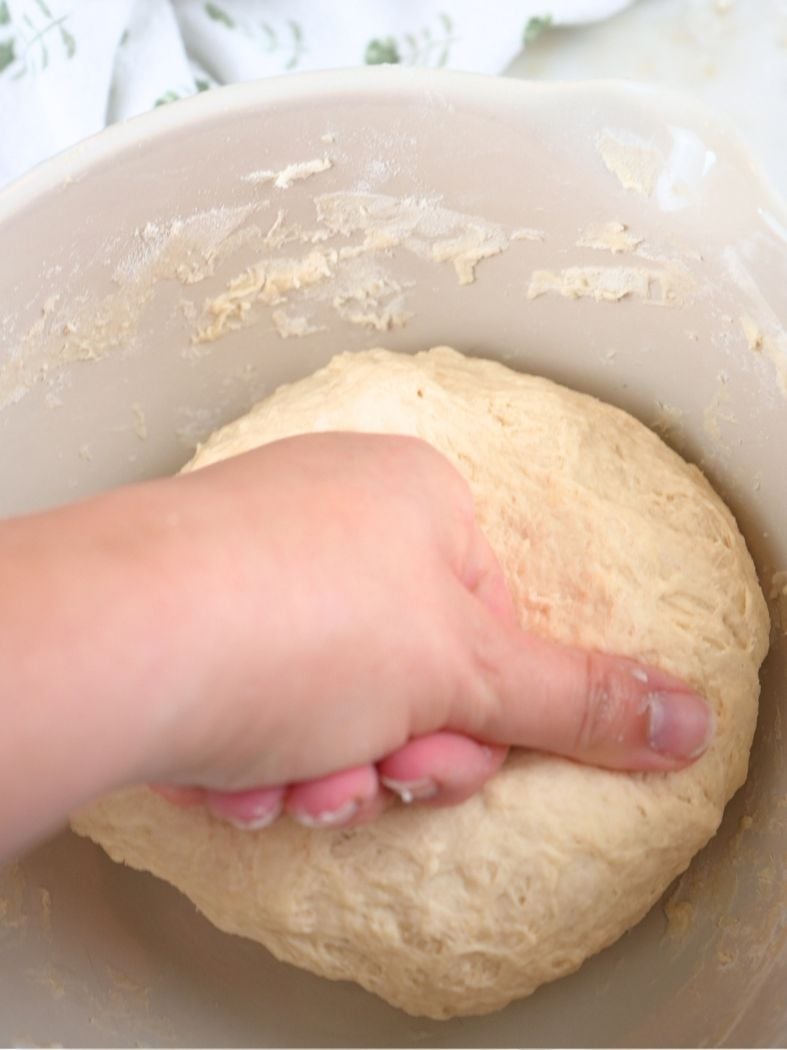
Step 2: With the dough still in the bowl, knead by hand for 2-3 minutes to start developing gluten.
Add flour or water one tablespoon at a time if needed. The dough should form a ball and feel slightly sticky.
Cover with a damp towel and let ferment overnight.
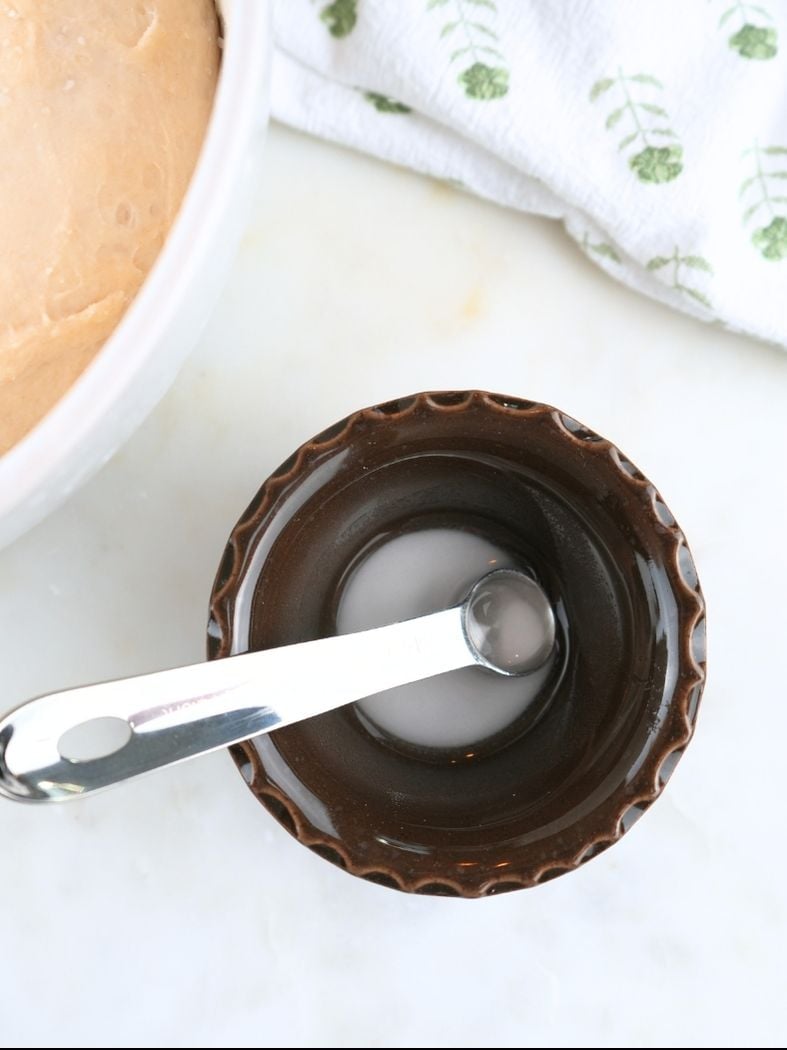
Step 3: The next morning, in a small bowl, combine the baking soda and water in a small dish. Set aside.
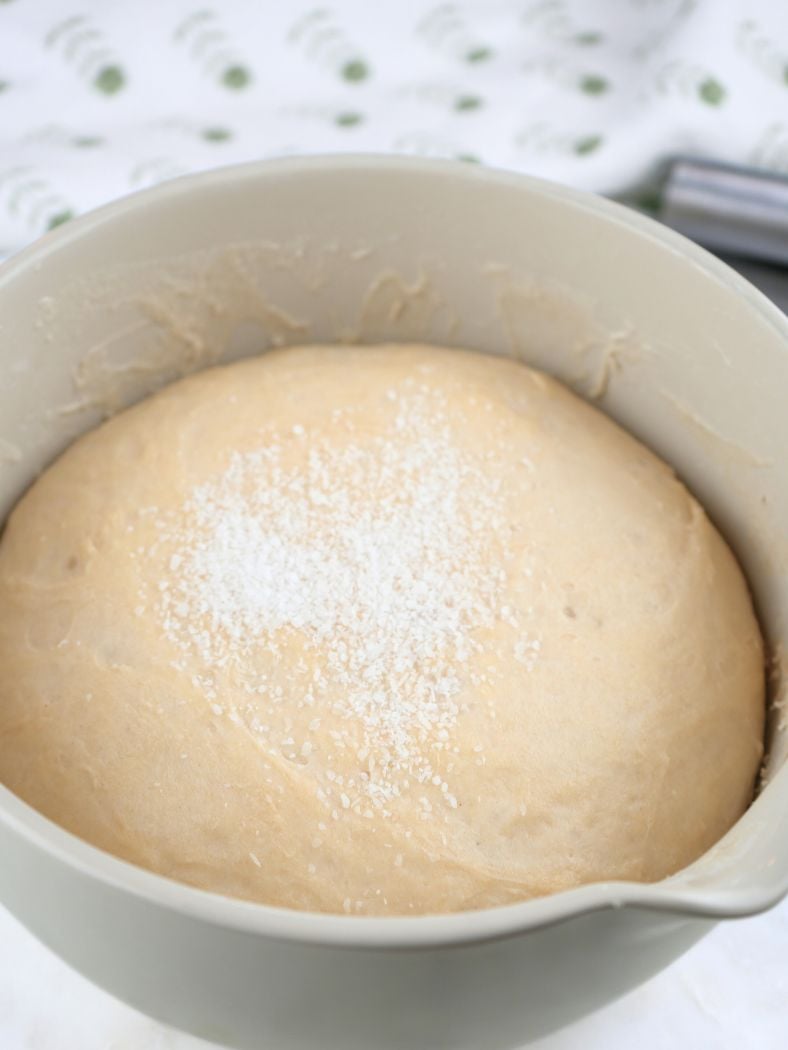
Step 4: Sprinkle the salt evenly over the top of the dough and mix it in with your hands just until combined. The dough will deflate.
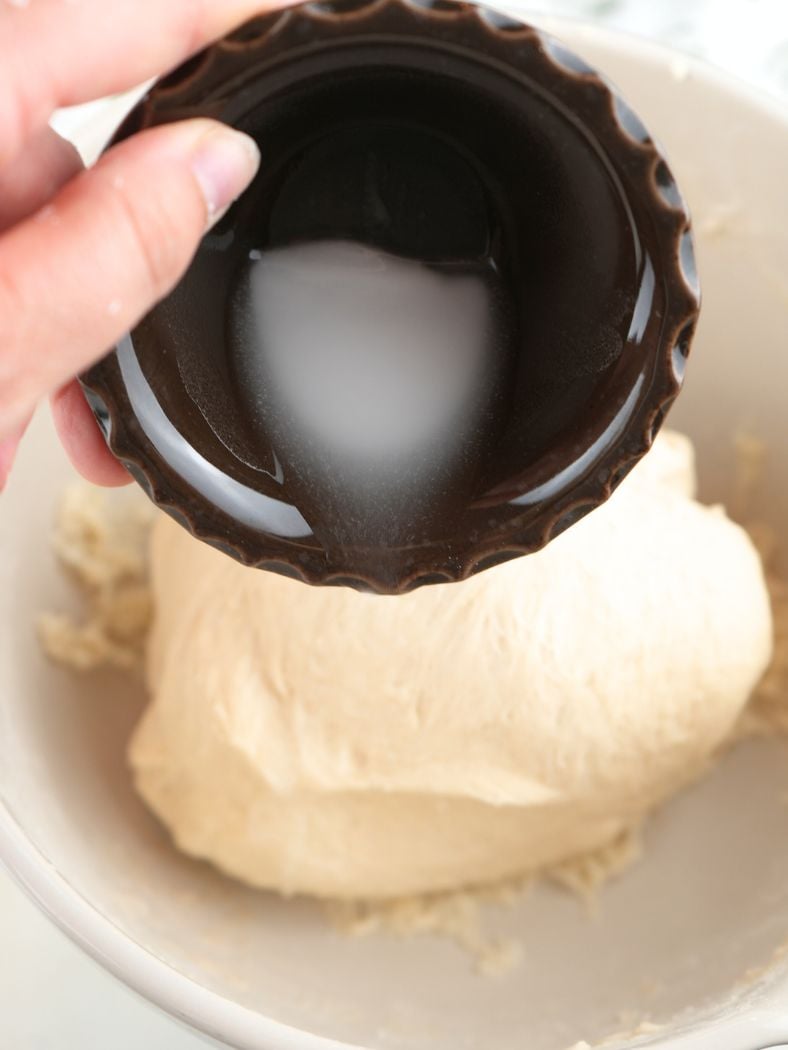
Step 5: Pour the baking soda mixture over the dough, and mix it in with your hands.
The dough will feel wet at this point, but the water mixture will help the baking soda incorporate more evenly throughout the dough.
Step 6: Set the dough aside and allow it to rest and absorb the baking soda mixture.
Meanwhile, preheat the oven to 350° F and preheat a cast iron skillet over medium heat.
Then, line a baking dish with parchment paper and sprinkle it with cornmeal.
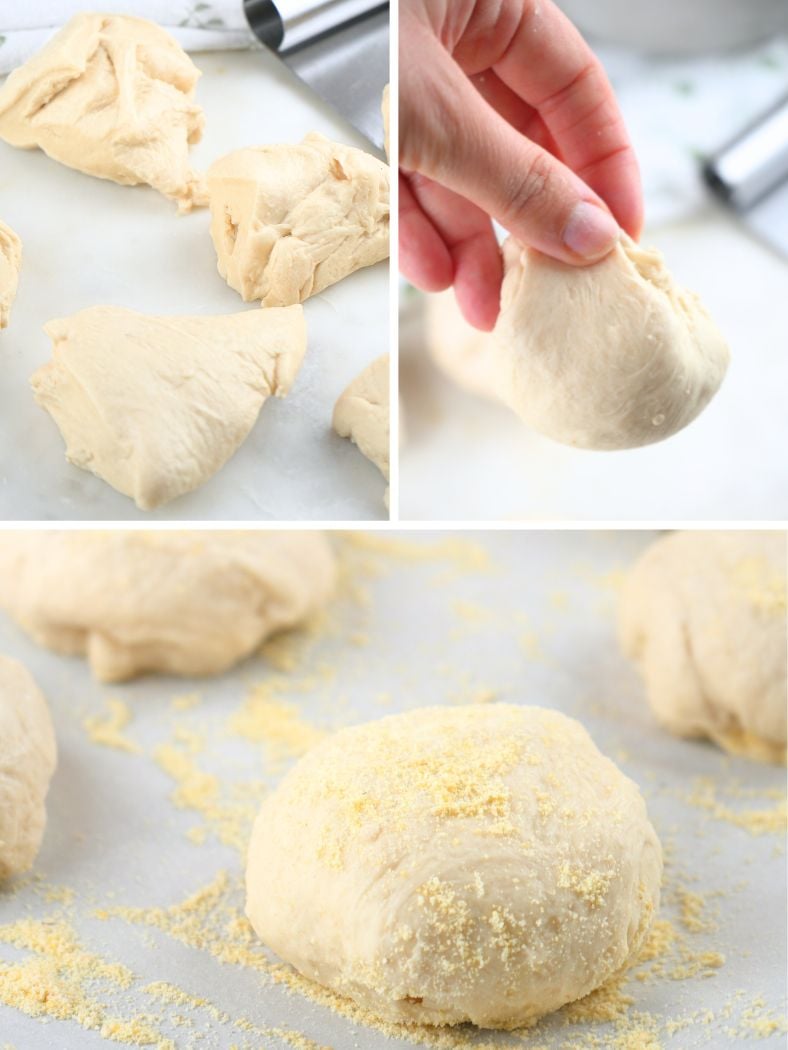
Step 7: When the oven is ready, turn the dough onto the counter and divide it into 10-12 pieces. Pinch each into a dumpling shape, place the seam-side down, and gently spin it into a ball.
This recipe doesn’t rely on dough tension for rising, so don’t worry about perfect shaping.
Transfer each to the cornmeal-dusted sheet, sliding them a little to coat the bottoms.
Press gently to slightly flatten into an English muffin shape, then sprinkle the tops with more cornmeal.
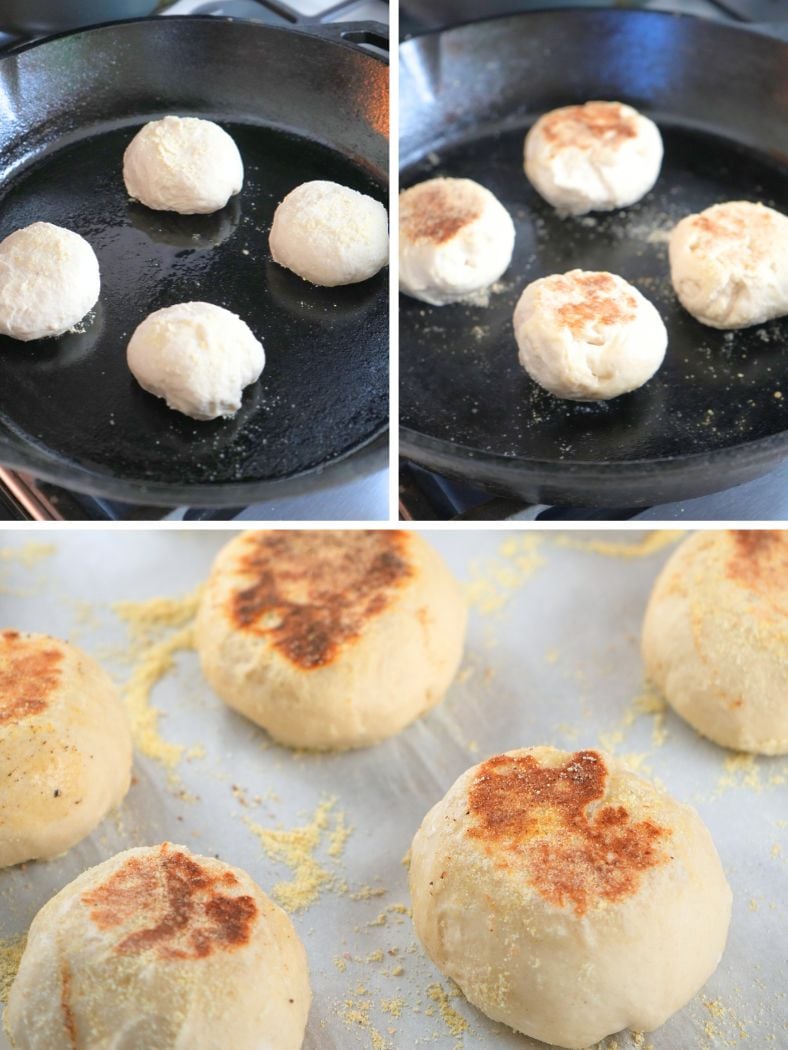
Step 8: Grease the skillet with avocado oil spray or butter. Place 3-4 muffins in the skillet, about 2″ apart. Cook 2 minutes per side, until golden brown.
Transfer back to the baking sheet and repeat with the rest of the dough. I usually re-grease the skillet between batches to ensure even browning.
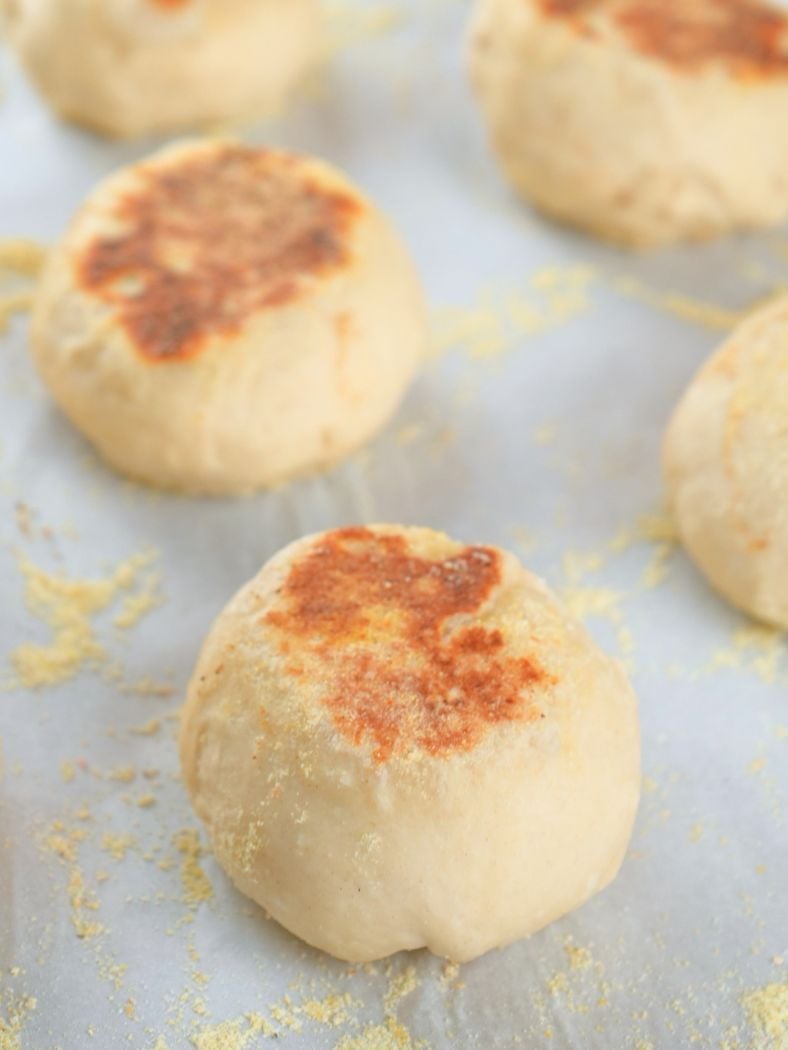
Step 9: Once all are browned, bake for 10-15 minutes, or until an instant-read thermometer inserted in the center reads 190°F. Larger muffins may take longer.
Transfer to a wire rack and let cool. Cooling improves the chewy texture.
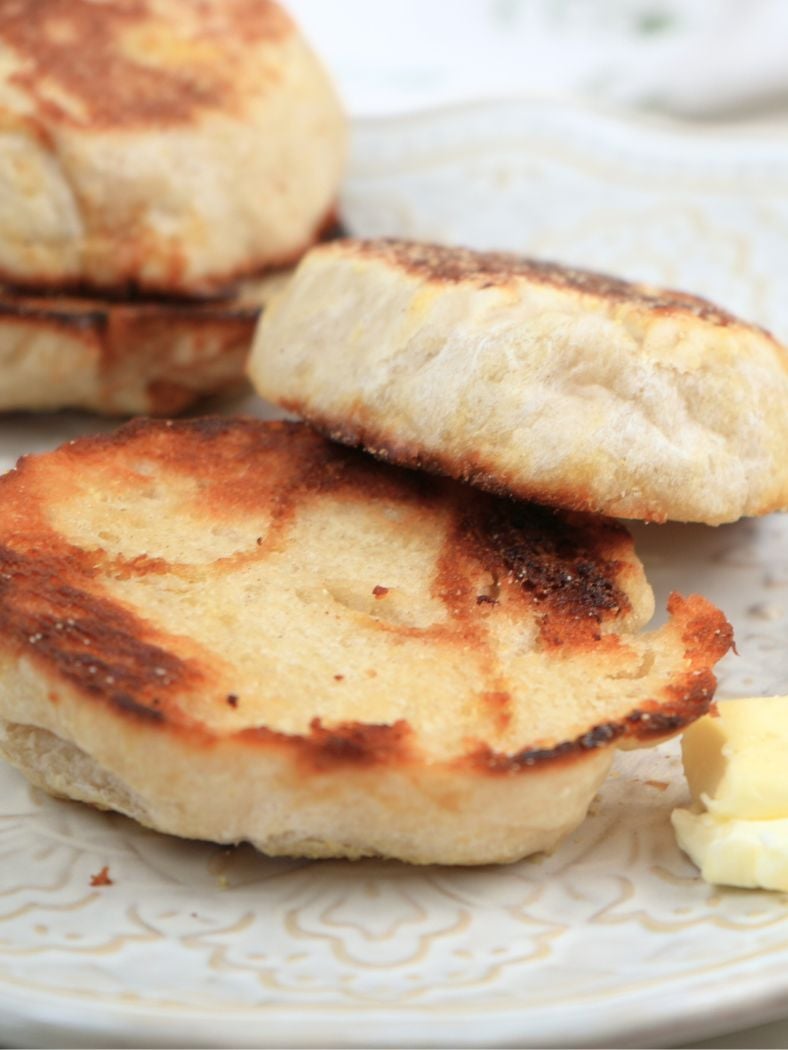
Step 10: To crisp them like a classic English muffin, slice the muffin open, slather it with butter, and toast it buttered-side down on a hot cast iron skillet.
Tips for Success
- The baking soda may cause the muffins to brown more throughout the crumb. This is normal and simply a tradeoff for the quicker method. It doesn't affect the flavor.
- Adjust the heat on the skillet as needed to prevent burning the English muffins. I usually oscillate mine between medium-low and low.
- Don’t over-flour the dough. A slightly sticky dough creates a better texture for English muffins.
- Because the muffins are browned on the outside before baking, it can be tricky to judge doneness by color alone. Use a digital thermometer. The muffins are ready when the internal temperature reaches 190°-200°F.
Serving Suggestions
Butter and Jam: Toast the English muffin with butter and slather it with homemade strawberry jam or Instant Pot apple butter.
Sandwiches: English muffins make great mini-sandwiches. Serve them with egg, cheese, and home-cured bacon for breakfast. Or use them for a quick turkey sandwich for lunch.
Pizza: When I was a kid, I lived for English muffin pizzas. Toast the muffins first, then add pizza sauce, cheese, and your favorite toppings. Bake at 350°F until the cheese has melted.
Sausage Gravy: Instead of biscuits and sausage gravy, swap out the biscuits for these easy-to-make English muffins.
Storing and Reheating
- Store leftover sourdough English muffins at room temperature in an airtight bag for 2-3 days.
- Freeze them for up to 3 months, and slice before freezing for easier toasting.
- Reheat the muffins in the toaster for the best texture.
Variations
Whole wheat: You can replace half-or even all-of the flour with whole wheat or fresh-milled flour. Please note that whole-grain flour typically requires a little extra liquid, and fresh-milled flour may ferment more quickly overnight.
Cinnamon Raisin: Fold in cinnamon and raisins before shaping the English muffins.
Savory: Add shredded cheese or herbs to the dough. Or add homemade herb butter to the muffin after toasting.
FAQs
Yes, you can. But it will take longer for the dough to ferment. The more recently your starter has been fed, the more active yeast and bacteria it has in it. Additionally, discard may increase the sour flavor of your English muffins.
Not for this quick recipe. I just pinch off pieces of dough and shape them by hand. They won't be perfectly uniform, but that's part of the charm, and it makes the recipe faster and easier.
Yes, you can bake them at 350°F for about 12-15 minutes. Just know that pan-cooking gives that classic golden crust and tender middle, so the end result may be different.
Yes! If you'd rather not use baking soda, let the shaped muffins rise again for 30-45 minutes or until doubled and puffy before cooking. It takes a little longer, but you'll still get delicious results.
Let's Connect!
If you tried this recipe and loved it, leave a comment or review below.
Also, don't forget to pin this post and follow Moon + Magnolia on Pinterest. You can save all my recipes on your boards and keep up with the latest happenings!
Share your creations on Instagram and tag @moon_and_magnolia

Overnight Sourdough English Muffins
Equipment
- Large Bowl
Ingredients
Overnight Dough
- 300 g all-purpose or bread flour, see notes
- 240 g water
- 120 g sourdough starter, active and bubbly
- 21 g honey
For Mixing the Next Day
- 5 g baking soda
- 10 g water
- 6 g salt
- cornmeal for dusting
- avocado oil spray or butter for greasing the skillet
Instructions
Make the Dough
- Make the Dough. In a large mixing bowl, combine the flour, water, starter, and honey. Mix until combined (I like using a Danish dough whisk for this).300 g (2 1/2 cups) all-purpose or bread flour, 240 g (1 cup) water, 120 g (1/2 cup) sourdough starter, 21 g (1 tablespoon) honey
- Knead and Ferment. With the dough still in the bowl, knead by hand for 2-3 minutes to start developing gluten. Add flour or water one tablespoon at a time if needed. The dough should form a ball and feel slightly sticky. Cover with a damp towel and let ferment overnight.
The Next Morning
- Mix the Leavener. In a small bowl, combine the baking soda and water in a small dish. Set aside.5 g (1 teaspoon) baking soda, 10 g (2 teaspoons) water
- Add the Salt. Sprinkle the salt evenly over the top of the dough and mix it in with your hands just until combined. The dough will deflate.6 g (1 teaspoon) salt
- Add the Leavener. Pour the baking soda mixture over the dough, and mix it in with your hands. The dough will feel wet at this point, but the mixture will help the baking soda incorporate more evenly throughout the dough.
- Preheat and Prep. Set the dough aside and allow it to rest and absorb the baking soda mixture. Meanwhile, preheat the oven to 350° F and preheat a cast iron skillet over medium heat. Then, line a baking dish with parchment paper and sprinkle it with cornmeal.cornmeal for dusting
- Divide and Shape: When the oven is ready, turn the dough onto the counter and divide it into 10-12 pieces. Pinch each into a dumpling shape, place the seam-side down, and gently spin it into a ball.Transfer each to the cornmeal-dusted sheet, sliding them a little to coat the bottoms. Press gently to slightly flatten into an English muffin shape, then sprinkle the tops with more cornmeal.
- Cook on the Skillet. Grease the skillet with avocado oil spray or butter. Place 3-4 muffins in the skillet, about 2" apart. Cook 2 minutes per side, until golden brown. Transfer back to the baking sheet and repeat with the rest of the dough. I usually re-grease the skillet between batches to ensure even browning.avocado oil spray or butter for greasing the skillet
- Bake and Cool. Once all are browned, bake for 10-15 minutes, or until an instant-read thermometer inserted in the center reads 190°F. Larger muffins may take longer. Transfer to a wire rack and let cool. Cooling improves the chewy texture.
- Toast. To crisp them like a classic English muffin, slice the muffin open, slather it with butter, and toast it buttered-side down on a hot cast iron skillet.
Video
Notes
- Both all-purpose and bread flour work. All-purpose makes a softer, biscuit-like muffin, while bread flour gives a chewier texture. Bread flour dough mixes with the baking soda a bit less easily, but the results are still great.
- The baking soda may cause the muffins to brown more throughout the crumb. This is normal and simply a tradeoff for the quicker method. It doesn't affect the flavor.
- Adjust the heat on the skillet as needed to prevent burning the English muffins. I usually oscillate mine between medium-low and low.
- A slightly sticky dough creates a better texture for English muffins.
- Because the muffins are browned on the outside before baking, it can be tricky to judge doneness by color alone. Use a digital thermometer. The muffins are ready when the internal temperature reaches 190°-200°F.
Nutrition
Nutrition information is auto-calculated and may not reflect your final product. Please verify independently if needed.



Tried this with bread flour and they turned out well. After the baking soda and water mixture was added, it didn’t seem to soak in so the dough was quite sticky which made the balls very challenging to shape. I did my best though and they’re looking okay so far! Will try with AP flour next time, just didn’t have any when I went to make this!
Thanks for sharing! 😊
My whole family, but especially my husband, loves these. I eat them for breakfast, and he uses them for little sandwiches.
I am not sure what I am doing wrong. I have attempted this recipe twice with the same result. The first time I used inactive starter so the second time I made sure it was active. The same thing happened. I can never get it to form dough from the beginning. It is so wet not just sticky. I have added the tablespoons of flour but it doesn’t do anything. What am I doing wrong?
Hey there!
It’s hard for me to tell without seeing it. But for it to work, the dough has to be right from the start. If it’s really wet, that means it needs more flour. I always add one tablespoon at a time until it’s the right consistency. For me, it’s usually a total of 2-3 tablespoons. But it depends on the type of flour you are using and the hydration of your starter. At some point, once you’ve added enough flour, the dough will form. How many tablespoons have you added? Do you know if your starter is at 100% hydration (a 1:1 ratio of flour and water with each feeding)?
We’ll figure it out!
-Rebecca
Thanks! I am wondering if I am adding too much water from the start. I was measuring everything in grams and I think I should try in cups. Also, my starter has not been rising as good as it should because my house is right at 70. Hoping to get a bread proofer for Christmas. I think the ratio is fine. I am measuring starter flour and water with kitchen scale each feeding.
You can adjust the flour or the water (or both). I’d cut back on the water from the start and add a little at a time from there.
Hope that helps!
-Rebecca
When you say “bread flour” are you referring to fresh milled flour or the bread flour in the store? If you’re not referring to fmf, can you use it in this recipe and what might any changes be?
Thank you
Hey there! I am referring to store-bought bread flour. If you are using FMF, I would use hard white wheat. I also really like to combine hard white with a little kamut. I’d increase the water about 5%, then check the dough after 30 minutes to see if it needs a little more. 🙂
Hope that helps!
-Rebecca
Thank you!
what does the kamut floor do in the recipe?