
This post may contain affiliate links. Please read our disclosure policy.
This fresh-milled flour Q&A breaks down everything from choosing the best grains to substituting fresh-milled flour in your favorite recipes and beyond. These are the questions you’ve asked the most!
Baking with fresh-milled flour has been one of the best changes I’ve made in our kitchen.
Milling your own flour means that each recipe is made with nutrient-rich ingredients that you can’t find in store-bought flour.
Getting started with fresh-milled flour can feel overwhelming at first, so I put together this Q&A to help you troubleshoot common issues.
From choosing the right grains to dealing with gummy bread, these are the most commonly asked questions I’ve received on YouTube and the blog.
Though there is a little learning curve when using fresh-milled flour (especially when making fresh-milled sourdough), this Q&A will take the guesswork out of it and help you feel more confident working with fresh-milled flour.
Video – Fresh-Milled Flour Q&A
If you prefer to watch, these questions are also answered in the video below.
Don’t forget to subscribe to my YouTube channel. New videos come out weekly!

Why Is It Difficult To Get a Grain Mill?
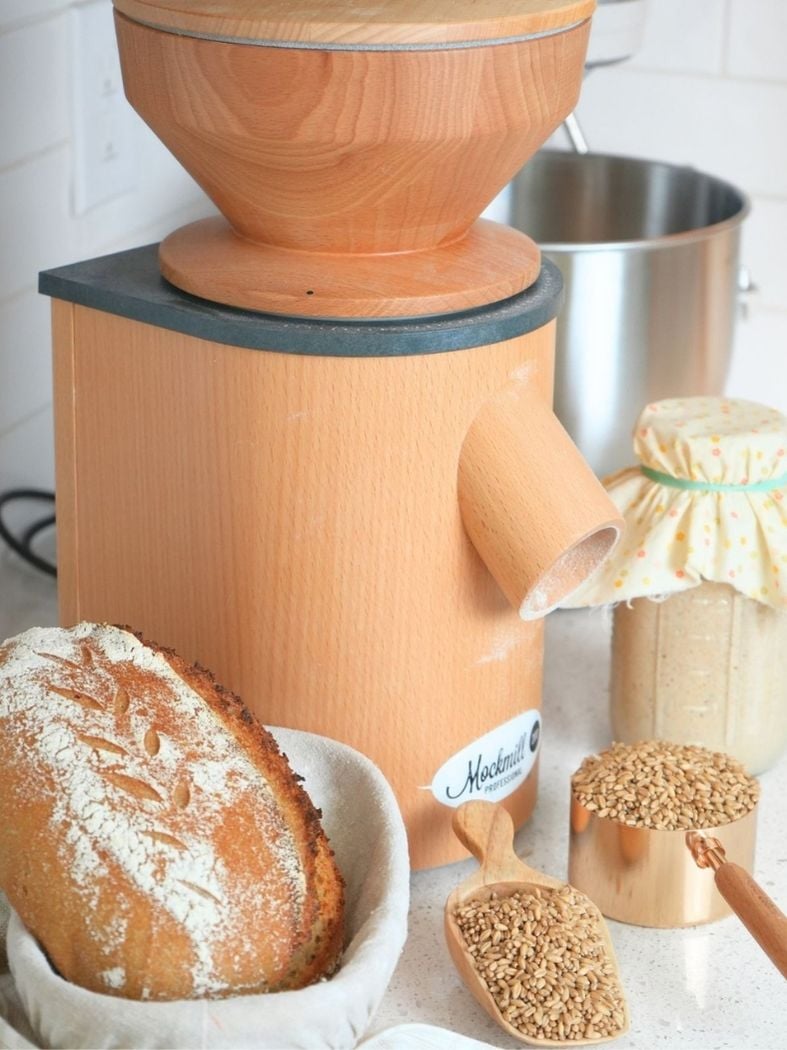
One of the top questions I hear is: Why is it so hard to buy a grain mill right now?
If you’ve tried ordering a grain mill lately, you’ve probably noticed many are out of stock or on backorder. And even though they reappear in small restocks, they sell out quickly and have long wait times.
When I ordered my Mockmill 200 Professional, I had to wait months before finally receiving it.
There are a few reasons why it’s so hard to get a grain mill right now:
- Rising Popularity: As more people return to traditional, from-scratch cooking, grain mills are in high demand. This means longer wait times for popular models, such as the Mockmill.
- Supply Chain Issues: In mid-2024, some manufacturers shared that they’ve had trouble sourcing a specific internal part.
Although there may be some delays in finding a grain mill, it’s well worth the wait! A high-quality grain mill, like the Mockmill, is a long-term investment for your home and your health.
Freshly milled flour is truly on a whole different level. It’s rich in nutrients that you won’t find in store-bought flour and free from any additives.
Other benefits of freshly milled flour include:
- Maximum Nutrition: Fresh flour retains the natural vitamins, minerals, and oils that are stripped away in commercial processing.
- Balance Blood Sugar: Whole grains, which include the bran, germ, and endosperm, all work together to slow digestion and help balance blood sugar (source).
- Gut-Healthy Grains: Some people who can’t tolerate bread find that they have no issues with fresh, whole-grain flour (especially when paired with long-fermented sourdough recipes).
Can I Feed My Starter Fresh-Milled Flour?
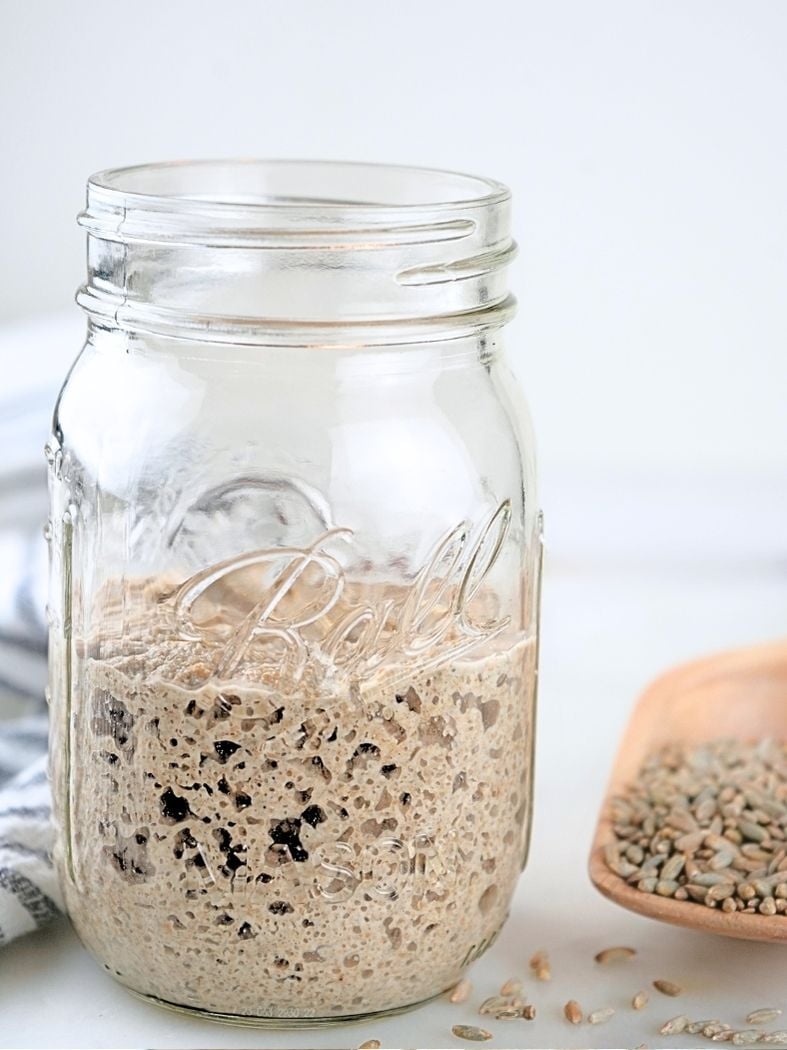
Absolutely! In fact, fresh-milled flour is great for sourdough starter. It’s packed with micronutrients that wild yeast and bacteria love. You can even make a 100% fresh-milled starter if you prefer.
Your starter can be fed with any wheat flour: hard red, hard white, rye, you name it. It has a little learning curve, so be sure to check out my full tutorial on how to use and change flour types for starter.
If you decide to feed your starter fresh-milled flour, there are a few things to consider:
- Faster Fermentation: Fresh flour is more nutrient-dense, so your starter may peak in as little as 4-6 hours, rather than 12.
- Less Dramatic Rise: Don't be alarmed if your starter isn't as bubbly as it is with store-bought flour. The bran and germ in fresh flour weigh it down. Still, look for bubbles throughout and a modest rise. That's your sign that it's healthy.
And remember, you don't have to feed it fresh flour every time. I often use all-purpose flour for convenience and save fresh flour for baking. You can even use a mix!
How Do I Adjust the Bulk Fermentation Time for Fresh-Milled Sourdough?
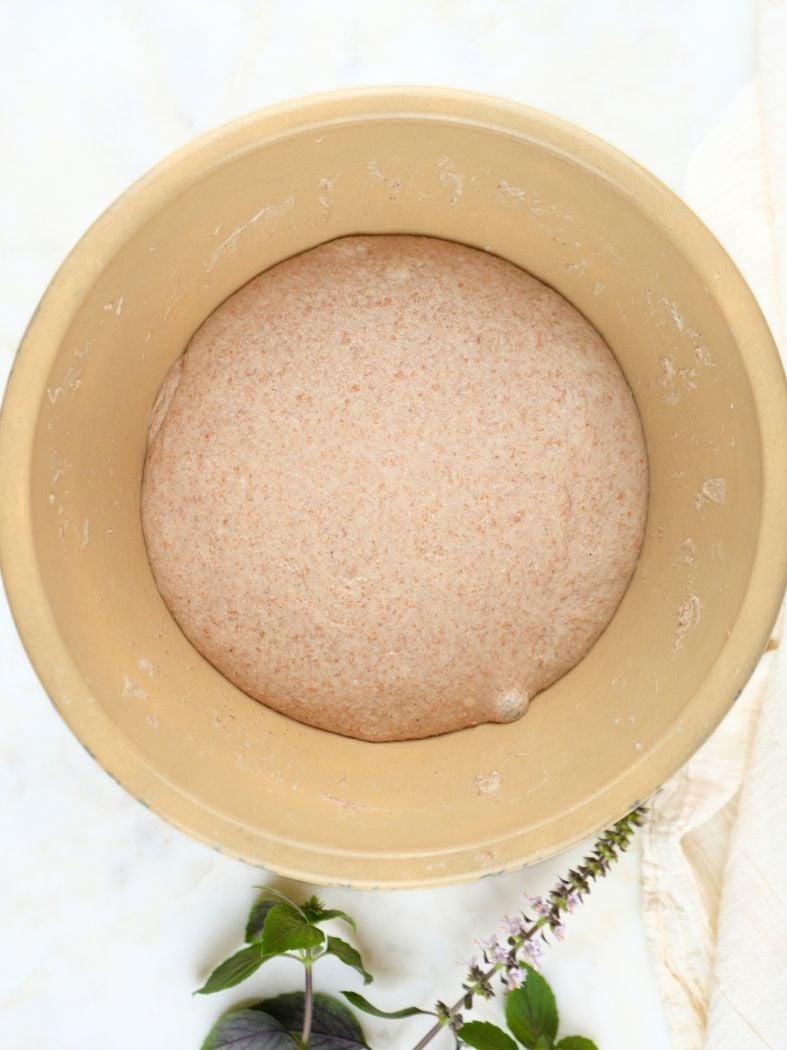
Whether you’re using fresh flour or store-bought, don't watch the clock-watch your dough.
Several factors, including starter strength, room temperature, dough hydration, and the type of flour will influence the bulk fermentation rate.
For example, if your house is warm and your starter is strong, the dough will ferment faster. A cooler room or a weaker starter means it may be slower.
When making fresh-milled sourdough bread, keep these tips in mind:
- The rise may be more outward than upward, especially if you are using a wide or shallow container.
- It may not double, but a 20-30% rise is a good target.
- Look for a domed top as a sign your dough is ready to shape or proof.
- Use a container with tall sides to help gauge rise.
Why Is My Bread Gummy or Dense?
Before we troubleshoot, let’s break down exactly what kind of issue you’re actually dealing with:
Gummy: Bread that is gummy is tacky, and it appears wet or under-baked when sliced open (though it actually isn’t under-baked).
Dense: Dense bread has a tight crumb, meaning it doesn’t have large air pockets.
Gummy Bread
Gummy bread is almost always a sign of under-proofing. If your dough hasn't risen at least 20-30% or domed on top before baking, let it ferment longer next time.
Excessive hydration can contribute to gummy bread, but the most common issue is often insufficient time for fermentation.
Dense Bread
Dense bread isn't wet. Instead, it's just heavy and has a tight crumb. There are two main reasons your bread is dense.
- It’s the nature of baking with 100% whole grain flour. The brain and germ make it heavier.
- Some wheat berries lack a strong gluten network and therefore don’t rise as much. This is common when making einkorn sourdough, for example.
- Not developing the gluten enough. For no-knead breads, be diligent with stretch and folds. For stand mixer breads, knead until you reach the windowpane test. (More on that below.)
Can You Use The Windowpane Test with Fresh-Milled Flour?

Yes, you absolutely can! However, it requires a bit more patience and technique than working with store-bought flour.
TIPS FOR SUCCESS
- Autolyse Your Dough: Mix flour and water and let it rest 30-60 minutes to fully hydrate.
- Knead Well: I use a KitchenAid mixer and knead for 10-15 minutes. Expect it to take a bit longer than all-purpose flour.
- Adjust Hydration as Needed: Add extra flour or water a tablespoon at a time if the dough feels off.
- Use Hard Wheat: Soft wheat doesn't contain enough gluten for bread and won't pass the windowpane test.
When testing, gently stretch the dough. Because of the bran and germ, the dough might tear more easily. But if you can see light through it before it tears, you've got a pass!
Can I Substitute Fresh-Milled for All-Purpose Flour 1:1?
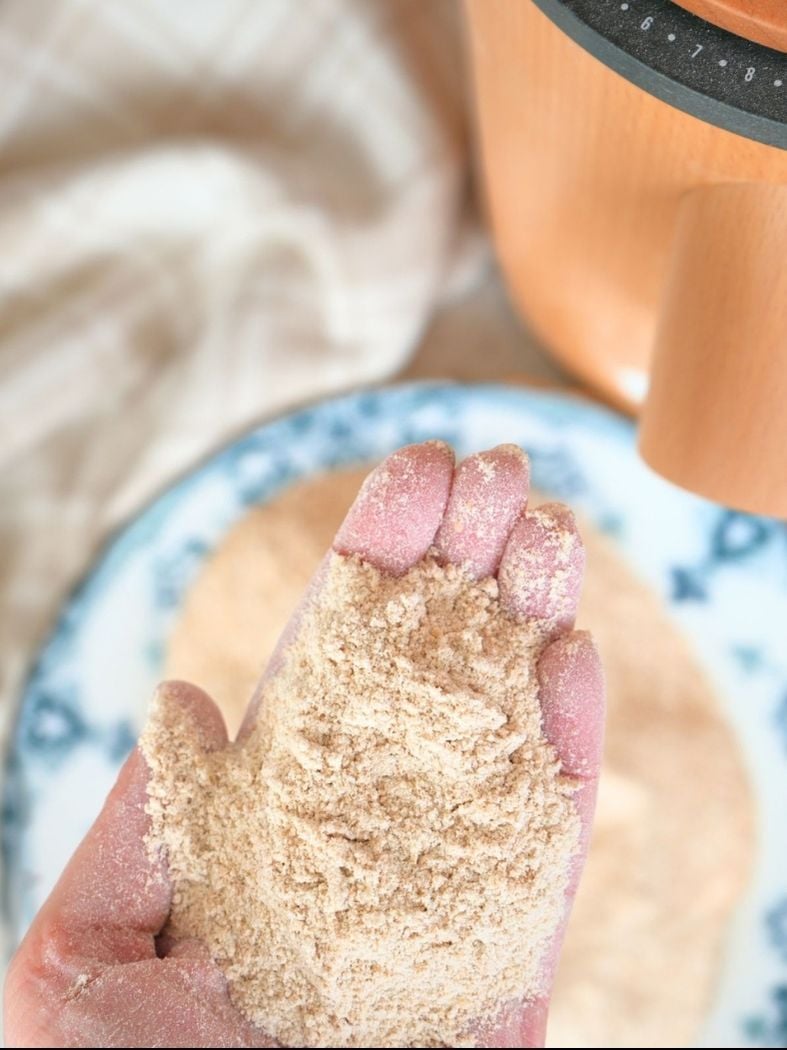
You can substitute fresh-milled flour 1:1, but it depends on the type of wheat and how you’re measuring:
- Hard wheat can be substituted 1:1 for all-purpose if measured by weight (grams). If measuring in cups, it's not as precise due to how flour settles.
- Soft wheat has higher moisture and needs some adjusting. Add ¼ cup (or 30 g) more soft wheat flour per cup called for in a recipe.
For more help with flour conversions, be sure to grab my free fresh-milled flour conversion chart here. It’ll make swapping store-bought flour for fresh-milled so much easier!
What’s the Best Grain to Use for Fresh-Milled Flour?

When I first started milling grains, I was totally overwhelmed with the choices. Over time, you may have several varieties that you like to work with.
But to get started, you just need one or two (especially if you’re tight on space!):
If you only have space for one type, choose hard white wheat. It's mild in flavor and works in everything from sandwich bread to muffins and pancakes.
If you have space to store two types of wheat, I recommend the following:
- Hard wheat for bread, such fresh-milled sourdough sandwich bread.
- Soft wheat is ideal for pastries, such as fresh-milled chocolate chip muffins, cakes, or cookies (I especially enjoy making sourdough carrot cake with soft white wheat).
How Long Does Fresh-Milled Flour Last?
There are differing opinions on how long fresh flour lasts once milled, but fresh-milled flour starts oxidizing immediately. It won't spoil instantly, but it loses nutrients and can go rancid over time because of the oils in the bran and germ.
BEST PRACTICES
- Mill what you need right before baking.
- Store extras in freezer-safe bags (sandwich bags inside a labeled Ziploc work great).
- If you are storing it at room temperature, it will last a few days.
- In the freezer, it will last for 3-6 months
Keep in mind that whole wheat berries, when stored properly, can last many years. So, when in doubt, just mill them as needed.
Where Can I Buy Wheat Berries?
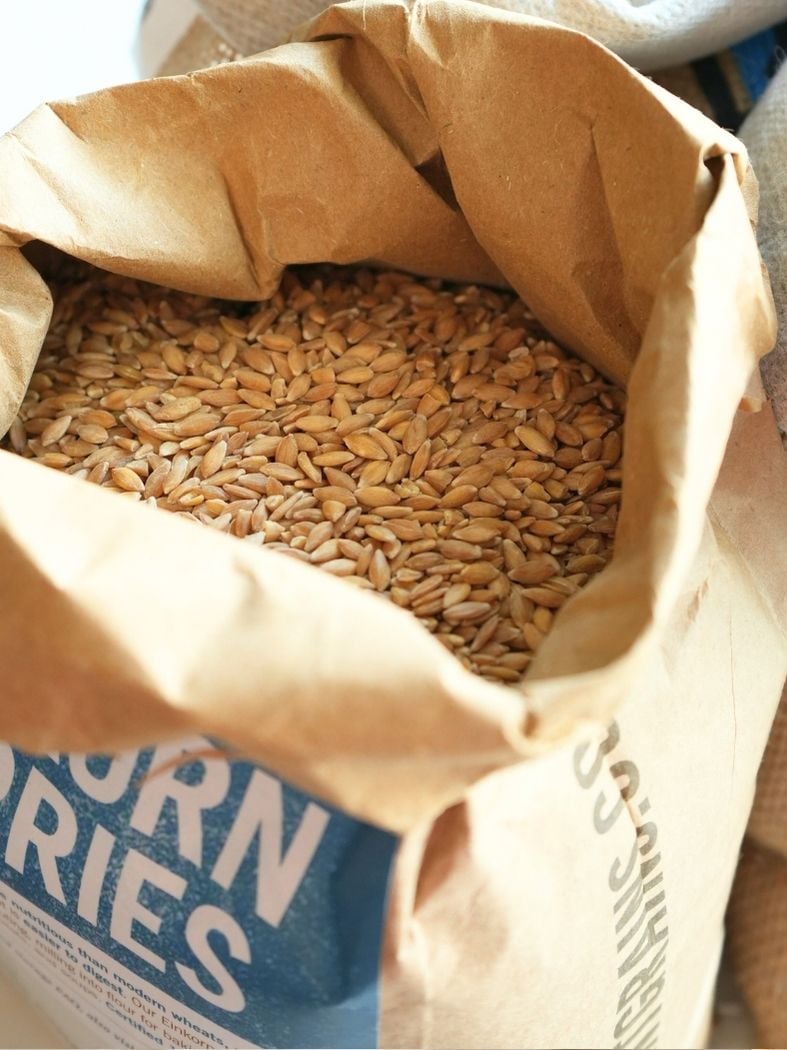
I buy my wheat berries from Azure Standard or Grains from the Plains and have had great experiences with both.
I usually buy 25 lb bags. But to test a new variety, I'll order a small bag from Amazon. It's pricier, but it’s better than committing to 25 lbs of grain you don't like.
Check local co-ops or nearby Amish communities, too. They often have great options.
Let's Connect!
If you have more questions about using fresh-milled flour, leave them in the comments below!
Also, don't forget to pin this post and follow Moon + Magnolia on Pinterest. You can save all my recipes on your boards and keep up with the latest happenings!
Share your creations on Instagram and tag @moon_and_magnolia!



Does the bread retain its nutrients if frozen?
Yes, and some studies suggest that freezing bread may reduce the glycemic index. 🙂
Best,
Rebecca
What are your thoughts on using vital wheat gluten.
I recently started using vital wheat gluten, and the results have been amazing. I know some folks don’t like it because it is a processed food. But it’s naturally derived, and my family devours 100% whole grain bread made with it. So I’ve been using it. I have a fresh-milled sandwich bread recipe that uses VWG and sunflower lecithin here: https://moonandmagnolia.com/fresh-milled-sourdough-pullman-loaf-pain-de-mie/. And I talk about it’s pros and cons in this tutorial: https://youtu.be/GOG-rF5Hcgk.
Hope that helps!
-Rebecca