This post may contain affiliate links. Please read our disclosure policy.
Set yourself up for sourdough success with this simple sourdough starter supply list. With just a few essential tools and ingredients, you'll have everything you need to make a healthy and bubbly starter.
Making a sourdough starter is exciting, but I know it can also feel a little intimidating. The best way to set yourself up for success is to gather a few simple sourdough starter supplies before you begin.
I always say sourdough is a minimalist's dream come true because you really don't need much to get started. With just a few basics-a jar, flour, water, and a scale-you can make your own starter from scratch.
Below, I’m sharing my favorite sourdough starter tools-from jars and scales to flour and a few optional extras that make the process easier.
Once you get everything you need, be sure to download my free sourdough starter eBook!
Before you know it, you'll have a happy, bubbly starter that's ready for baking your first loaf of homemade sourdough bread.
Ps. Sourdough is better with friends. Make a cute sourdough starter gift set for a friend so you can learn together!
Must-Have Supplies
Jars
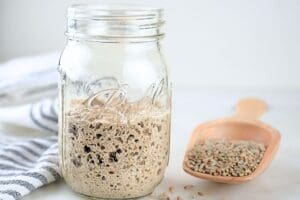
You’ll need jars or a container to make and store your sourdough starter in. I recommend using clear mason jars so you can keep an eye on your starter and watch its progress.
Any jar big enough for your starter to double in size will do. Depending on how much starter I am keeping, I use either of these:
- Ball Pint Jars: I use pint jars during seasons when I’m not baking much, or if I am down to the bottom of my starter and giving a small feeding.
- Ball Quart Jars: This is my usual jar size for my weekly baking needs.
Note: Often, Ball jars are cheaper at Walmart and Sam’s Club.

Kitchen Scale
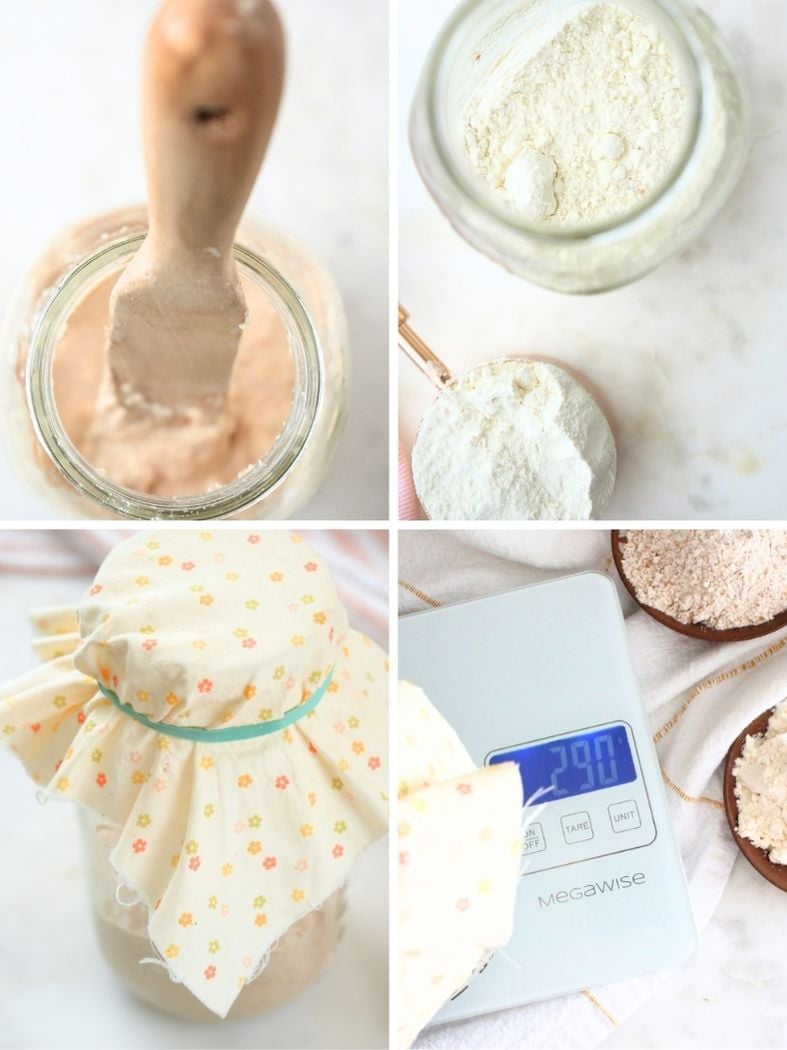
A waterproof kitchen scale is one of the most useful tools you can own for making sourdough starter. It ensures accuracy when feeding your starter so you’ll know that you are using the correct ratio of flour to water.
I use this waterproof digital scale:
- MegaWise Precision Food Scale: I like this scale because it’s waterproof and you can either use batteries or recharge it via USB-C.

Lid
Your starter needs airflow while it ferments, so use a breathable cover, such as a 100% cotton cover secured with a rubber band or a loose-fitting lid.
I’ve used a fabric lid with a rubber band on my starter for years without issue. But some folks prefer lids such as these:
- Reusable Fabric Covers: These are really cute and have built-in elastic to secure it around the jar.
- Weck Lids: These need to be used with a Weck jar and placed loosely on top.

Flour
For making a sourdough starter, you will need a bag of whole wheat and a bag of unbleached all-purpose flour. As your starter matures, you can experiment with switching the flour types or even make a fresh-milled starter.
These are my favorite store-bought flours:
- I use Azure Standard all-purpose flour or Costco’s organic all-purpose flour.
- King Arthur whole wheat flour (I’ve also had good results with Pillsbury).

Water
I use cold, filtered water from my fridge. However, some folks have suggested that their starter only responds to purified water.
If your starter seems sluggish and you are using tap water, try using filtered or dechlorinated water.
Measuring Cups
I always recommend using a kitchen scale to weigh your ingredients because it is more precise and repeatable. However, if you don’t have a scale, you can convert the weight to volume (cup measurements).
- Gold Measuring Cups: These will elevate your kitchen and baking days.
- Williams Sonoma Measuring Cups: I love my 14-piece set from Williams Sonoma because it includes more increments, like 1 1/2 cups and 2 tablespoons.

Optional Supplies
Spurtle
A spurtle isn’t necessary, but it does make stirring inside of a jar easier. You can also use the handle of a wooden spoon or another spoon that will fit inside the mouth of your jar.
I use this spurtle and love it:
- Teak Skinny Spurtle: I’ve used this spurtle for years. Make sure to handwash it and let it dry thoroughly.

Proofing Box
A proofing box keeps your starter warm, allowing it to ferment more efficiently.
It’s not essential, but it is an upgrade that can make the whole process more predictable and less stressful, especially if your home is chilly or the kitchen is drafty.
I use my Brod & Taylor proofing box all of the time, but there are also some other budget-friendly alternatives:
- Brod & Taylor Proofing Box: This proofing box also doubles as a slow cooker, making it a great bang for your buck.
- Brod & Taylor Sourdough Home: This is similar to a proofing box, but it is designed specifically for a jar of starter and is a little cheaper.
- Heating Pad: Set the heating pad to low, cover it with a thick towel, and place your starter on it. Make sure the heating pad does not go over 100° F.

Tips for Success
- While getting started, use what you have. You can always upgrade your tools later.
- Consistency is key with a sourdough starter. Feed it on a routine schedule and make sure it isn’t too cold or too hot.
- Once your starter is mature, you can try my once-a-week feeding routine.
- Your starter is incredibly resilient, and even if it looks dead, it probably isn’t. Check out my YouTube tutorial to learn how to revive a “dead” starter.
FAQs
A clear glass jar works best so you can easily stir, feed, and see the bubbles and rise.
The size depends on how much starter you are keeping on hand. Just make sure it is large enough for your starter to double in size.
Your starter is active and ready to use when it doubles after each feeding and smells pleasant (like sourdough!). For most people, this takes around 10-14 days.
If you bake a few times a week, keep your starter at room temperature and feed it daily. For longer breaks, store it in the fridge and feed it once a week to slow down the yeast and bacteria’s metabolic processes.
That liquid means your starter is hungry. Stir it in or pour it off, then feed your starter as usual.
Yes, that’s a great way to keep a backup! Check out my tutorial for freezing sourdough starter.
Let's Connect!
If this post was helpful, leave a comment or review below!
Also, don't forget to pin this post and follow Moon + Magnolia on Pinterest. You can save all my recipes on your boards and keep up with the latest happenings!
Share your creations on Instagram and tag @moon_and_magnolia