
This post may contain affiliate links. Please read our disclosure policy.
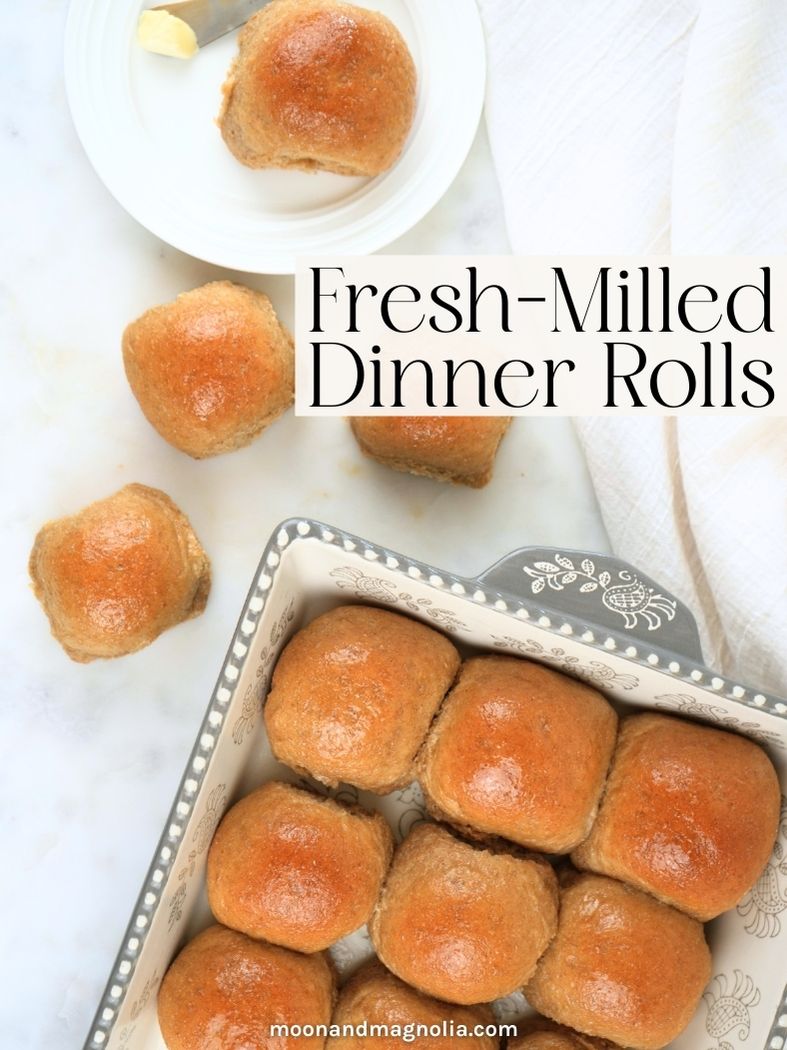
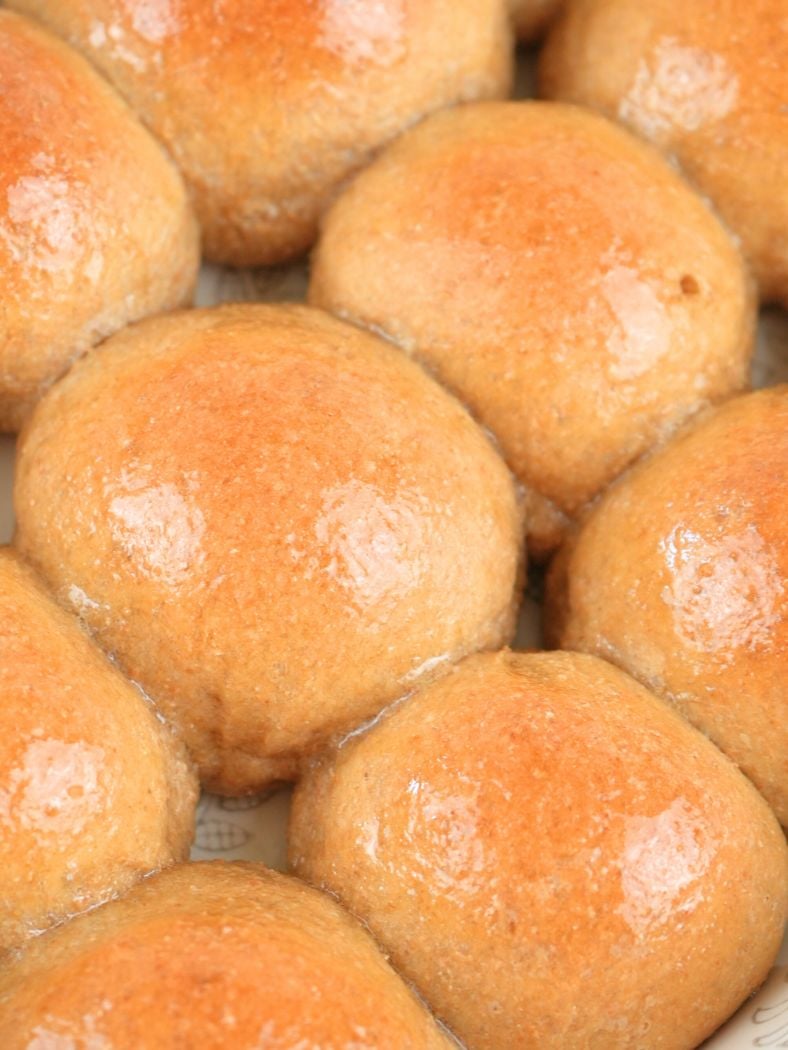
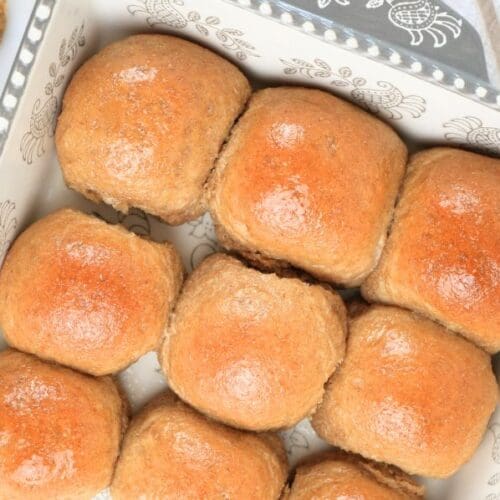
These fresh-milled dinner rolls are soft, fluffy, and 100% whole grain. Made with active dry yeast, hard white wheat, and kamut, they have a mild flavor that the whole family will love.
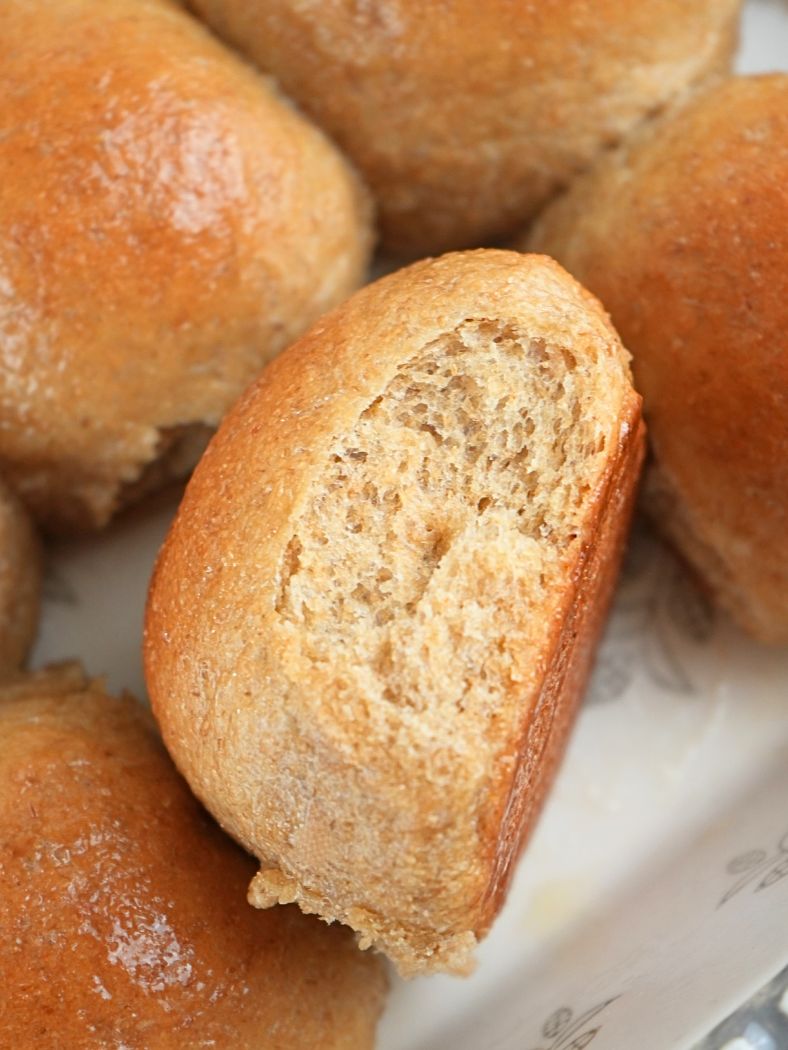
I know it's surprising, but I'm actually sharing a non-sourdough bread recipe!
I love sourdough, of course, but as I've been diving into fresh-milled flour, I've found the flavor is often more palatable for picky eaters when it's made with commercial yeast.
Fresh-milled flour sourdough can be extra-tangy, which not everyone loves, so I’ve been testing fresh-milled yeast breads…and my family is obsessed.
Now, don’t get me wrong. We still love fresh-milled sourdough sandwich bread and fresh-milled sourdough Pullman loaves. But these are a favorite right now.
My 4-year-old daughter ate two fresh out of the oven, then had two more with dinner. And my husband loves them for mini-sandwiches.
Active dry yeast works quickly, keeps the flavor milder, and lets you have 100% whole-grain dinner rolls on the table in just a few hours.
These fluffy wheat rolls are perfect for an everyday bread or for family dinners and gatherings.
Why You’ll Love This Recipe
Whole Grain: These rolls are made with 100% freshly milled whole-grain flour, so they are packed with flavor and nutrition.
Quick Yeast: Using active dry yeast creates a milder flavor than my sourdough bread recipes. And it speeds up the process when you want homemade bread in a pinch.
Easy: This recipe is beginner-friendly and requires just a few, simple bread-baking techniques.
Freezer-Friendly: Homemade dinner rolls freeze like a dream. So bake a batch or two and pop them in the freezer for grab-and-go bread on busy days.
Soft & Delicious: The vital wheat gluten and sunflower lecithin create the absolute softest crumb.
Ingredients
Wheat Berries: You will need hard wheat berries. I use a blend of hard white wheat and kamut.
Active Dry Yeast: Use active dry yeast granules. If you prefer sourdough, check out my yeast-to-sourdough conversion post to learn how to adapt this recipe.
Vital Wheat Gluten: Vital wheat gluten strengthens the dough's structure, helping the bread rise higher, hold its shape, and develop a softer crumb. I use Anthony's vital wheat gluten.
Sunflower Lecithin: Sunflower lecithin is a natural emulsifier that helps bread stay softer longer, improves moisture retention, and creates a finer, more even crumb. I use NOW Food's sunflower lecithin.
Milk: I used whole milk, but you can use any milk you prefer.
Get the full list of ingredients and measurements on the printable recipe card below.
Tools You Will Need
Grain Mill: You will need a grain mill for this recipe. I use a Mockmill 200 Professional. Popular brands also include Nutrimill and KoMo.
Stand Mixer: A stand mixer makes kneading more efficient. I love my KitchenAid bowl-lift mixer.
Baking Dish: You will need a 9″x13″ baking dish.
Step-by-Step Instructions

Step 1: Just before prepping the dough, mill the hard white wheat and kamut on the finest setting.
(If you are measuring in volume, you should have about 4 cups of flour after milling.)
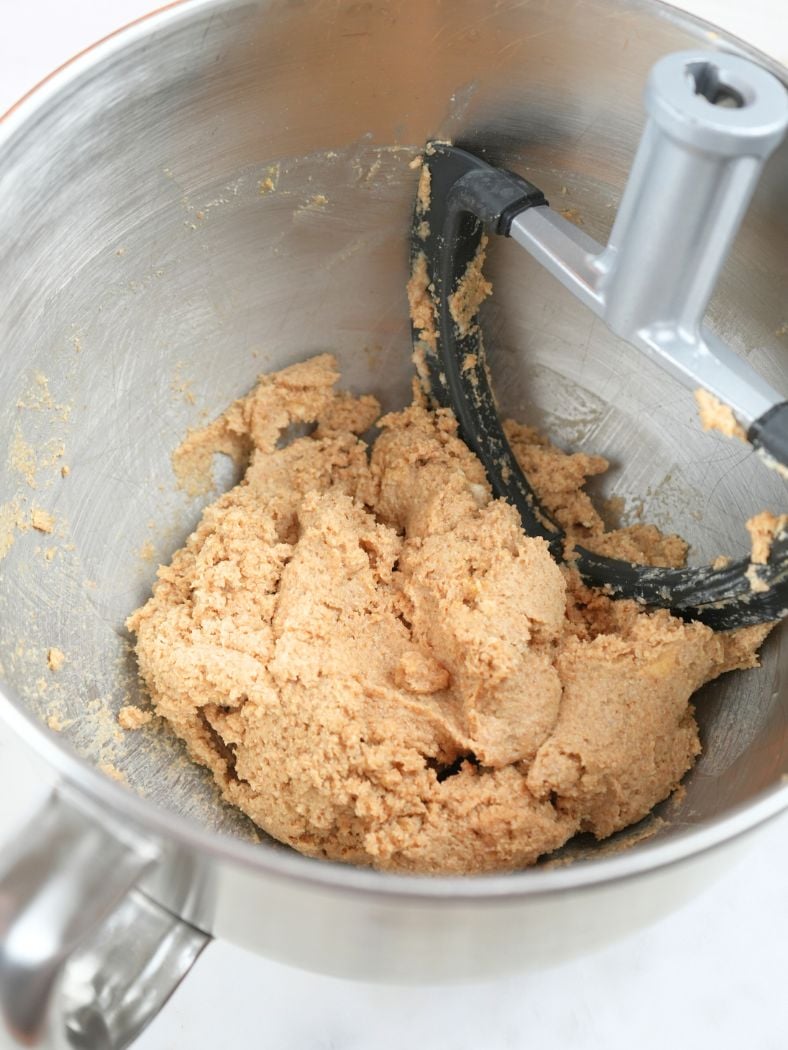
Step 2: In the bowl of a stand mixer, combine the freshly milled flour, milk, butter, vital wheat gluten, sunflower lecithin, sugar, and egg.
Using the paddle attachment, mix on low just until everything comes together.
Cover with a damp towel and let the dough rest for 30 minutes to 1 hour.
It may look too wet at first, but the rest allows the flour to hydrate fully, so don't add extra flour yet.
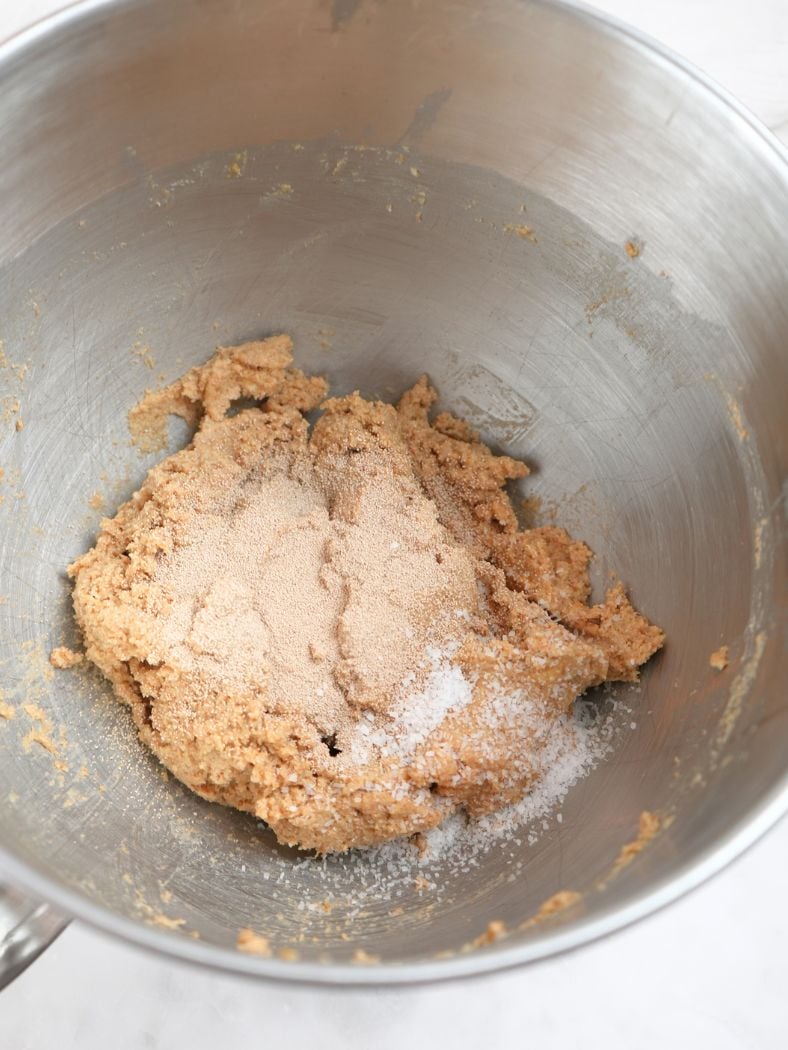
Step 1: Add the salt and active dry yeast, then switch to the dough hook and knead on low until the dough comes together.
If it's still sticky, add fresh-milled flour 1 tablespoon at a time until the dough is soft and slightly tacky. Keep the mixer at speed 3 (no higher than 4).
Knead until the dough is smooth, elastic, and passes the windowpane test (this takes me about 10 minutes)
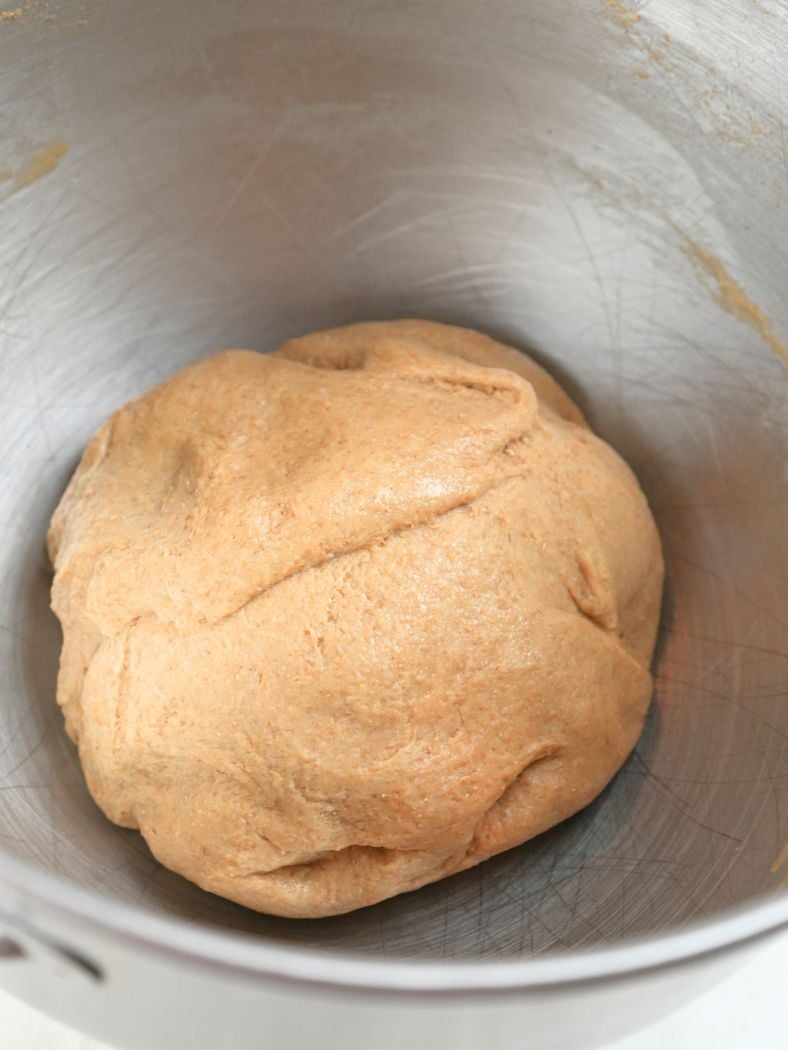
Step 2: Transfer the dough to an oiled bowl. Cover with a damp towel and allow it to rise until doubled in size, about 1-2 hours.
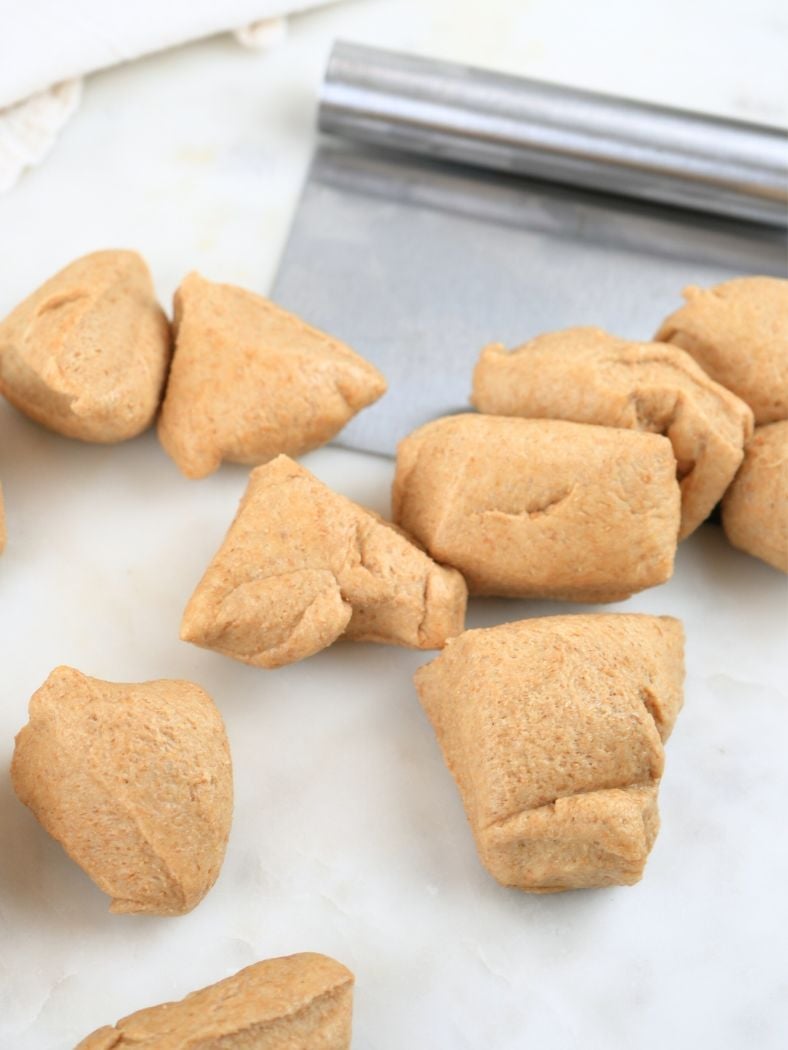
Step 3: Butter or grease a 9″x13″ baking dish. Then, turn the dough out onto a clean work surface.
Divide the dough into 15 equal portions (they don’t have to be perfect).
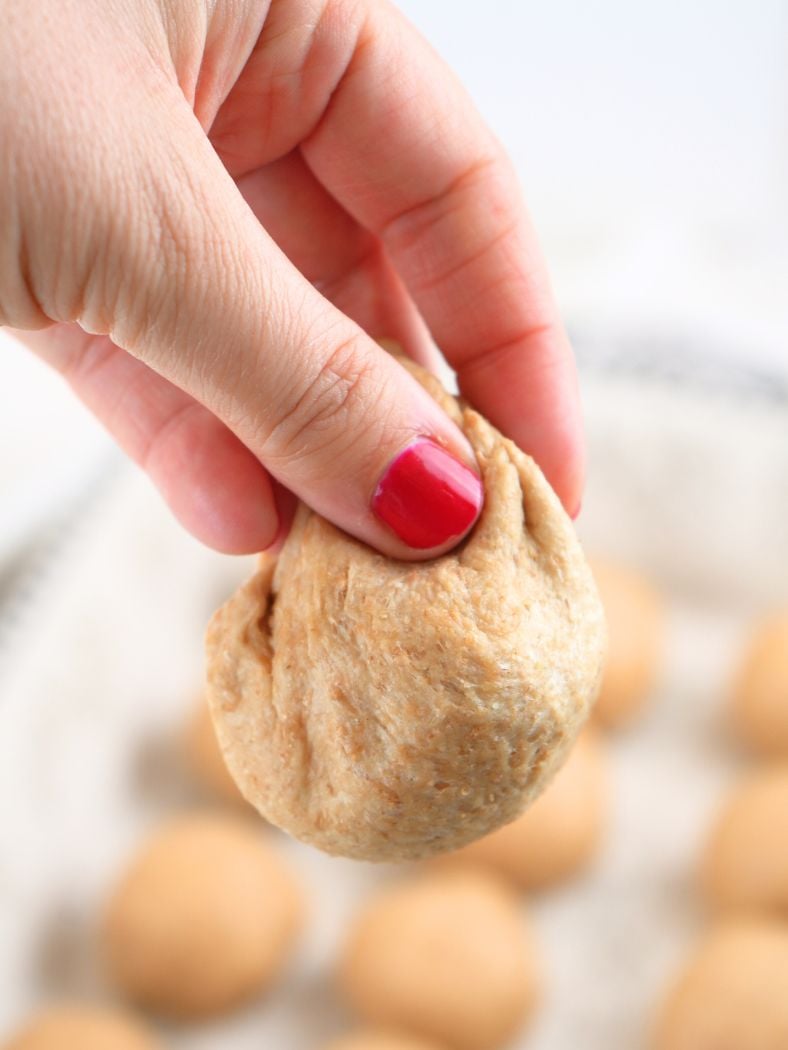
Step 4: Shape each portion by first pulling and tucking the edges underneath to create a ball.
Then, turn the dough clockwise while gently dragging it on the counter to create tension and tidy up the shape.
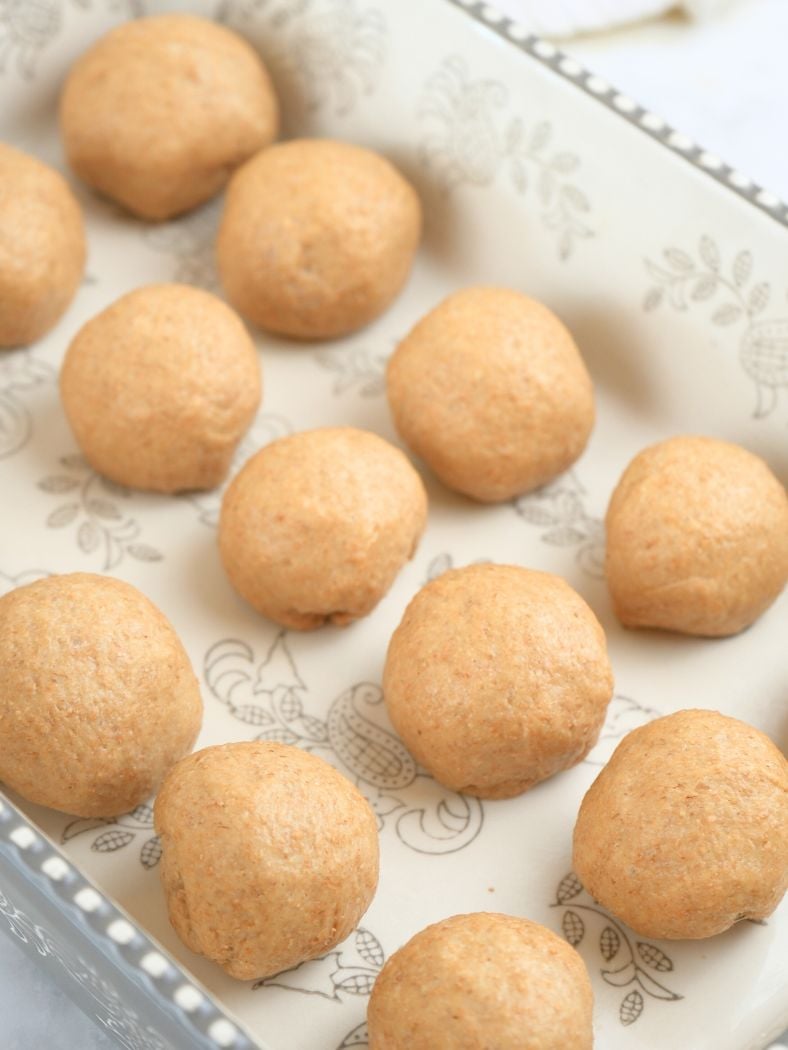
Step 5: Arrange the dough balls in the prepared baking dish, leaving about 1/4 inch space between them so they have room to rise.
Cover with a damp towel and allow to proof until the dough is puffy and the sides of the dough balls are touching each other.
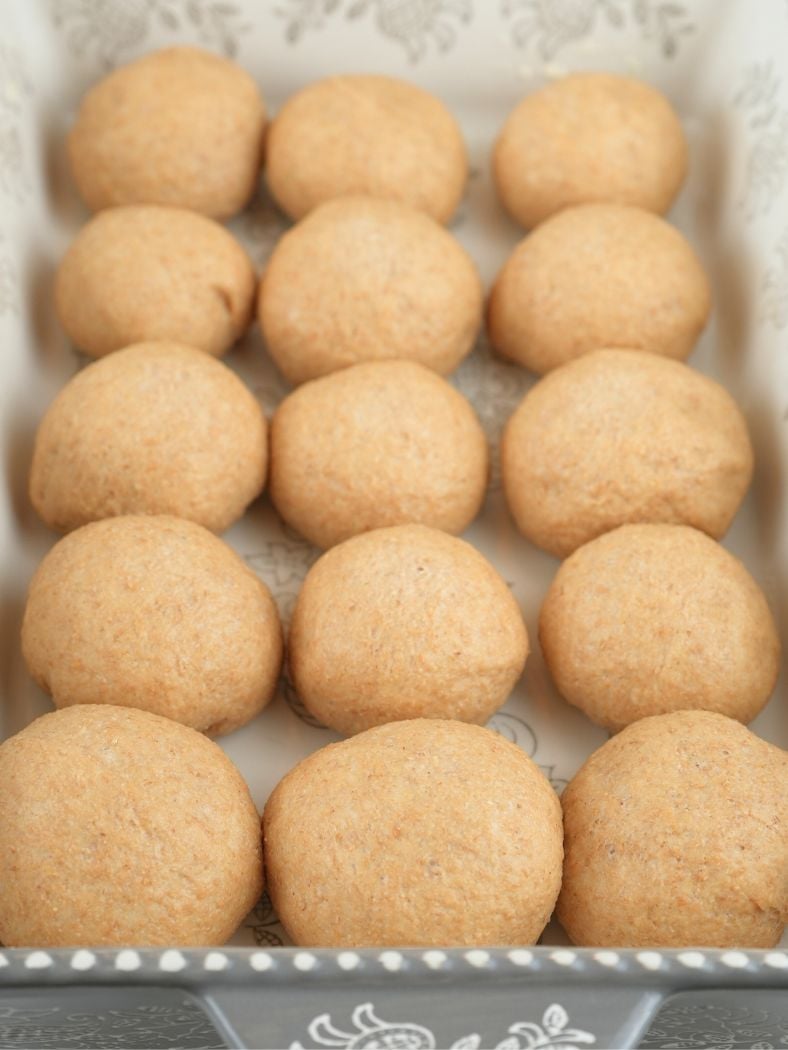
Step 6: When you are ready to bake, preheat the oven to 350° F. Bake for 20-25 minutes or until the internal temperature reaches 190°-200°F.
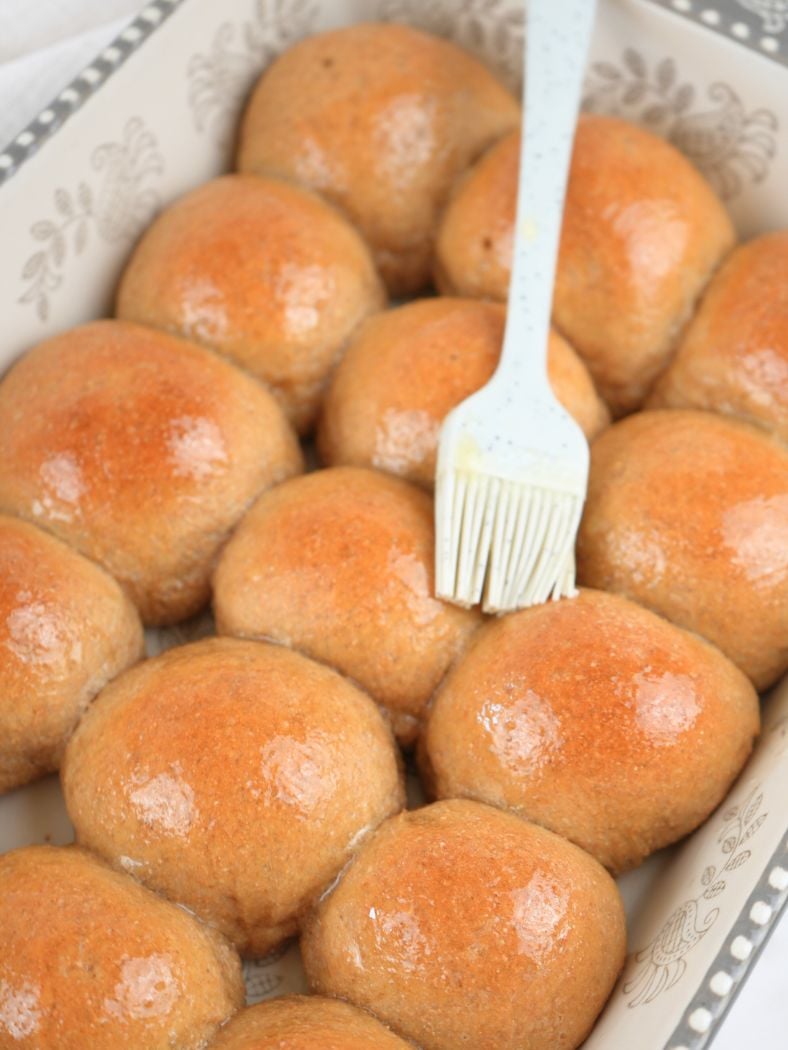
Step 7: As soon as the rolls come out of the oven, brush them with the melted butter.
This will make them glossy and delicious, but it also helps trap the steam as they cool, making them softer.
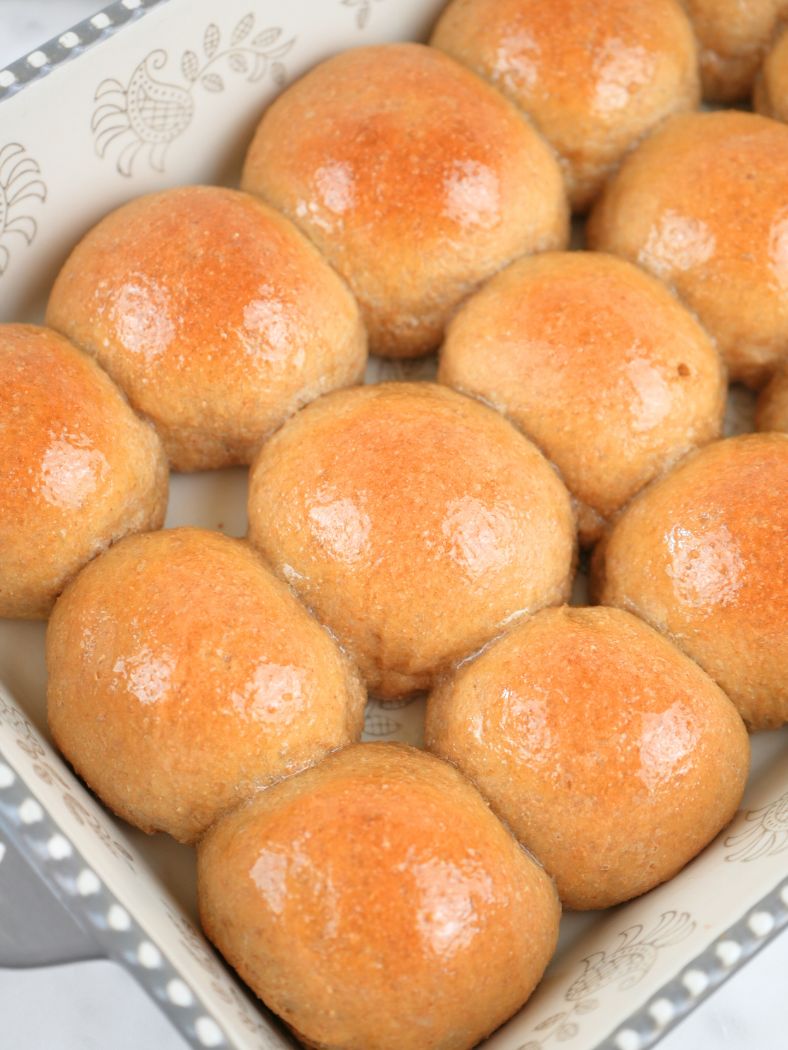
Step 8: If serving right away, let the rolls cool in the pan for a few minutes.
If serving later, let them cool in the pan for a few minutes, then transfer to a wire rack and cool to room temperature.
Tips for Success
- In my oven, the tops usually don’t brown, so just before they reach an internal temp of 190° F, I bump the oven up to 375° F, and let them finish baking. This does the trick for me.
- Dough made with fresh-milled flour has a more delicate gluten network because the bran and germ can pop the bubbles. I do not recommend punching down the dough after the first rise, as it can affect the bread’s quality.
- You can omit the sunflower lecithin and vital wheat gluten. The rolls won’t be quite as soft, but they will still be delicious.
- I like to keep a little extra fresh-milled flour in the freezer so I can easily adjust the dough while kneading without having to mill more flour.
- If batch prepping these rolls, after the bulk fermentation, you can freeze sourdough dough and bake it at your convenience.
Serving Suggestions
Herb Butter: These rolls are delicious with homemade herb butter.
Soup: Pair homemade dinner rolls with sausage and kale soup or fire-roasted tomato and veggie soup.
Roast Chicken: Serve roast chicken or an Instant Pot whole chicken with steamed veggies and fresh rolls.
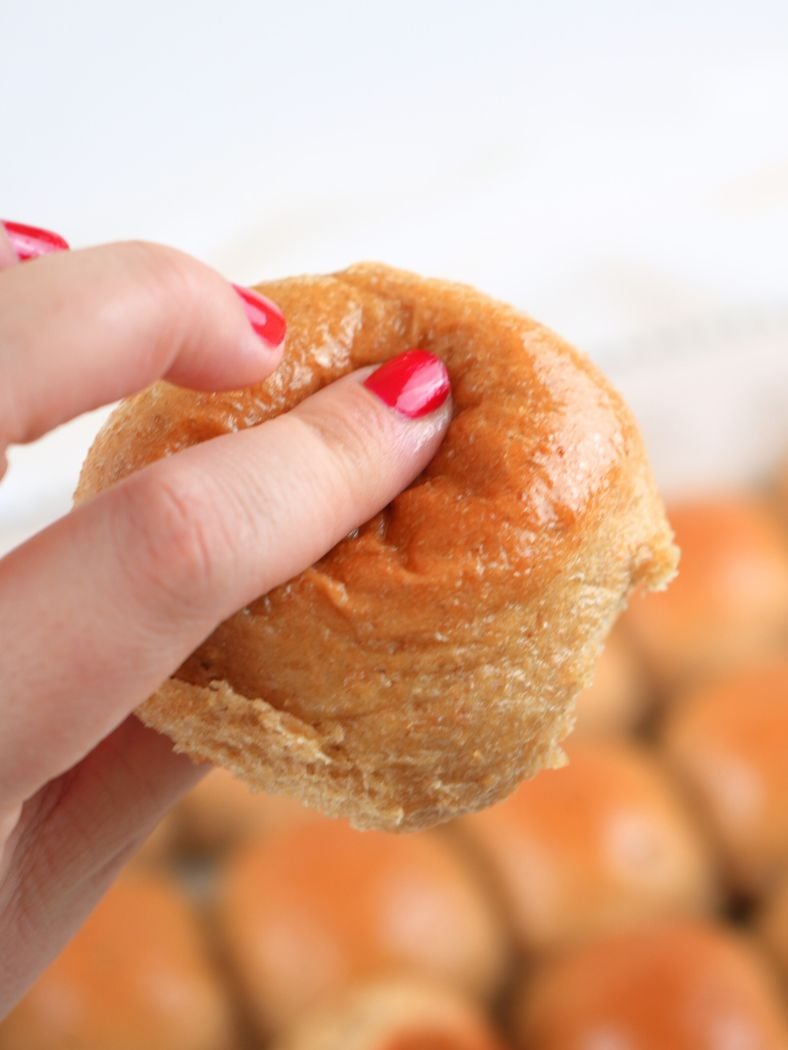
Sliders: Fresh-milled dinner rolls are perfect for sliders and mini-sandwiches.
Holiday: These rolls are perfect for your holiday feasts and family meals. I love using these as a vessel for 3-ingredient creamed spinach for holiday meals.
Storing
- Store leftovers in an airtight container for 2-3 days at room temperature.
- Freeze room temperature rolls in a freezer-safe bag for up to 3 months.

Variations
Honey Butter: Brush the rolls with warm honey butter for a lightly sweet finish.
Garlic Herb: Add garlic and dried herbs to the dough for a savory roll. Freeze-dried herbs work great for this.
Everything Bagel: Sprinkle the tops with everything bagel seasoning before baking for extra flavor and crunch.
Cheese: Mix shredded cheddar or parmesan into the dough for a cheesy twist.
FAQs
You can use einkorn, but the dough will be more delicate, so expect shorter kneading and a slightly denser roll. I also recommend reducing the liquid by 1-2 tablespoons and adjusting it as needed while kneading the dough.
No, soft wheat berries do not have enough gluten for bread.
Replace the yeast with 100g active starter, reduce the milk by about 1-2 tablespoons, and extend the rise times until the dough is puffy and almost doubled.
Heavy rolls usually result from under-kneading, too much flour, or shortening the rising time. Aim for a soft, slightly tacky dough and allow each rise to double.
Yes, refrigerating the dough overnight works great. Just cover tightly and let it warm slightly before shaping or baking the next day.
Let's Connect!
If you tried this recipe and loved it, leave a comment or review below.
Also, don't forget to pin this post and follow Moon + Magnolia on Pinterest. You can save all my recipes on your boards and keep up with the latest happenings!
Share your creations on Instagram and tag @moon_and_magnolia

Fresh-Milled Dinner Rolls
Equipment
- Grain Mill
- 9"x13" Baking Dish
Ingredients
Dough
- 300 g hard white wheat berries, about 1 1/2 cups whole wheat berries
- 100 g kamut wheat berries, about 1/2 cup whole wheat berries
- 1 cup whole milk
- 56 g butter, softened
- 1 tablespoon vital wheat gluten
- 1 tablespoon sunflower lecithin
- 2 tablespoons granulated sugar
- 1 large egg
- 1 teaspoon salt
- 2 1/4 teaspoons active dry yeast, 1 packet
Topping
- 2 tablespoons butter, melted
Instructions
- Mill the Wheat Berries. Just before prepping the dough, mill the hard white wheat and kamut on the finest setting. (If you are measuring in volume, you should have about 4 cups of flour after milling.)300 g hard white wheat berries, 100 g kamut wheat berries
- Add the Ingredients (except salt and yeast). In the bowl of a stand mixer, combine the freshly milled flour, milk, butter, vital wheat gluten, sunflower lecithin, sugar, and egg.1 cup whole milk, 56 g butter, 1 tablespoon vital wheat gluten, 1 tablespoon sunflower lecithin, 2 tablespoons granulated sugar, 1 large egg
- Mix and Rest. Using the paddle attachment, mix on low just until everything comes together. Cover with a damp towel and let the dough rest for 30 minutes to 1 hour. It may look too wet at first, but the rest allows the flour to hydrate fully, so don't add extra flour yet.
- Knead with Salt and Yeast. Add the salt and active dry yeast, then switch to the dough hook and knead on low until the dough comes together. If it's still sticky, add fresh-milled flour 1 tablespoon at a time until the dough is soft and slightly tacky. Keep the mixer at speed 3 (no higher than 4).Knead until the dough is smooth, elastic, and passes the windowpane test (this takes me about 10 minutes)1 teaspoon salt, 2 1/4 teaspoons active dry yeast
- First Rise. Transfer the dough to an oiled bowl. Cover with a damp towel and allow it to rise until doubled in size, about 1-2 hours.
- Prep the Pan. Butter or grease a 9"x13" baking dish.
- Turn Out the Dough. Divide the dough into 15 equal portions (they don't have to be perfect).
- Shape the Dough. Shape each portion by first pulling and tucking the edges underneath to create a ball.Then, turn the dough clockwise while gently dragging it on the counter to create tension and tidy up the shape.
- Second Rise. Arrange the dough balls in the prepared baking dish, leaving about 1/4 inch space between them so they have room to rise. Cover with a damp towel and allow to proof until the dough is puffy and the sides of the dough balls are touching each other.
- Bake. When you are ready to bake, preheat the oven to 350° F. Bake for 20-25 minutes or until the internal temperature reaches 190°-200°F. (See notes about browning the tops.)
- Brush with Butter. As soon as the rolls come out of the oven, brush them with the melted butter. This will make them glossy and delicious, but it also helps trap the steam as they cool, making them softer.2 tablespoons butter
- Cool and Enjoy! If serving right away, let the rolls cool in the pan for a few minutes. If serving later, let them cool in the pan for a few minutes, then transfer to a wire rack and cool to room temperature.
Video
Notes
- In my oven, the tops usually don’t brown, so just before they reach an internal temp of 190° F, I bump the oven up to 375° F, and let them finish baking. This does the trick for me.
- Dough made with fresh-milled flour has a more delicate gluten network because the bran and germ can pop the bubbles. I do not recommend punching down the dough after the first rise, as it can affect the bread’s quality.
- You can omit the sunflower lecithin and vital wheat gluten. The rolls won’t be quite as soft, but they will still be delicious.
- I like to keep a little extra fresh-milled flour in the freezer so I can easily adjust the dough while kneading without having to mill more flour.
Nutrition
Nutrition information is auto-calculated and may not reflect your final product. Please verify independently if needed.


Can’t wait to make them! The recipe calls for active yeast, the body of the recipe calls for instant. I guess either will be okay?
Hey there!
Oooops, that’s a mistake on my part. It’s active dry yeast. I’ll fix that on the post right now. Thanks for brining that to my attention!
-Rebecca
These are the softest and most mild-tasting fresh-milled rolls I’ve had. Even more 4-year-old loves them!