
This post may contain affiliate links. Please read our disclosure policy.
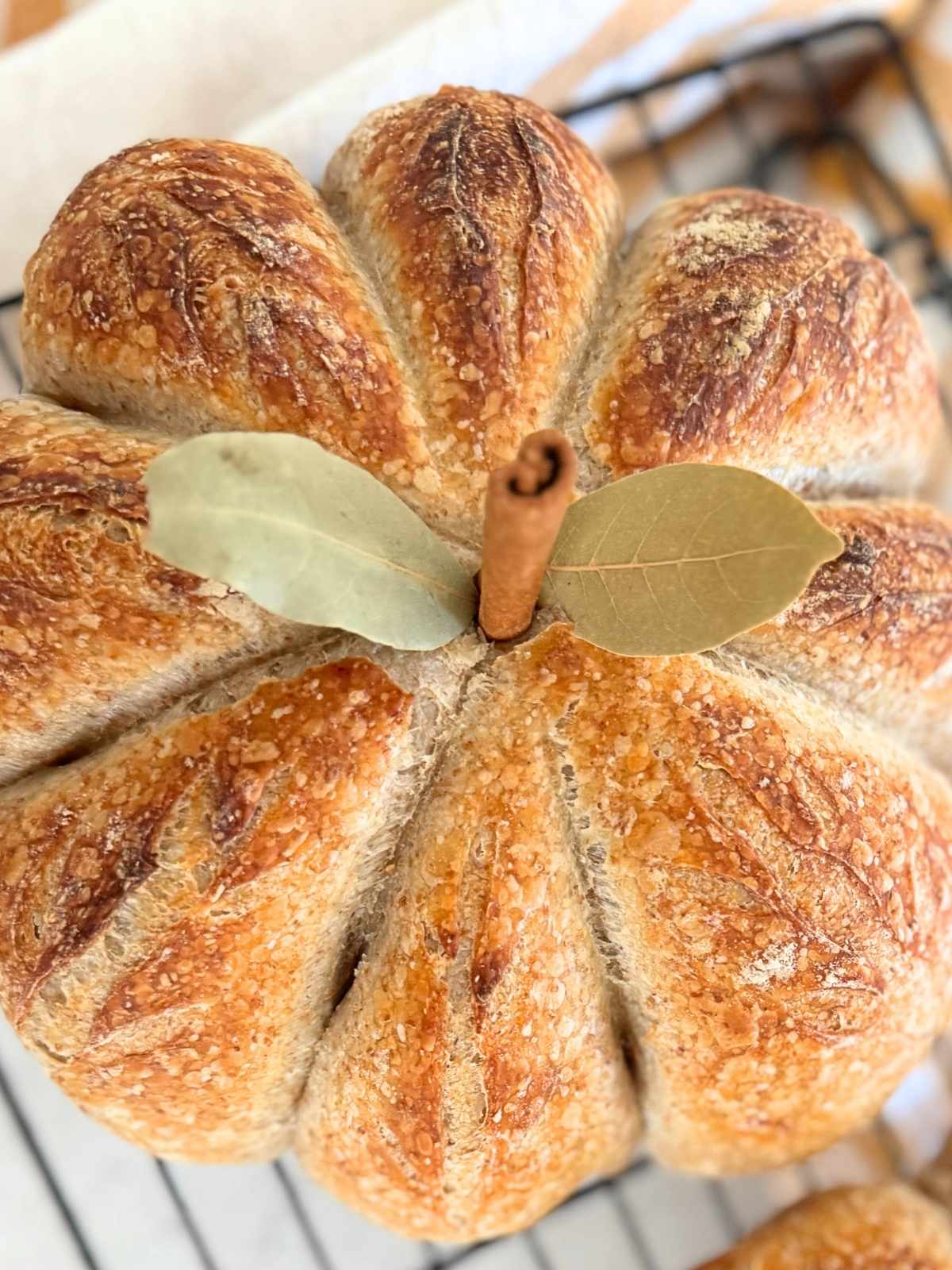
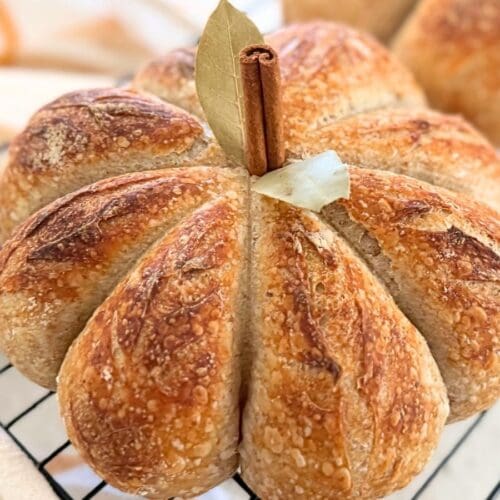
Learn how to make pumpkin-shaped sourdough bread with these simple steps. Making a sourdough pumpkin is easy and adds an aesthetic touch to all your fall and holiday gatherings. Use a classic no-knead sourdough boule or your favorite sourdough recipe!
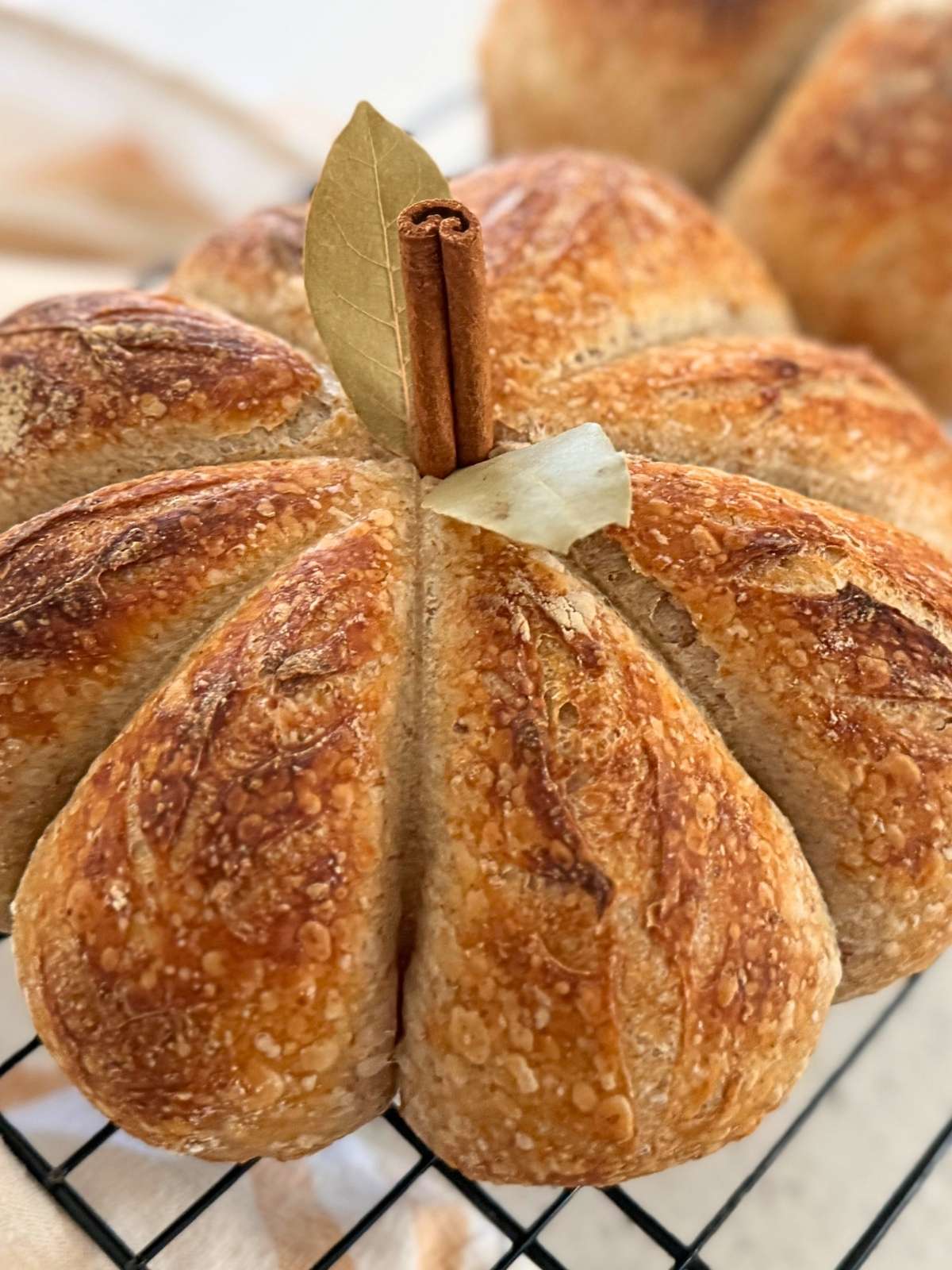
Recipe Overview: Pumpkin-Shaped Sourdough
- Ready In: 22 hours, 50 minutes (depending on recipe)
- Serves: 1 boule
- Calories: 100 kcal/slice (depending on recipe)
- Main Ingredients: Flour, water, salt, sourdough starter
- Dietary Notes: Fermented grains
- Why You’ll Love It: This pumpkin-shaped sourdough bread turns a classic boule into a festive fall centerpiece with just a few simple steps. It's fun to make with kids and perfect for fall gatherings, Thanksgiving dinner, or a cozy fall meal.
SUMMARIZE & SAVE THIS RECIPE ON
When the weather cools, I am ready for all things fall. Each year, we head to the North Carolina mountains for changing leaves, apple picking, and favorites like sourdough apple cinnamon bread and sourdough apple cider donuts.
Pumpkin season is just as exciting, with recipes like sourdough pumpkin cobbler, pumpkin sourdough focaccia with prosciutto, and this pumpkin-shaped sourdough bread.
Making pumpkin-shaped sourdough is easy if you are already familiar with sourdough bread. I use my classic sourdough bread recipe, but any boule will work. The finished loaf makes a beautiful centerpiece for a fall or Thanksgiving table.
🌾 New to sourdough? My Sourdough Starter for Beginners course walks you through making a healthy starter and baking your first loaf with confidence. 🌾
Jump to:
Why You’ll Love This Recipe
Use Any Bread Recipe: As long as the dough can hold its shape, you can turn it into a pumpkin. Chocolate sourdough, sourdough croissant bread, maple oatmeal bread, half-fresh milled, and even sourdough sandwich bread are great choices.
Fall Aesthetic: Pumpkin-shaped sourdough is a pretty and useful way to add a touch of fall to your kitchen.
Easy: Making pumpkin-shaped sourdough is an easy DIY fall project. It’s as simple as tying a few pieces of twine around a batch of dough.
Fun for Kids: This is also an easy project for kids to enjoy. My 3-year-old loves making “bread that’s a pumpkin.”
Simple Gift Giving: Pumpkin-shaped sourdough makes a great gift. Check out my gifting sourdough guide for ideas!
Ingredients & Tools
Ingredients: Gather the ingredients needed for your preferred recipe (I usually use my beginner’s no-knead sourdough recipe).
Cinnamon Stick: A cinnamon stick works perfectly for a cute pumpkin stem.
Bay Leaves: Although they don’t resemble pumpkin leaves, adding a few bay leaves alongside the cinnamon-stick stem creates a finished look.
Banneton Basket: A banneton basket or proofing basket helps maintain the dough’s shape while cold proofing. Use a round banneton basket for pumpkin-shaped sourdough. A towel-lined bowl will also work.
Cutting board: A small cutting board helps turn the dough over without losing the placement of the butcher’s twine.
Butcher’s Twine: Butcher’s twine creates the ribs of the pumpkin shape.
Lame: Score the dough with a lame (pronounced “lahm”) or a regular razor blade.
Cast Iron Dutch Oven: The tight-fitting lid on a Dutch oven traps steam and creates better oven spring.
How To Make a Sourdough Pumpkin
These instructions assume you have already made, fermented, and cold-proofed your bread dough.
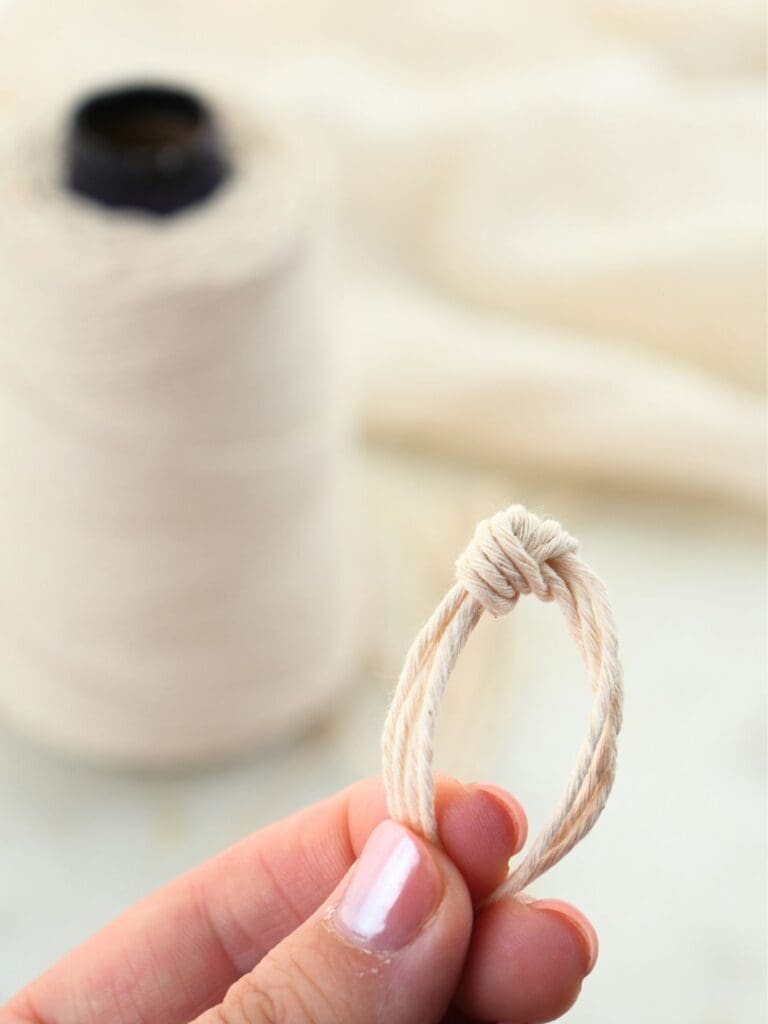
Step 1: Prepare your dough as you normally would. Proof the dough in a round banneton. When you are ready to bake, preheat a cast iron Dutch oven to the temperature the recipe recommends.
Leave the dough in the fridge while you prep the supplies.
Cut 4 pieces of butcher’s twine about 36-40 inches long. Tie them in a knot in the middle. This will keep them in place as you shape the dough.
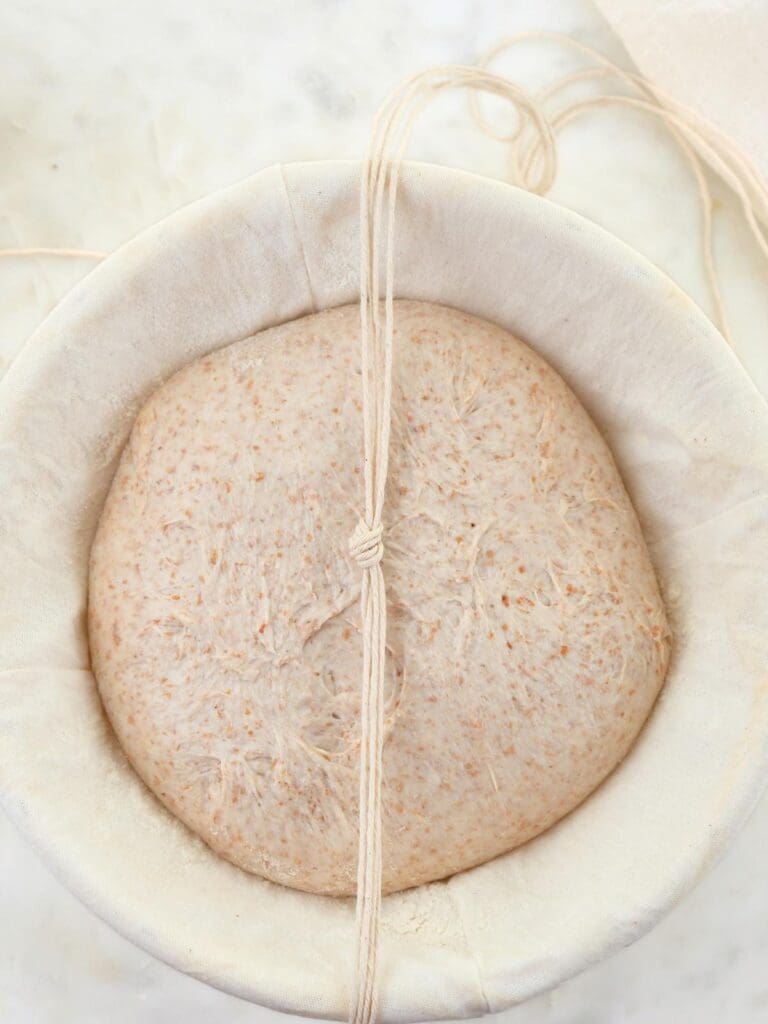
Step 2: Remove the dough from the fridge, but keep it in the banneton basket or towel-lined bowl.
Place the knotted twine vertically across the top of the dough. Make sure the knot is in the center of the dough.
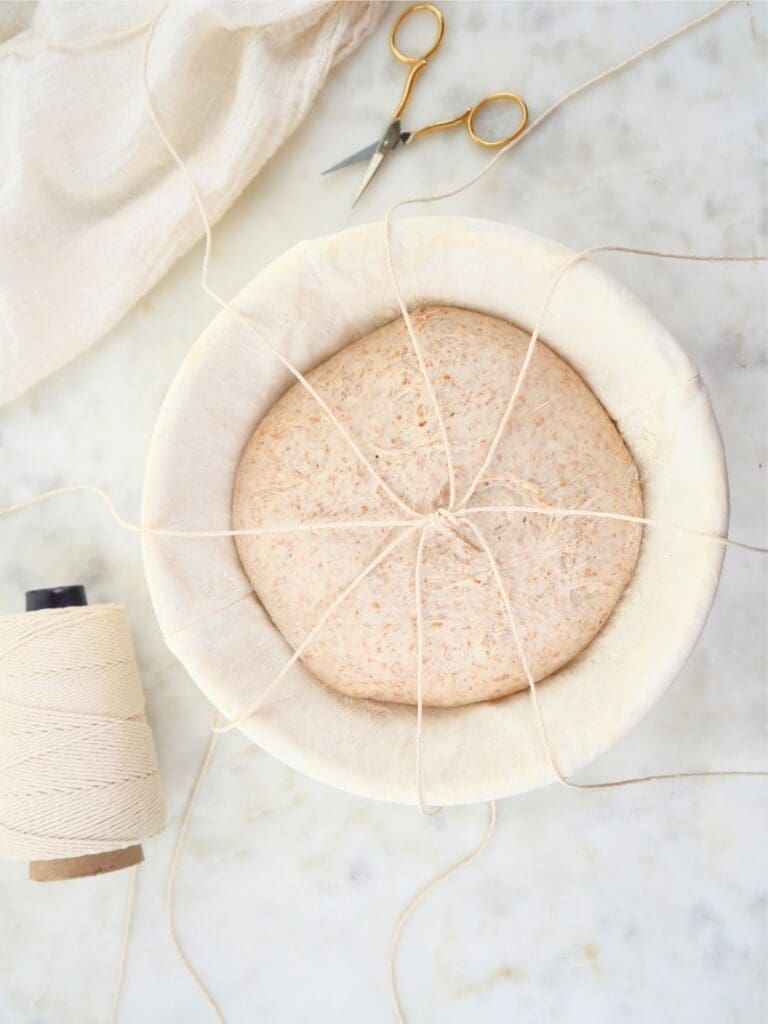
Step 3: Spread and align the twine so that it creates 8 equal sections.
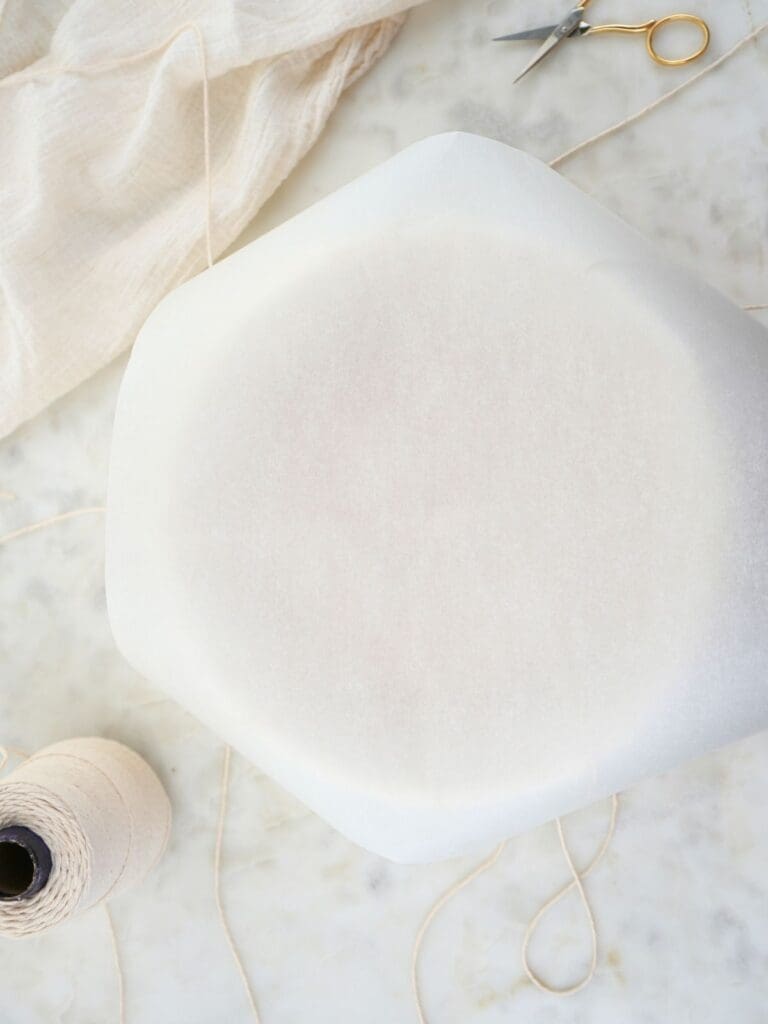
Step 4: Place a piece of parchment paper over the dough. Make sure the banneton, dough, and string are fully covered.
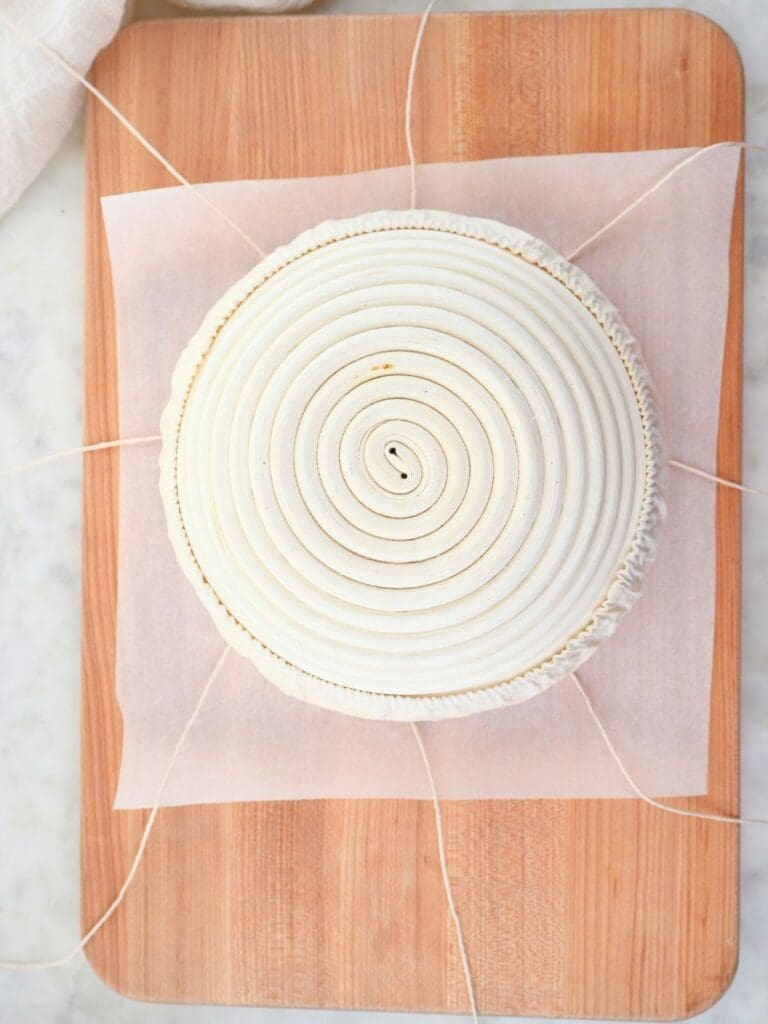
Step 5: Place a cutting board on top of the parchment-covered banneton basket and use it to turn the dough over.
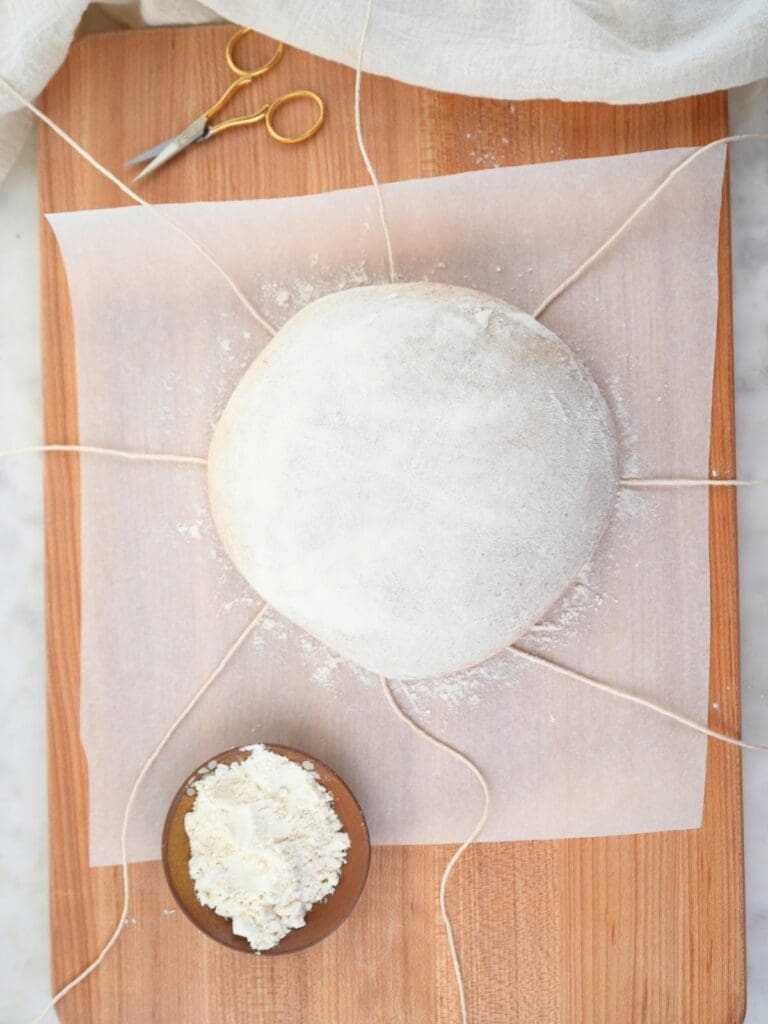
Step 6: Rub a light coating of flour on the dough. This will make your scoring stand out and help prevent the butcher’s twine from sticking. Note: you can skip this step if you prefer a toasted look rather than a white boule (I skipped this part for the main photo in this post).
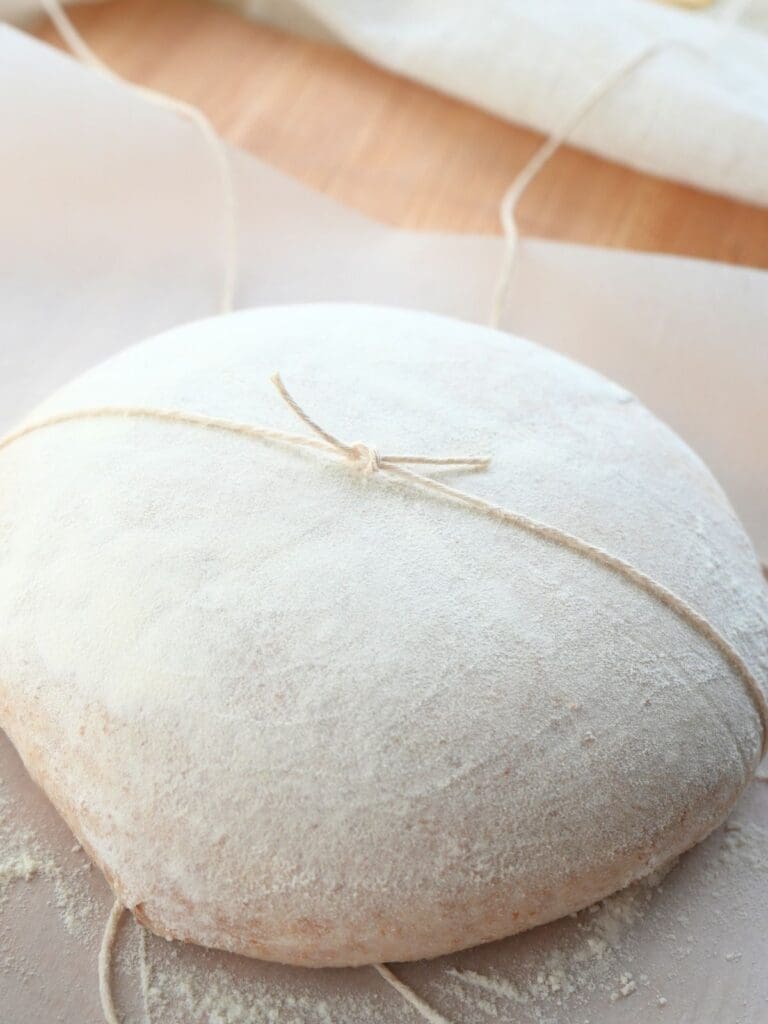
Step 7: If needed, readjust the strings so they are even. Then, grab two strings from opposite ends and tie a knot at the center of the dough. The string should be snug against the dough but not cut or pinch into it.
Cut the excess string above the knot.
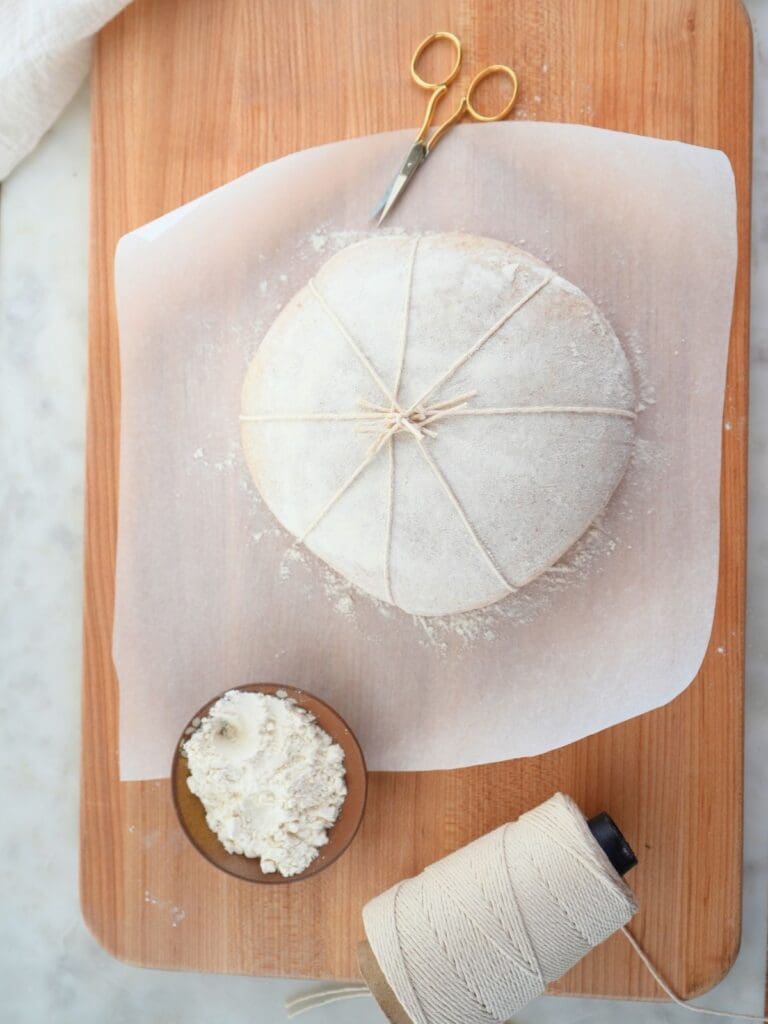
Step 8: Repeat with each string, ensuring the knots are centered on the dough.
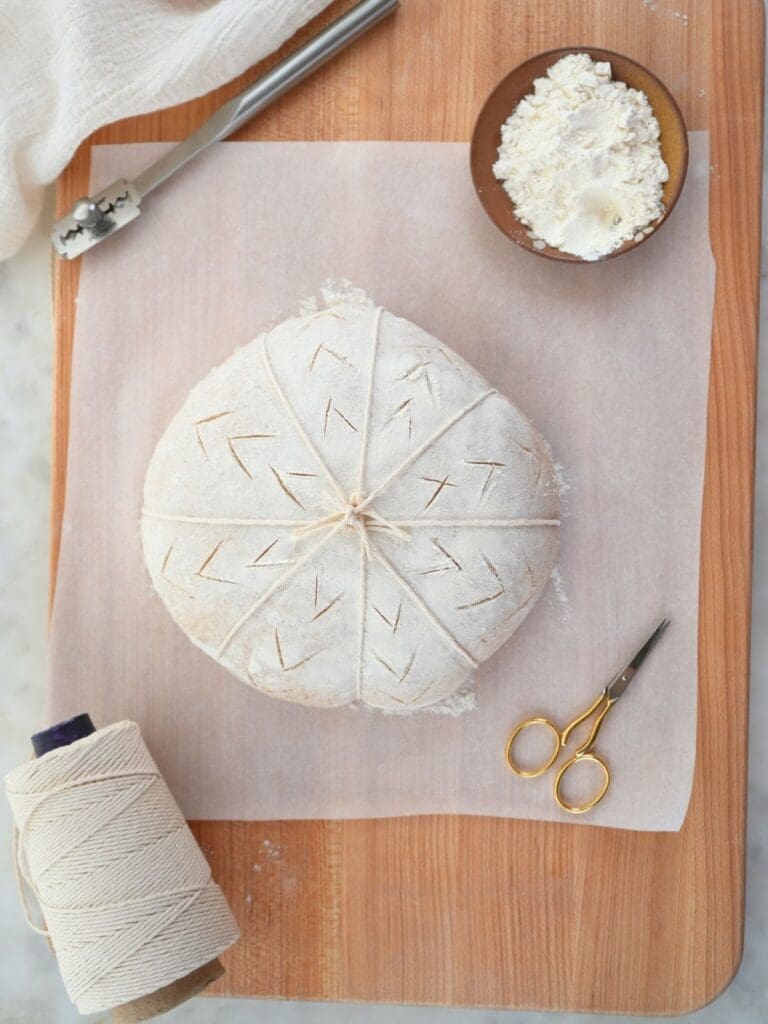
Step 9: Optional: with a bread lame, add designs to each section on top of the loaf.
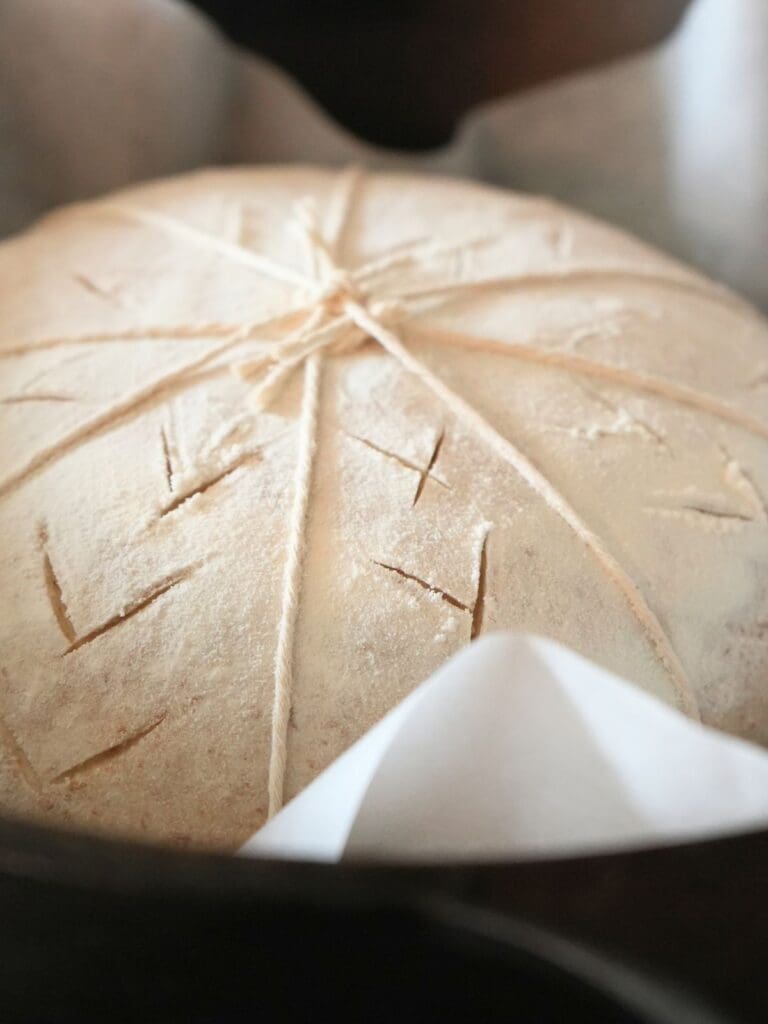
Step 10: Use the parchment paper to transfer the dough to the hot Dutch oven.
Follow the recipe instructions for baking. Most sourdough bread is ready when the top is golden brown and reaches an internal temperature of 190°-200° F.
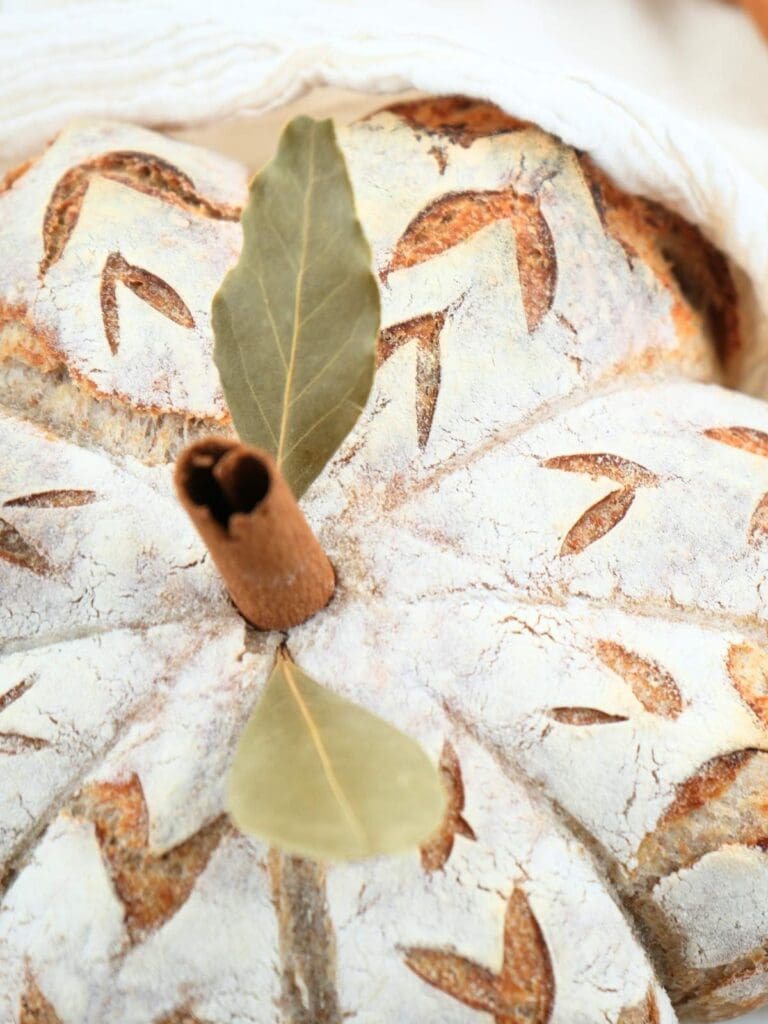
Step 11: When the bread is done, transfer it to a wire rack to cool. When it is cool to the touch, remove the string.
I usually cut the strings at the top and pull them out gently. They can get a little embedded in the bread, but give them a little tug, and they should come out.
Use a small knife to pop a hole in the center of the dough, and insert half of a cinnamon stick for the stem. Add bay leaves for a cute finishing touch.
Tips for Success
- Soaking the butcher’s twine in oil makes it easier to remove. I usually skip this step, but it is helpful if you find it hard to remove the twine.
- Before arranging the twine across the dough, knot it together in the middle. This makes it much easier to turn the dough over without losing the twine’s placement.
- The baking process isn’t complete until the bread is room temperature. So don’t remove the string or cut into the bread until it is cool to the touch. Waiting to eat it is the hardest part of the process, haha!
- Baking sourdough while it’s cold creates more steam, resulting in a fuller loaf of bread. Sourdough can expand up to 30% in the oven! So, oven spring is the difference between a flat sourdough pumpkin and one with a plump, round shape.
- Though it looks like just a few pieces of string, you specifically need butcher’s twine because it is food- and oven-safe.
Storing & Freezing
- Leftover sourdough is best stored with a little airflow. I like to use a kitchen towel and leave it on the counter for up to 2 days. You can also store sourdough bread in a Ziploc bag, but it can make the crust soft.
- If you think your bread will go stale, you can freeze sourdough bread for later use.
- Sourdough bread is best consumed quickly. If your bread is drying out, make French toast, sourdough toast, or breadcrumbs before it goes stale.
Pumpkin-Shaped Sourdough Bread FAQs
For the best results, I shoot for about 8-10 score marks per section of the pumpkin. And I only cut about 1/8″ deep into the dough.
If your dough is bursting open, that is a sign that your dough needed to ferment longer or that you scored too deeply.
Sourdough needs support during cold proofing to hold its shape. A banneton basket works best, and I recommend an 8″ or 9″ round one for a sourdough pumpkin. You can also use a towel-lined bowl, but if it's too wide and shallow, the dough won't stay as round and full once baked.
You can turn just about any bread into a pumpkin as long as the dough can hold its shape. Quick sweet breads like banana bread, for example, wouldn’t work because they are a batter and not a shaped dough.
For this post, I used my regular no-knead sourdough recipe. But any bread dough, from sourdough croissant bread, cranberry walnut sourdough bread, sourdough sandwich bread, to even fresh-milled dinner rolls, will work.
This can happen if the dough is underproofed, overproofed, too dry, or not scored enough to release steam. But even if it bursts a little, it’s still beautiful and delicious!
More Sourdough Bread Recipes

If you tried this Pumpkin-Shaped Sourdough Bread recipe or any other recipe on my blog, please leave a 🌟 star rating and let me know how it went in the 📝 comments below. Thanks, y'all!

How To Make Pumpkin-Shaped Sourdough
Ingredients
- use ingredients for you preferred recipe
Instructions
- I use my regular no-knead sourdough recipe. But you can use your favorite. These instructions assume you have already made, fermented, and cold-proofed your bread dough.
Preheat and Prepare
- Prepare your dough as you normally would. Shape the dough into a tight ball for a round loaf. When you are ready to bake, preheat a cast iron Dutch oven to the temperature the recipe recommends.
- Leave the dough in the fridge while you prep the supplies.
- Cut 4 pieces of butchers twine about 36-40 inches long. Tie them in a knot in the middle. This will keep them in place as you shape the dough.
Make the Pumpkin Shape
- Remove the dough from the fridge, but keep it in the banneton basket or towel-lined bowl.
- Place the knotted twine vertically across the top of the dough. Make sure the knot is in the center of the dough.
- Spread and align the twine so that it creates 8 equal sections.
- Place a piece of parchment paper over the dough. Make sure the banneton, dough, and string are fully covered.
- Place a cutting board on top of the parchment-covered banneton basket and use it to turn the dough over.
- Rub a light coating of flour on the dough. This will make your scoring stand out and help prevent the butchers twine from sticking. Note: you can skip this step if you prefer a toasted look rather than a white boule (I skipped this part for the main photo in this post).
- If needed, readjust the strings so they are even. Then, grab two strings from opposite ends and tie a knot at the center of the dough. The string should be snug against the dough but shouldn't cut or pinch into it.
- Cut the excess string above the knot.
- Repeat with each string, ensuring the knots are centered on the dough.
- Optional: with a bread lame, add designs to each section on top of the loaf.
Bake the Bread
- Use the parchment paper to transfer the dough to the hot Dutch oven.
- Follow the recipe instructions for baking.
- When the bread is done, transfer it to a wire rack to cool. When it is cool to the touch, remove the string. I usually cut strings at the top and pull them out gently. They can get a little embedded in the bread, but give them a little tug, and they should come out.
- Use a small knife to pop a hole in the center of the dough, and insert half of a cinnamon stick for the stem. Add bay leaves for a cute finishing touch.
Notes
- Soaking the butcher's twine in oil makes it easier to remove. I usually skip this step, but it is helpful if you find it hard to remove the twine.
- Before arranging the twine across the dough, knot it together in the middle. This makes it much easier to turn the dough over without losing the twine's placement.
- The baking process isn't complete until the bread is room temperature. So don't remove the string or cut into the bread until it is cool to the touch. Waiting to eat it is the hardest part of the process, haha!
- Baking sourdough while it's cold creates more steam, resulting in a fuller loaf of bread. Sourdough can expand up to 30% in the oven! So, oven spring is the difference between a flat sourdough pumpkin and one with a plump, round shape.
- Though it looks like just a few pieces of string, you specifically need butcher's twine because it is food- and oven-safe.
Nutrition
Nutrition information is auto-calculated and may not reflect your final product. Please verify independently if needed.


This is one of my favorite fall recipes/projects. It’s as easy as my regular weekly bread, but with such a pretty seasonal touch.