
This post may contain affiliate links. Please read our disclosure policy.
Learn how to can crushed tomatoes so you can enjoy summer flavor all year long. Home-canned crushed tomatoes are a versatile pantry staple for soups, stews, sauces, casseroles, and more.
Canning crushed tomatoes is perfect for beginners, and this step-by-step guide will walk you through the process so you can safely preserve tomatoes at home.
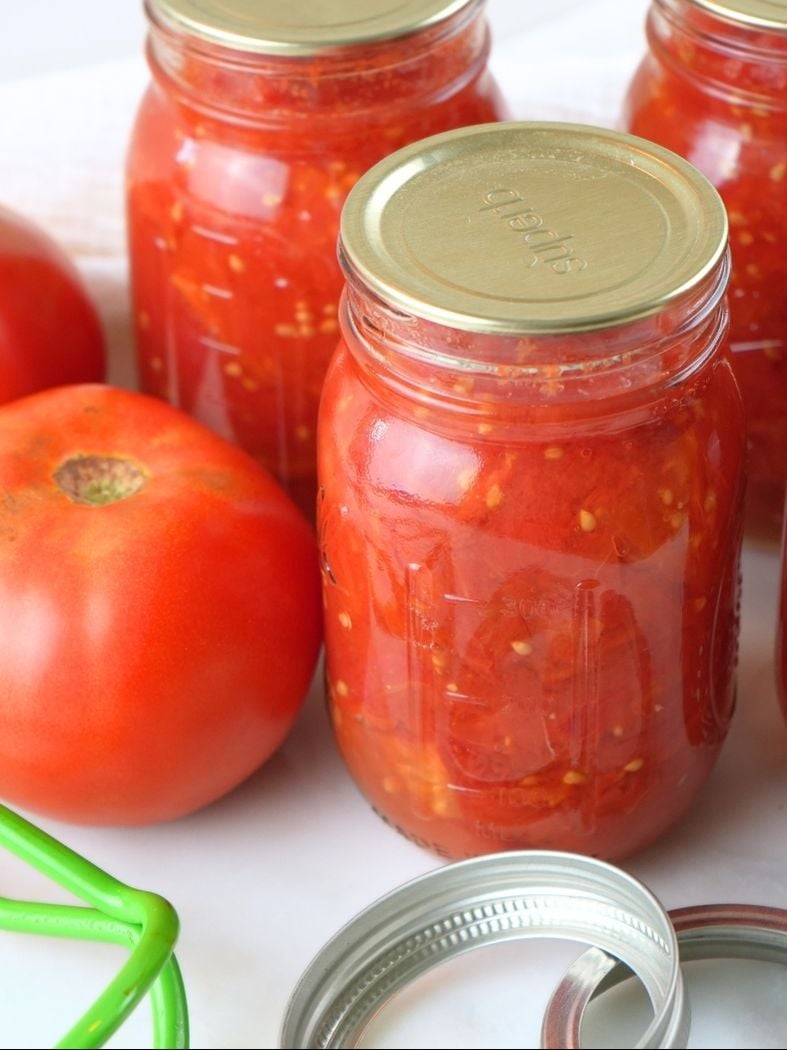
There's nothing quite like opening a jar of summer-ripened tomatoes in the middle of winter. The flavor is bright, fresh, and way better than store-bought varieties of canned tomatoes.
Folks often think they can’t preserve tomatomes at home because they don’t grow enough in their gardens. But you don’t have to have a homestead or a huge garden.
Every summer, I buy 100-125 pounds of tomatoes from a local farm and can them at home-right here, smack dab in the middle of the suburbs. For my family, that’s enough for a year, and I use them in any recipes that call for tomatoes.
Learning how to preserve tomatoes at home is a great way to stock your pantry and to enjoy summer’s bounty all year long.
This tutorial walks you through water bath canning crushed tomatoes step by step, so even if you're new to canning, you'll feel confident in the process. If you are just embarking on your food preservation journey, check out my canning equipment guide before getting started.
The next thing you know, you’ll be making pressure-canned chicken broth, my canned strawberry jam recipe, home-canned pinto beans, and just about anything else you can stock your pantry with.
Ps. You might also enjoy my self-sufficient pantry episode on my new podcast, Tended!

Why You’ll Love Home-Canned Tomatoes
Summer Flavor: Canning tomatoes at home brings summer’s flavor into your kitchen all year long.
No Additives: Home-canned tomatoes contain only tomatoes and lemon juice, sealed in glass with no additives or unknown ingredients.
Versatile: Canned crushed tomatoes work for soups, sauces, casseroles, and more. They are so versatile that it’s the only type of canned tomatoes I keep in my pantry.
Beginner-Friendly: You only need a few simple, budget-friendly tools to water bath can crushed tomatoes, making this an easy project for beginners.
Video – A Year’s Worth of Canned Tomatoes
In this video, I show you the step-by-step process for canning a year’s worth of tomatoes.
Don’t forget to subscribe to my YouTube channel. New videos come out weekly!

Ingredients

Tomatoes: You will need approximately 20 pounds of tomatoes for a load of 9 pints. Just about any variety will work. I always buy boxes of canning tomatoes from a local farm. Often, local farms will offer a discount if you buy in bulk.
Lemon Juice: For canning, only use bottled lemon juice, not fresh lemons.
Get the full list of ingredients and measurements on the printable recipe card below.
Tools You Will Need
Stockpot: Use a large stockpot to crush and cook the tomatoes.
Water Bath Canner: I use a 21.5-quart water bath canner. Canning pots are taller than stockpots, ensuring the jars are covered by at least 2 inches of water during processing.
Food Funnel: Use a canning funnel to transfer the food into the jars.
Jar Lifter: Always use canning tongs (aka a jar lifter) to transfer the hot jars in and out of the water bath canner.
Debubbler/Measurer: I like to use this canning debubbler. One side is for popping bubbles, while the other side is for measuring the headspace.
Mason Jars: This recipe uses pint jars. I usually run mine through the dishwasher right before using them. Regular or wide-mouth jars will work.
Canning Lids & Rings: I use Superb canning lids. They are compatible with Ball rings, so you don't need to purchase new rings if you already have a bunch. Remember, rings can be reused, but lids are not reusable.
Step-by-Step Instructions

Step 1: To get started, follow the manufacturer’s instructions to prepare your water bath canner, lids, and jars. I always put the jars in the canner so they stay hot.
Then, bring a separate large pot of water to a boil. While you wait for the water to boil, fill a separate bowl with ice water.

Step 2: Working in batches, wash the tomatoes. Place them in the boiling water for 30-60 seconds. I usually boil 3-4 at a time.

Step 3: Use a slotted spoon to transfer the tomatoes to the ice water.

Step 4: Peel the tomatoes, removing any bruised, damaged, or discolored areas. Core them and cut into quarters or large chunks if they are oversized.
As you work, place the skins and cores in a bowl for compost and collect the prepared tomato pieces in a separate large bowl.

Step 5: Transfer 4 cups of tomatoes to a large stock pot. Cook over medium heat, while crushing them with a spoon to release the juices and stirring to prevent burning.
When boiling, add the remaining tomatoes in 2-3 cup portions, stirring frequently. Do not crush; they will soften as they cook. Once all are added, return to a boil and cook for 5 minutes.

Step 6: Use a jar lifter to remove the jars from the canner. I usually place them on a towel to protect the counter and to catch any spills.

Step 7: Pour 1 tablespoon of bottled lemon juice into each jar.

Step 8: Pack the hot jars with hot tomatoes, leaving 1/2″ headspace.
I use a canning funnel to avoid spills and a slotted spoon to pack the jars with more tomatoes than liquid.

Step 9: Use a clean debubbler to slide around the jar's edges and release air bubbles. Re-check the headspace and add more tomatoes if needed.

Step 10: Wipe the jar rim with a clean, damp paper towel. Place a lid on each jar, making sure it is centered.

Step 11: Add a band to each jar, and twist it only until fingertip tight.

Step 12: Use canning tongs to transfer each prepared jar into the water bath canner. Ensure the water covers the jars by 2 inches. Return the canner to a boil. Then, process for 35 minutes, adjusting the time for altitude if necessary. Start the time only once the water is boiling.

Step 13: Turn off the heat and remove the canner lid. Let jars sit in the hot water for 5 minutes to prevent siphoning.
Remove jars without adjusting bands and cool for 12-24 hours. Once cooled, check that lids are sealed and do not flex when pressed.
Store without bands in a cool, dry place (check with the lid/jar manufacturer for how long they recommend storing).
Tips for Success
- Clean as you go. Canning tomatoes can be messy. You’ll thank yourself later if you clean as much as you can throughout the process.
- Always use bottled lemon juice when canning. Its consistent acidity makes the recipe safe for water bath canning, unlike fresh lemons with variable pH.
- Skip adding salt or other seasonings during canning. You can easily season the tomatoes later when you use them in recipes.
- Label with the date so you know when to use them (best within 12-18 months).
- Use ripe, firm tomatoes. Overripe or damaged ones can affect flavor and safety.
- To learn more about food preservation, check out my Food Preservation 101 podcast episode.

How To Store Home-Canned Tomatoes
Without the Rings: Store home-canned crushed tomatoes without the rings so you'll know if the seal pops.
Cool and Dry: Store your canned tomatoes in a cool, dry place, ideally between 50° F and 70° F.
Do Not Stack: Do not stack home-canned goods. The weight on the bottom jar can make it hard to tell if the seal has popped.
Upright: Keep the jars upright while in storage.
Lid Recommendations: Most manufacturers state how long their seals will last. Check the packaging for info.
How To Use Home-Canned Crushed Tomatoes
Sauces: Crushed tomatoes are great for making homemade pasta sauces. Mix a little homemade pasta sauce with classic béchamel sauce for a creamy tomato sauce.
Soups and Stews: Add a can of crushed tomatoes to tomato and veggie soup, Cuban garbanzo bean stew, or your other favorites.
Chili: Toss a few cans of home-canned crushed tomatoes into your favorite chili recipe.
One-Pot Meals: Crushed tomatoes are ideal for any one-pot meal, like homemade Cheeseburger Helper or a sourdough skillet meal.

Canning Safety Tips
I always recommend familiarizing yourself with the canning safety tips from The National Center for Home Food Preservation and Ball Canning. Ball's FAQ page answers many common questions about safe canning practices.
Canning food at home is a safe way to preserve your favorite foods, but there are a few tips to remember:
Use a Tested Recipe: Tested recipes undergo a rigorous scientific process to ensure that dangerous microorganisms will not grow in your preserved food.
Clean Environment: Make sure your food, kitchen, hands, and tools are clean before canning.
Use Unblemished Food: Choose foods without bruises or other blemishes.
Adjust for Altitude: Your altitude affects how long you need to process the tomatoes. I live just a few feet above sea level, so I don't have to adjust mine. But if you live at higher elevations, check the altitude adjustments.
Label and Date: Always label and date your canned foods. Use your oldest canned foods first.
Skip Grandma's Methods: Old-fashioned canning methods are often unsafe. Also, food and soil acidity change over time. So, only use current tested recipes and canning practices.
FAQs
Yes! You can use cherry or heirloom tomatoes, but they are usually juicier than paste varieties. For a less watery texture, you can combine them with meatier tomatoes like Roma or San Marzano.
Yes, tomato skins can become tough and float in the jars. Plus, bacteria often live on the skin, so peeling helps prevent spoilage.
Yes, you can safely double or even triple the batch. Just keep processing the jars in batches so each one is heated and sealed properly.
Absolutely. Pressure canning is a safe alternative to water bath canning. Follow a tested recipe for pressure canning times and guidelines for tomatoes.
Let's Connect!
If you tried this recipe and loved it, leave a comment or review below.
Also, don't forget to pin this post and follow Moon + Magnolia on Pinterest. You can save all my recipes on your boards and keep up with the latest happenings!
Share your creations on Instagram and tag @moon_and_magnolia!

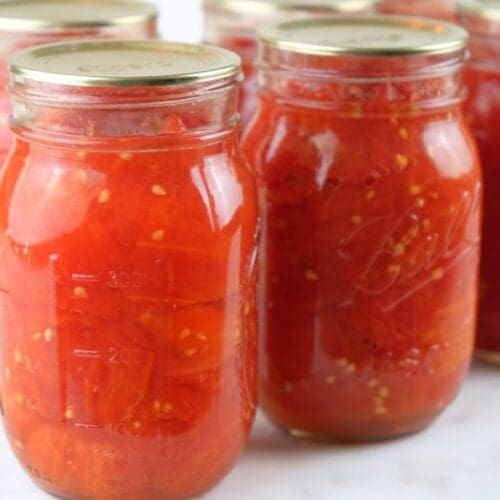
How To Can Crushed Tomatoes
Equipment
- Large Bowls
- Stockpot
- Mason jars
- Debubbler
- Lids and rings
Ingredients
- 20 pounds tomatoes
- 9 tablespoon lemon juice, (bottled only)
Instructions
- Prepare. To get started, follow the manufacturer's instructions to prepare your water bath canner, lids, and jars. I always put the jars in the canner so they stay hot.Then, bring a separate large pot of water to a boil. While you wait for the water to boil, fill a separate bowl with ice water
- Boil the Tomatoes. Working in batches, wash the tomatoes. Place them in the boiling water for 30-60 seconds. I usually boil 3-4 at a time.20 pounds tomatoes
- Place in Ice Bath. Use a slotted spoon to transfer the tomatoes to the ice water.
- Peel and Cut. Peel the tomatoes, removing any bruised, damaged, or discolored areas. Core them and cut into quarters or large chunks if they are oversized. As you work, place the skins and cores in a bowl for compost and collect the prepared tomato pieces in a separate large bowl.
- Cook the Tomatoes. Transfer 4 cups of tomatoes to a large stock pot. Cook over medium heat, while crushing them with a spoon to release the juices and stirring to prevent burning.When boiling, add the remaining tomatoes in 2-3 cup portions, stirring frequently. Do not crush; they will soften as they cook. Once all are added, return to a boil and cook for 5 minutes.
- Prepare to Pack. Use a jar lifter to remove the jars from the canner. I usually place them on a towel to protect the counter and to catch any spills.
- Add Lemon Juice. Pour 1 tablespoon of bottled lemon juice into each jar.9 tbsp lemon juice
- Pack the Jars. Pack the hot jars with hot tomatoes, leaving 1/2" headspace. I use a canning funnel to avoid spills and a slotted spoon to pack the jars with more tomatoes than liquid.
- Debubble. Use a clean debubbler to slide around the jar's edges and release air bubbles. Re-check the headspace and add more tomatoes if needed.
- Add Lids. Wipe the jar rim with a clean, damp paper towel. Place a lid on each jar, making sure it is centered.
- Add Rings. Add a band to each jar, and twist it only until fingertip tight.
- Process. Use canning tongs to transfer each prepared jar into the water bath canner. Ensure the water covers the jars by 2 inches. Return the canner to a boil. Then, process for 35 minutes, adjusting the time for altitude if necessary. Start the time only once the water is boiling.
- Cool. Turn off the heat and remove the canner Iid. Allow the jars to cool for 5 minutes in the hot water. This helps prevent a rapid temperature change, which can cause siphoning (aka liquid leaking from the lid).Remove the jars from the canner. Do not retighten or adjust the bands if they are loose. Cool for 12-24 hours. Check the lids for a proper seal once completely cooled. They should not flex or pop when you press the center.
- Store. Store without bands in a cool, dry place (check with the lid/jar manufacturer for how long they recommend storing).
Video
Notes
- Clean as you go. Canning tomatoes can be messy. You’ll thank yourself later if you clean as much as you can throughout the process.
- Always use bottled lemon juice when canning. Its consistent acidity makes the recipe safe for water bath canning, unlike fresh lemons with variable pH.
- Skip adding salt or other seasonings during canning. You can easily season the tomatoes later when you use them in recipes.
- Label with the date so you know when to use them (best within 12-18 months).
- Use ripe, firm tomatoes. Overripe or damaged ones can affect flavor and safety.
Nutrition
Nutrition information is auto-calculated and may not reflect your final product. Please verify independently if needed.


We can’t live without canned crushed tomatoes. The process is simple, especially once you have a few batches under your belt.