
This post may contain affiliate links. Please read our disclosure policy.
French mayonnaise is easy to make in just 10 minutes. Your sandwiches, fries, and steaks are begging to be eaten with it.
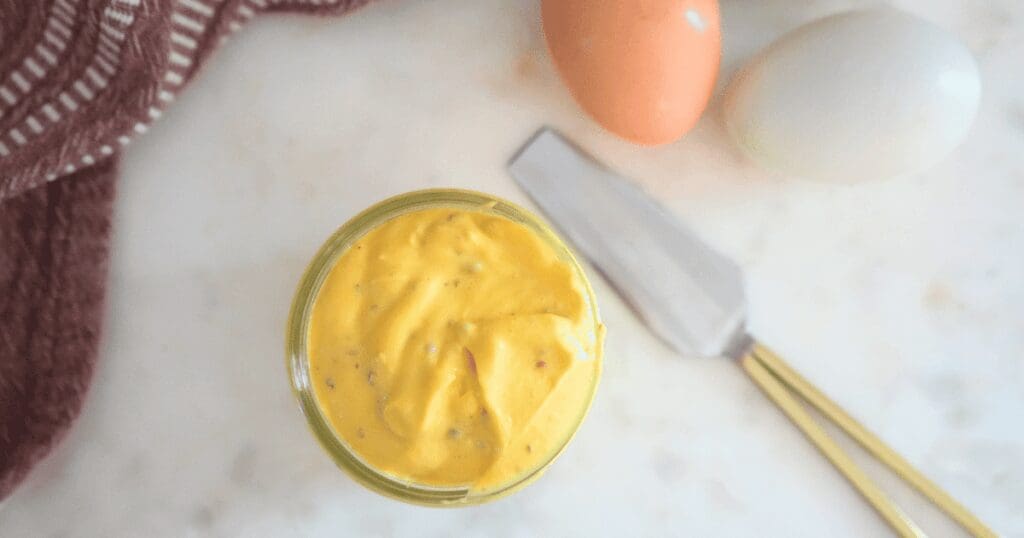
Table of Contents
Admittedly, I mentioned on my YouTube channel that I don’t make homemade mayonnaise often because I struggle to get through it quickly enough.
But now that it is spring and chickens are laying eggs, my “egg dealer” keeps giving me extra farm-fresh eggs.
Of course, I like to freeze dry eggs to preserve them. I also like to add them to enriched doughs, such as sourdough donuts and sourdough cinnamon rolls.
But still, with a fridge full of eggs, I have been trying to find creative ways to use them.
Since I want only so many scrambled eggs on sourdough toast and egg yolk coffees every day, I decided to contradict myself and make this homemade French mayonnaise recipe.
And now, there is no going back to store-bought mayonnaise. It’s that good!
After you try this homemade mayonnaise, you won’t have to worry about not getting through it in time. Your bigger concern will be if there is enough.

What is French Mayonnaise?
Most French mayonnaise recipes are similar to standard mayo, except French mayo uses egg yolks rather than whole eggs and includes Dijon mustard.
The egg yolks create a richer flavor, while the mustard adds a little depth and complexity.
French Mayonnaise Ingredients

Egg Yolks: For the best results, use large, room-temperature eggs. The large egg yolk yields a richer flavor.
Oil: Any neutral oil will work. I prefer avocado oil, but you can also use canola or sunflower oil if that’s what you have.
Mustard: Classic French mayo uses Dijon mustard. I swapped it out for stone-ground mustard because I’m not too fond of Dijon. But either will work!
Vinegar: White or white wine vinegar for this recipe. Lemon juice will also work.
Get the full list of ingredients and measurements on the printable recipe card below.
Tools You Will Need
Glass jar or a mixing bowl – You will need a container to mix and blend the ingredients. I like to use a glass mason jar.
Whisk – Use a whisk to combine the egg yolks and oil.
Immersion blender – An immersion blender creates a thicker texture. I recommend switching to an immersion blender once all of the oil and egg yolks are whisked together.
Measuring cups and spoons – You will need measuring cups and spoons for the oil, mustard, and vinegar.
Step-by-Step Instructions
In a medium bowl or glass jar, add the egg yolks and whisk until smooth.
Slowly drizzle the oil into the egg yolks while continuously whisking. I like to pour it in about one tablespoon at a time. It doesn’t have to be precise, but whisking it in slowly and thoroughly is KEY.
Once the oil is whisked in and combined, use your immersion blender to whip the ingredients. Usually, it only takes a minute or less.
When the consistency is thick and creamy, turn off the blender and add 1 teaspoon of mustard, 1 tablespoon of vinegar, and a dash of salt and pepper. Pulse with the immersion blender a few times.
Taste the mayo and add more mustard, vinegar, salt, and/or pepper to taste. Continue pulsing and adjusting the seasonings until the mayo reaches your desired flavor.
Transfer to an airtight container and store in the fridge for up to a week (possibly longer if your eggs are very fresh).

Tips for Making French Mayonnaise
Use fresh eggs.
If you have access to farm-fresh eggs, I recommend using them. The quality and taste are much better. However, store-bought eggs will certainly work if that isn’t an option.
Whisk in oil slowly.
When I was testing French mayonnaise recipes, I found that not all recipes mentioned adding in the oil slowly. As such, I had several failed attempts at mayo. But once I whisked in the oil one tablespoon at a time, it was mayo magic!
Though it isn’t actually magic. The binding properties of the egg yolks help the oil mix in, but only if it is done slowly. Homemade French mayo can curdle if the oil is mixed in too quickly. Ask me how I know.
Add the seasonings to taste.
I recommend a range for the seasoning in this French mayonnaise recipe. Though this isn’t necessary, flavors like Dijon mustard and vinegar can be overpowering. Add mustard, vinegar, salt, and pepper a little at a time to tailor your homemade mayo to your taste.
Use an immersion blender.
You can certainly whisk the ingredients by hand, but the emulsion process requires more vigor than my arms can provide (apparently, I am a weakling). If you have an immersion blender, it’s worth getting it out of the cabinet for this recipe. Note: I found it works best to whisk the oil in slowly. Once, it is combined, switch to an immersion blender.
Warm your container.
It’s best if your ingredients are room temperature. An easy hack for taking the chill off of refrigerated eggs is to warm your container. You can easily do this by running hot water over the outside of your jar or bowl to warm it up.

How to Use Homemade French Mayonnaise
Dip and Sauce
Of course, you can use French mayo just as you would regular store-bought varieties, such as a spread for cold meats on sourdough sandwich bread.
But because it has more depth of flavor, it is often used as a dip for raw vegetables, a sauce for steaks, or a condiment for French fries.
Homemade Aioli
You can also add garlic and fresh or freeze-dried herbs to create a homemade aioli. This is particularly delicious when using homemade mayo on steak or roasted chicken.
Classics Made Better!
Also, this mayo makes THE BEST potato salad. And if you have Instant Pot boiled eggs to use up, you can make quick deviled eggs with French mayo.
Frequently Asked Questions
No! Traditional French mayonnaise recipes call for Dijon. Fun fact: I don’t like Dijon mustard. So, instead, I used stone-ground mustard, and I loved it. Feel free to use any mustard you like or have on hand (though a French chef might totally disagree with me).
If your homemade mayo is yellow, it is most likely due to the egg yolks. Regular mayo uses a whole egg, so the egg white dilutes some of the color. Also, some eggs have darker yolks than others. For example, my farm-fresh eggs have dark yolks, so my mayo was very yellow.
In my experience, the best vinegar is either white vinegar or white wine vinegar. Either will do, depending on your preference or what you have on hand. You can also use lemon juice as an alternative to vinegar.
I prefer a neutral oil, such as avocado, canola, or sunflower oil, for homemade mayonnaise (avocado is my go-to). Olive oil will also work, but it will alter the flavor. I have not tried using olive oil, but many folks say it can be a little overpowering.
Let’s Connect!
If you tried this recipe and loved it, leave a comment or review below.
Also, don’t forget to pin this post and follow Moon + Magnolia on Pinterest. You can save all my recipes on your boards and keep up with the latest happenings!
Share your creations on Instagram and tag @moon_and_magnolia!


Homemade French Mayonnaise
Ingredients
- 2 large egg yolks, room temperature
- 1 cup neutral oil
- 1-2 tsp Dijon or stone-ground mustard
- 1-2 tablespoons of vinegar
- Salt and pepper to taste
Instructions
- In a medium bowl or glass jar, add the egg yolks and whisk until smooth.
- Slowly drizzle the oil into the egg yolks while continuously whisking. I like to pour it in about one tablespoon at a time. It doesn't have to be precise, but whisking it in slowly and thoroughly is KEY.
- Once the oil is whisked in and combined, use your immersion blender to whip the ingredients. Usually, it only takes a minute or less.
- When the consistency is thick and creamy, turn off the blender and add 1 teaspoon of mustard, 1 tablespoon of vinegar, and a dash of salt and pepper. Pulse with the immersion blender a few times.
- Taste the mayo and add more mustard, vinegar, salt, and/or pepper to taste. Continue pulsing and adjusting the seasonings until the mayo reaches your desired flavor.
- Transfer to an airtight container and store in the fridge for up to a week (possibly longer if your eggs are very fresh).
Notes
- You can use lemon juice instead of vinegar. Just add a little at a time until it reaches your desired flavor.
- Classic French mayo uses Dijon mustard. I swapped it out for stone-ground mustard because I'm not too fond of Dijon. But either will work!
- You can certainly whisk the ingredients by hand, but the emulsion process requires more vigor than my arms can provide (apparently, I am a weakling). If you have an immersion blender, it's worth getting it out of the cabinet for this recipe.
- You can also add in garlic or fresh herbs to create a homemade aioli to this homemade French mayonnaise recipe.
Nutrition
Nutrition information is auto-calculated and may not reflect your final product. Please verify independently if needed.
This is just a quick and easy way to use up extra eggs!