
This post may contain affiliate links. Please read our disclosure policy.
You can cook with a cast iron Dutch oven on the stove, even on a glass top. From making slow-simmered broths to quick meals like creamy gnocchi soup and beyond, you can use a Dutch oven on any stovetop.
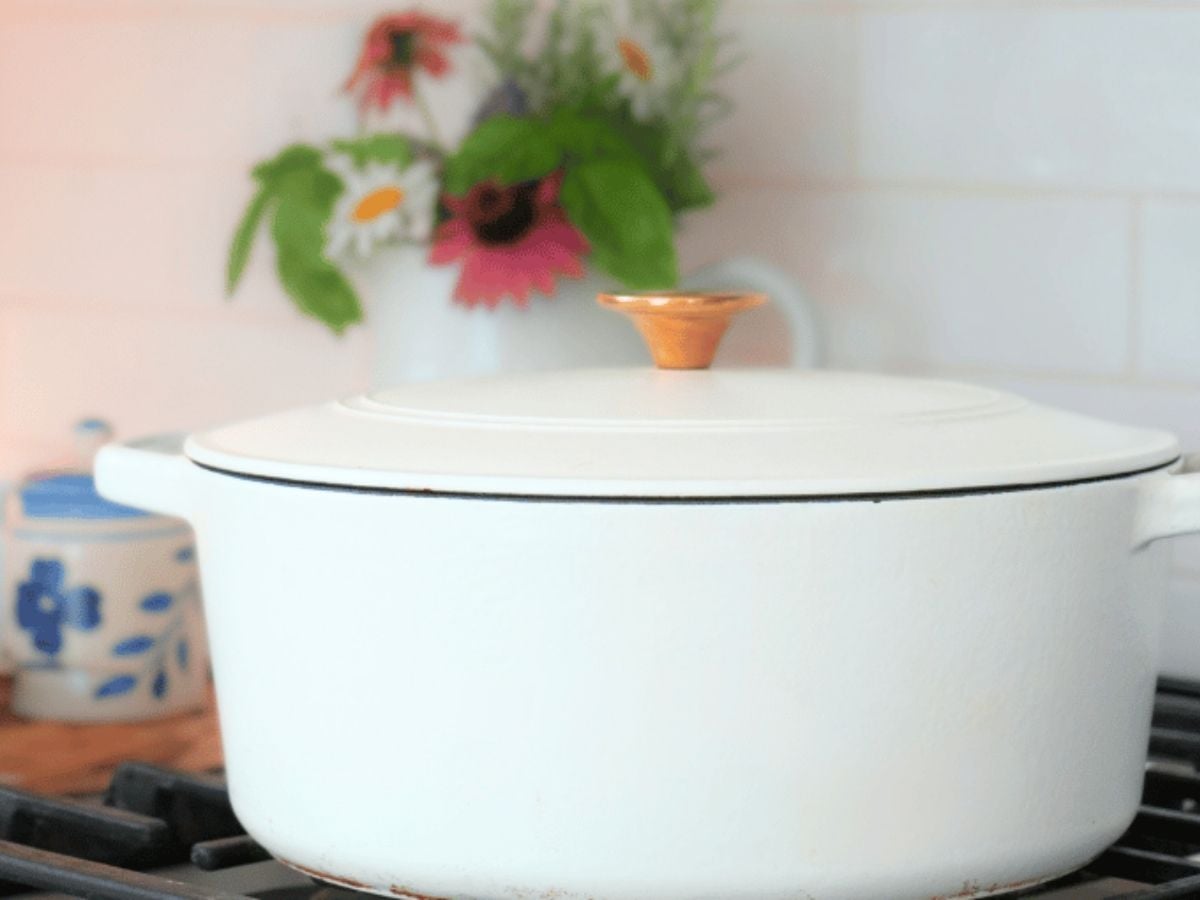
Quick Look: Using a Cast Iron Dutch Oven on the Stove
- Best For: Everyday stovetop cooking, one-pot meals, soups, and braises
- Works On: Gas, electric, induction, and glass stovetops
- Heat Range: Low to high, depending on the recipe and Dutch oven brand
- Skill Level: Beginner-friendly
- Why You'll Love It: Using a Dutch oven on the stove is one of the most versatile ways to cook! From weeknight meals to slow-simmered comfort food, you can make everything in one pot with minimal clean up.
SUMMARIZE & SAVE THIS RECIPE ON
Cast iron cookware is a kitchen staple. Whether using a cast iron waffle maker, skillet, or Dutch oven, cast iron is a great investment in your kitchen and can uplevel your cooking routine.
When we moved into our new home a few years ago, I was beyond excited to start cooking in cast iron because I finally had “the right” type of stove for cast iron.
But it turns out I had been misinformed all along. You can cook with a cast iron Dutch oven on any stove: gas, induction, electric, or glass.
Jump to:
- Quick Look: Using a Cast Iron Dutch Oven on the Stove
- What is a Dutch Oven?
- Video – Dutch Oven Comparison
- Can You Use Cast Iron on Any Stove?
- Benefits of Using a Cast Iron Dutch Oven on the Stove
- Cons of Using a Cast Iron Dutch Oven on the Stove
- How To Use a Dutch Oven on the Stove
- 5 Instant Pot Recipes That Save Time
- Cast Iron Best Practices
- Cast Iron Cooking Methods
- Using a Cast Iron Dutch Oven on the Stove FAQs
- More Cast Iron Posts
What is a Dutch Oven?
A Dutch oven is similar to a casserole dish, but the biggest difference is its heavy, tight-fitting lid and overall versatility.
The heavy lid traps and recirculates steam, which is why Dutch ovens are popular for recipes like split pea and ham bone soup, fresh-milled cheese grits, and braised meats.
While casserole dishes have their place, they cannot match the range of a cast iron Dutch oven, which works for baking, frying, sautéing, and both stovetop and oven cooking.
Video – Dutch Oven Comparison
I’m comparing three popular Dutch ovens in this YouTube video. Be sure to subscribe to my YouTube channel. New videos come out weekly!

Can You Use Cast Iron on Any Stove?
You can use a cast iron Dutch oven on any heat source, including gas, electric, induction, and glass-top. While some precautions are needed for glass cooktops, a Dutch oven is safe to use with proper care.
Because cast iron is heavy, manufacturers often discourage its use on glass surfaces to avoid damage claims.
But using cast iron on any stove is safe, just don’t drag or drop the pot across delicate surfaces.
Benefits of Using a Cast Iron Dutch Oven on the Stove
Stovetop-to-Oven Cookware: Dutch ovens are versatile and can be transferred directly from the stovetop to the oven.
Combine Cooking Techniques: You can sear meat, sauté veggies, and braise the dish all in your Dutch oven.
Natural Non-Stick Surface: Well-seasoned, non-enameled cast iron is a naturally non-stick surface. You don’t have to worry about questionable chemicals or coatings.
One-Pot Cooking: Many stovetop Dutch oven recipes, such as butternut squash soup with leeks, Tuscan white bean sausage and kale soup, or Japanese chicken curry, can be made as a one-pot meal in a Dutch oven.
Cons of Using a Cast Iron Dutch Oven on the Stove
Potential for Damage: With proper care and precautions, cast iron is safe for use on any type of range, including glass stovetops and induction surfaces. However, sliding or dropping a heavy Dutch oven on glass can cause damage.
Hand-Wash Only: Technically, enameled cast iron is dishwasher safe, but most manufacturers still recommend handwashing.
Heavy: Cast iron is very heavy. So, if lifting more than 10 pounds is a challenge, I recommend using lighter cookware.
Hot Spots: Hot spots are where the heat is unevenly distributed, which is common in cast iron. Luckily, the remedy is simply preheating your Dutch oven longer.
How To Use a Dutch Oven on the Stove
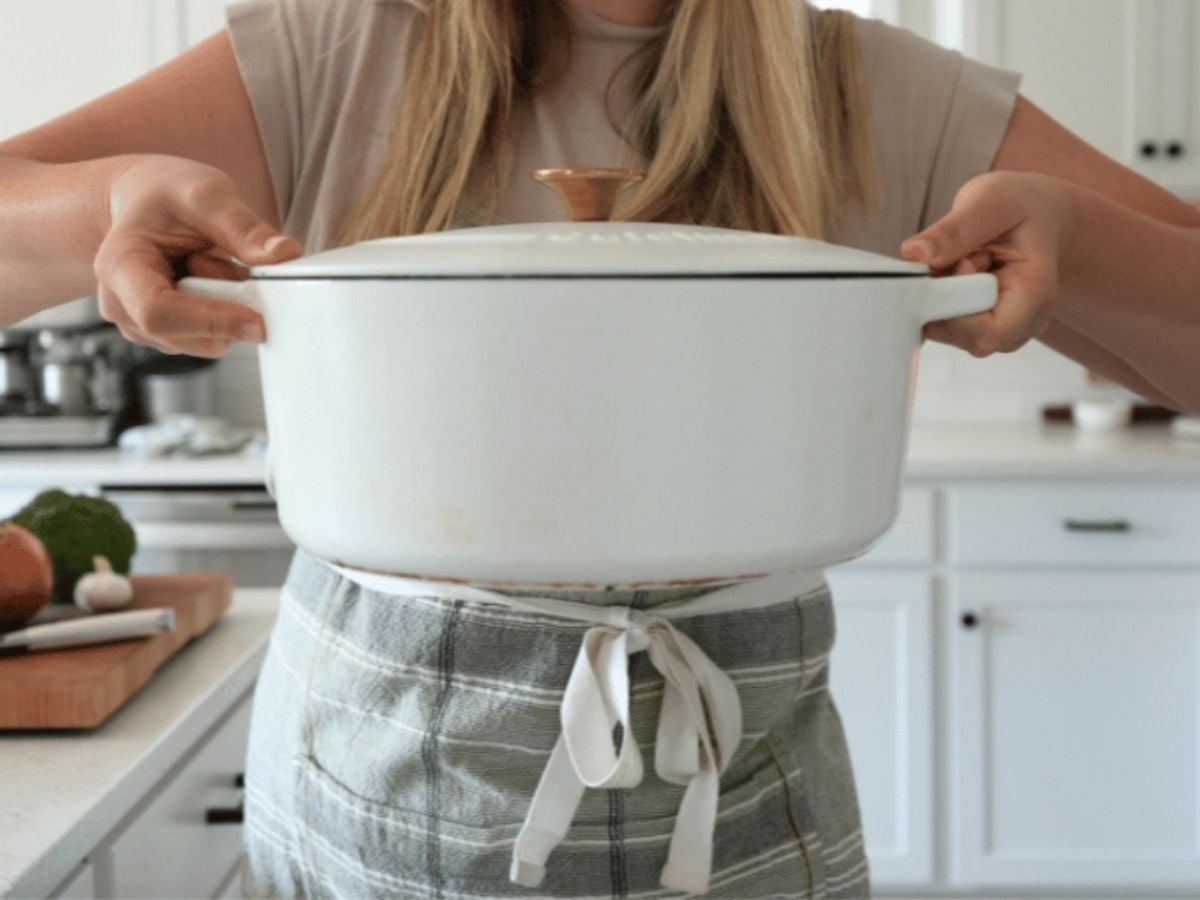
Lift, Don’t Slide: Cast iron can be rough on the bottom, so dragging it across your glass stovetop can leave scratches. This is less of a concern if you have an enameled cast iron Dutch oven. Overall, the safest bet is to pick up your cast iron to move it.
Don’t Drop: An empty 5-quart Dutch oven weighs about 10 pounds, and much more once filled. Dropping one on a glass cooktop can easily shatter it, so handle and lift with care.
Adjust Your Cooking Methods: The burner temperature you use for a stainless steel stock pot may differ significantly from what a cast-iron Dutch oven requires. Cast iron is slower to respond and retains heat longer, so it takes more time to heat and cool.
Be Careful with Cold Water: When deglazing cast iron cookware, use room-temperature ingredients. Pouring cold water into hot cast iron can cause it to crack.
Cast Iron Best Practices
Mind the Temperature: Most cast iron Dutch ovens can withstand high heat, but some decorative lid handles are rated for 450°F or lower. Always check your Dutch oven's temperature limits.
Don’t Burn Dry: Drying cast iron on a hot burner is an old-school method, but heating empty cookware can damage seasoning or enamel and is easy to forget.
Avoid Sharp Utensils: Sharp or heavy utensils can scratch the enameled coating or the seasoning on non-enameled cast iron.
Use the Lid: The lid is part of what makes a Dutch oven unique. So take advantage of that asset! Water boils faster when the lid is on, and slow-cooked food is more tender when using the Dutch oven lid.
Grab Your Oven Mitts: The handles are usually made of cast iron, and they get hot, hot, hot. Always use oven mitts when moving or picking up your hot Dutch oven.
Cast Iron Cooking Methods
Boil: Use a Dutch oven to boil pasta, potatoes, or soups. I often use mine for Southern chicken and pastry and fire-roasted tomato and veggie soup.
Braise: Brown meat first, then cook it gently in liquid with the lid on to create tender, flavorful dishes.
Fry: The heavy cast-iron pot keeps oil at a steady temperature, making it ideal for sourdough fried chicken or my sourdough donut recipe.
Simmer: Cast iron maintains a low, consistent heat for long, gentle simmering.
Sauté: Preheat the Dutch oven over medium heat, then sauté the vegetables or proteins.
Slow Cook: Low heat and excellent heat retention make a Dutch oven perfect for stovetop slow cooking.
Using a Cast Iron Dutch Oven on the Stove FAQs
Yes, cast iron can handle high heat, but low to medium heat is usually best because it retains heat and can scorch food if overheated.
Yes, a Dutch oven is ideal for long, gentle simmering because it retains heat well, and the heavy lid retains moisture. Check it periodically.
Enameled cast iron is generally easier for stovetop cooking because it does not require seasoning and is safe for acidic foods.
I usually use a bare cast iron Dutch oven to bake beginner’s no-knead sourdough bread or other boules, such as cranberry walnut sourdough bread and cheddar jalapeno sourdough bread.
Food usually sticks when the pot is not fully preheated, there is not enough fat, or the heat is too high.
Yes, acidic foods are safe to cook in an enameled cast iron Dutch oven on the stove.

More Cast Iron Posts



If you tried using a cast iron Dutch oven on the stove or a recipe on my blog, please leave a 🌟 star rating and let me know how it went in the 📝 comments below. Thanks y’all!