
This post may contain affiliate links. Please read our disclosure policy.
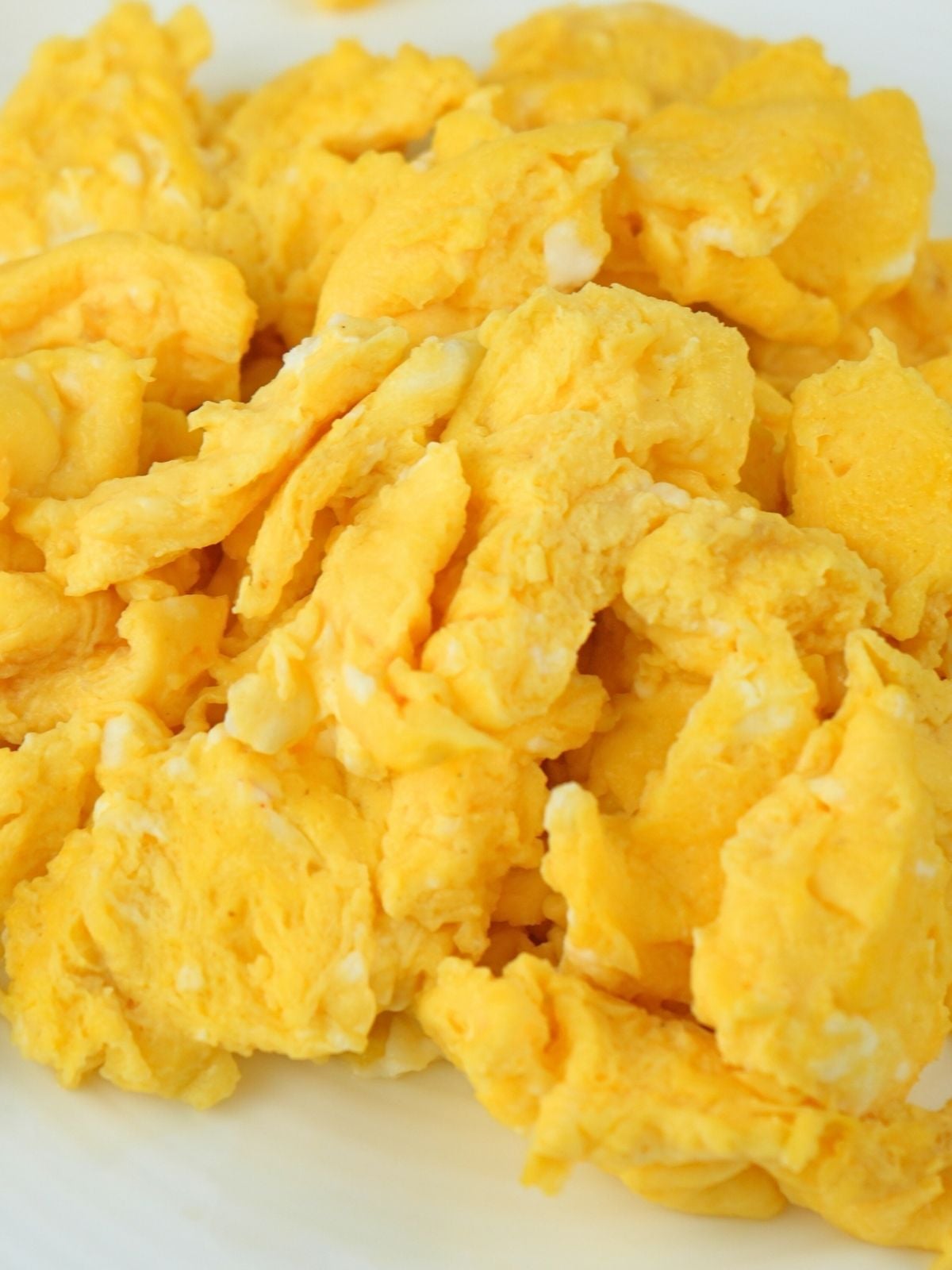
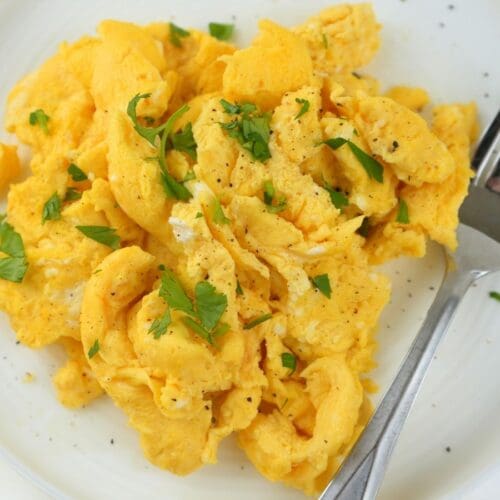
This fluffy scrambled eggs recipe is easy, quick, and absolutely delicious. Cooked low and slow and with a gentle, non-stirring technique, they turn out perfectly fluffy every time.
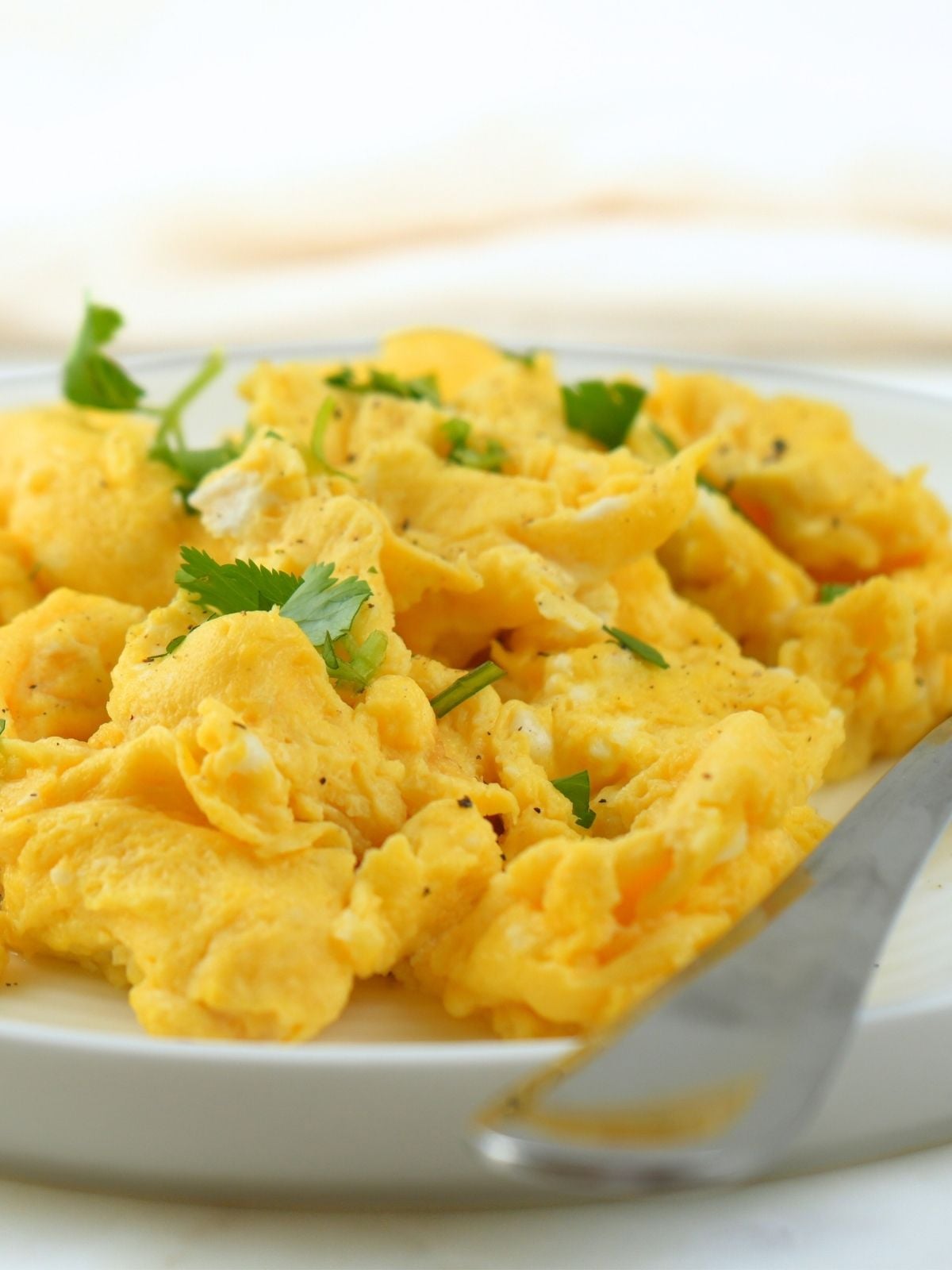
Recipe Overview: Fluffy Scrambled Eggs
- Ready In: 10 minutes
- Serves: 2 servings (but easy to scale for more)
- Calories: 174 kcal (approximately)
- Main Ingredients: Eggs, milk, and butter
- Dietary Notes: Gluten-free
- Why You’ll Love It: This recipe uses a simple technique to create soft, fluffy scrambled eggs with consistent results every time. This recipe takes just 10 minutes and requires no advance planning, making it perfect for mornings (or any meal) when I’m in a pinch.
SUMMARIZE & SAVE THIS RECIPE ON
When I was in my 20s, my friend’s mom cooked us breakfast and explained how she made scrambled eggs, and I have been making them that way ever since.
This recipes use a low-and-slow method without stirring to create the fluffiest eggs. And they turn out soft and fluffy every single time.
Eggs are one of the easiest foods to make on busy days. For other easy egg recipes, we love Instant Pot hard-boiled eggs or a slow cooker egg casserole.
Jump to:
Why You’ll Love This Recipe
Easy: This method is incredibly simple, even for folks who are new to cooking.
Quick: It takes only a few minutes to make scrambled eggs, and I like to serve them on sourdough toast or sourdough English muffins for a super quick meal.
Delicious: Using low heat and a simple technique creates soft, fluffy eggs with a light, tender texture.
Simple Ingredients: You only need eggs, milk, butter, and your favorite seasonings.
Kid-Approved: The mild flavor and fluffy texture make these eggs a favorite for kids and adults alike.
Key Ingredients

Eggs: Fresh eggs are best, but in a pinch, I’ve used freeze-dried eggs.
Milk: I used whole milk. Reduced-fat milk will also work.
Adobo: Adobo seasoning is my favorite for scrambled eggs. However, you can use salt and pepper or your other favorite seasonings.
Butter: I prefer unsalted butter for greasing the skillet. Salted butter or even avocado oil will also work.
Get the full list of ingredients and measurements on the printable recipe card below.
Variations
Cheesy: Stir in shredded cheese just before the eggs finish cooking.
Dairy-Free: You can skip the milk in this recipe, though it may slightly change the texture.
Herb: Add finely chopped fresh herbs, such as chives or parsley, at the end for added flavor and color. Freeze-dried herbs work great for this.
Breakfast Sandwich Eggs: Cook the eggs slightly firmer and use them on English muffins.
How To Make Fluffy Scrambled Eggs
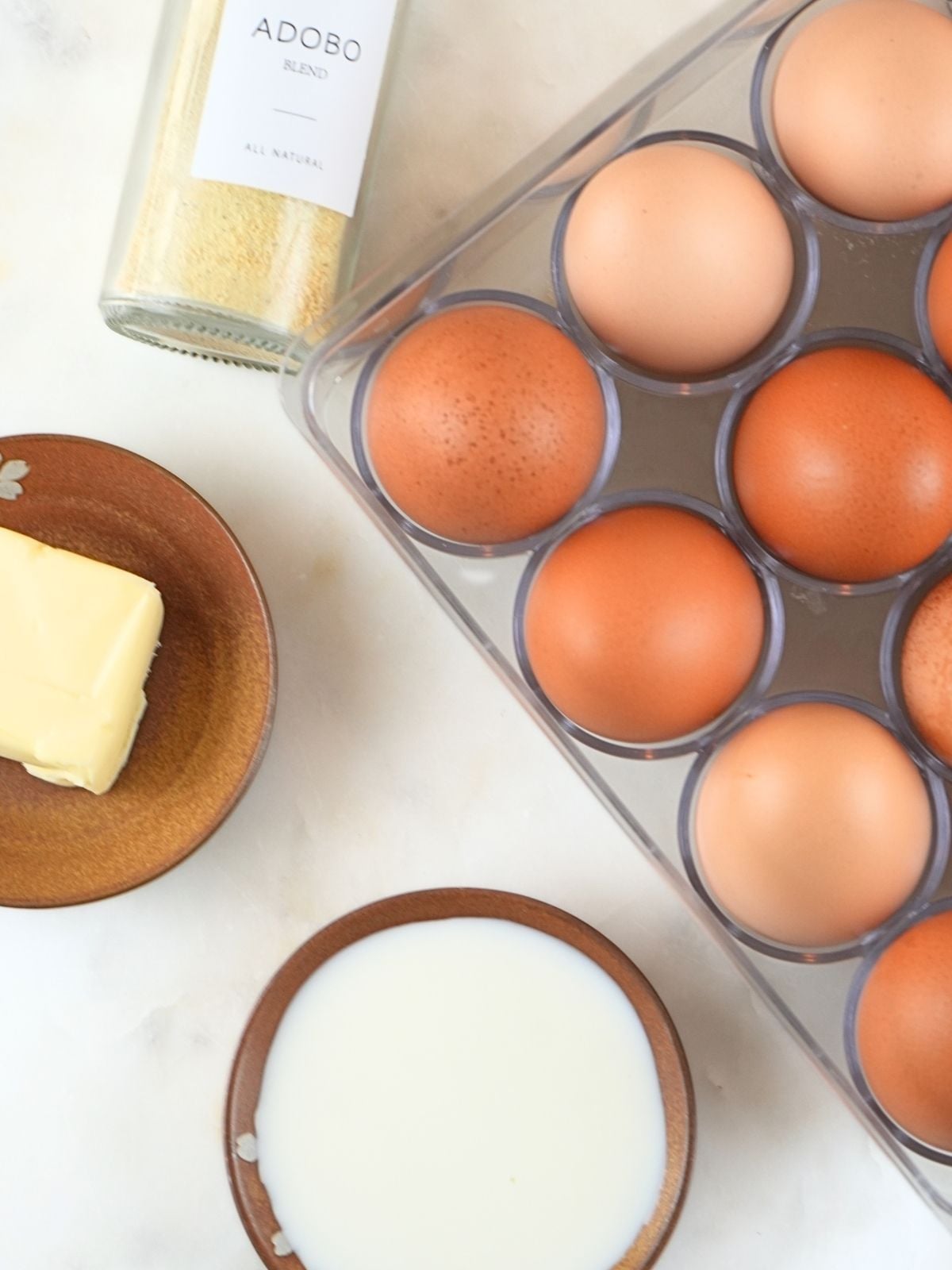
Step 1: Gather the ingredients.
In a well-seasoned cast iron skillet or nonstick pan, melt the butter over medium-low heat, swirling it to coat the pan evenly.

Step 2: While the skillet preheats, crack the eggs into a small mixing bowl.
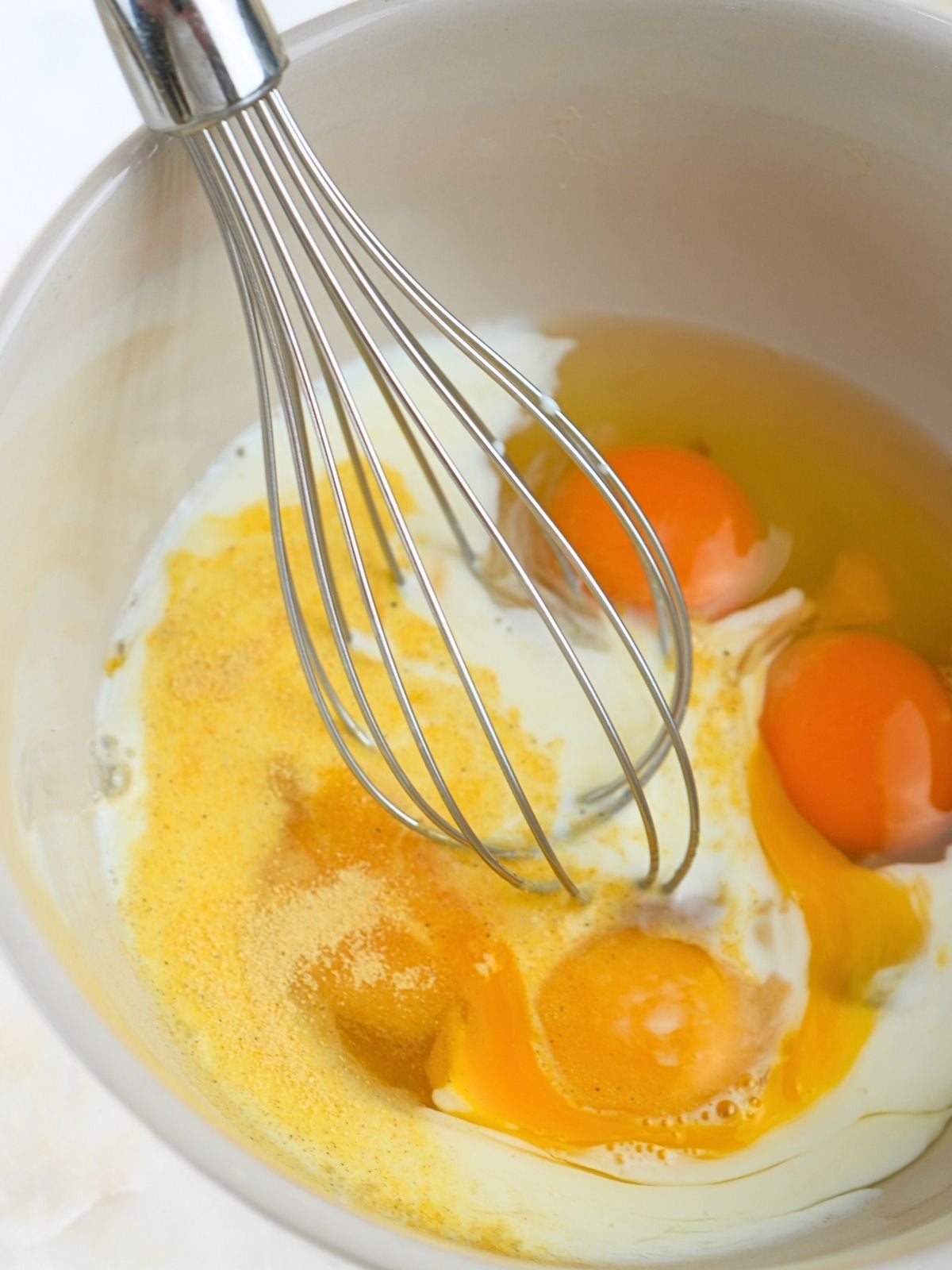
Step 3: Add the milk and adobo seasoning, then whisk with a fork or wire whisk until fully combined and slightly frothy.

Step 4: Pour the egg mixture into the skillet.
Cook over until the edges begin to set, about 30 seconds to 1 minute.
Use a rubber spatula to gently lift the cooked edges, tilting the skillet so the uncooked eggs flow into the open spaces.

Step 5: Once the edges set again, gently push the eggs toward the center, allowing the uncooked eggs to fill in around the edges.

Step 6: Repeat this process until the eggs are just set. Gently flip them to cook any remaining liquid egg.
Then, use the spatula to break them into large, fluffy curds.
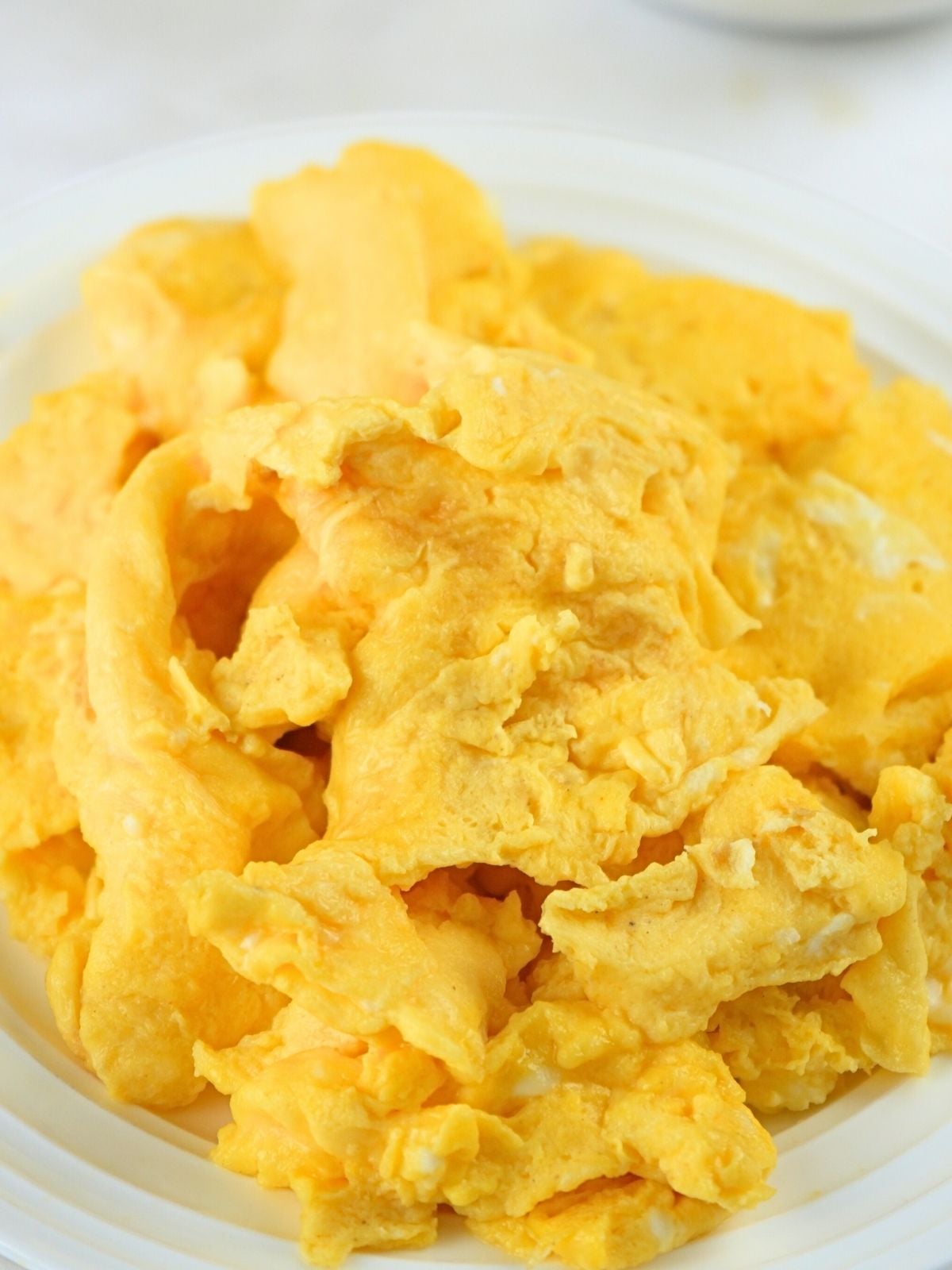
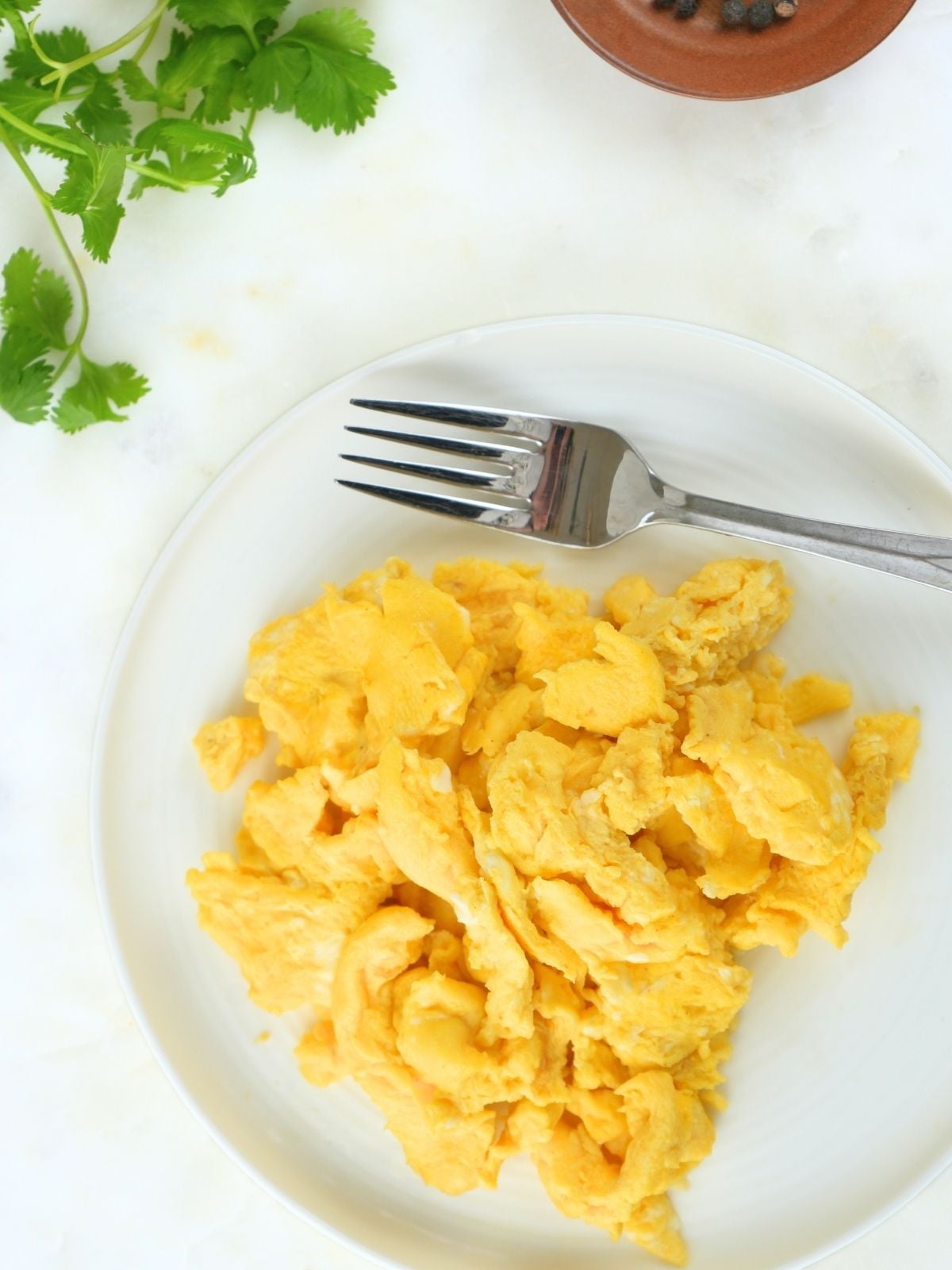
Step 7: Immediately transfer the eggs to a plate. Serve warm and enjoy!
Tips for Success
- Depending on your stove’s temperature range, medium-low to medium heat is key.
- The temperature is a balance. If it’s too low, the eggs will stick to the pan. If it’s too high, they will cook too quickly and won’t be fluffy. So try to find a middle ground with the temp.
- Do not stir the eggs in the skillet. Gently push them aside and let the uncooked eggs flow into the open spaces.
- The residual heat will continue cooking the eggs, so remove them from the skillet just before they look fully set.
- Feel free to include your favorite mix-ins, but avoid adding too many. If the eggs are overloaded, they won’t be as fluffy.
Serving Suggestions
Toast: I love eggs on sourdough toast or fresh-milled sourdough sandwich bread with sliced avocado. It’s one of my favorite breakfasts!
Breakfast Bowl: Serve the scrambled eggs over roasted potatoes or slow-cooker wheat berries, and top with fresh herbs or avocado for an easy breakfast bowl.
Breakfast Meats: Pair the eggs with crispy homemade bacon or sausage.
Tacos or Burritos: Make breakfast tacos with scrambled eggs, sourdough discard tortillas or fresh-milled tortillas, and your favorite toppings.
Storing & Reheating
- Scrambled eggs are best served fresh. But leftovers can be stored in an airtight container in the refrigerator for up to two days.
- Reheat gently over low heat or in short intervals in the microwave to avoid drying them out.
Fluffy Scrambled Eggs FAQs
Scrambled eggs are best served fresh, but they can be made ahead and reheated if needed. Keep in mind that the texture will change after reheating them. If you need to make eggs in advance, I recommend my Crockpot breakfast casserole recipe.
Yes, water will work, but I recommend milk. A small splash of water helps create steam, which can make the eggs fluffier. However, too much water will make the eggs soggy.
You can salt the eggs before cooking or just before they finish cooking. Salting early helps the eggs stay tender, while salting later gives more control over seasoning.
Watery scrambled eggs are usually caused by too much added liquid or overcooking, which forces moisture out of the eggs.
Fluffy scrambled eggs have larger curds and more air, while soft scrambled eggs are creamier with smaller curds and more frequent stirring.
More Breakfast Recipes

If you tried this Fluffy Scrambled Eggs recipe or any other recipe on my blog, please leave a 🌟 star rating and let me know how it went in the 📝 comments below. Thanks, y'all!

Fluffy Scrambled Eggs Recipe
Equipment
- Bowl
- Spatula
Ingredients
- 1/2 tablespoon butter, or as much needed for greasing skillet
- 2 eggs
- 2 tablespoons milk
- 1/8 teaspoon adobo seasoning, or salt and pepper
Instructions
- Preheat the Skillet. In a well-seasoned cast iron skillet or nonstick pan, melt the butter over medium-low heat, swirling it to coat the pan evenly.1/2 tablespoon butter
- Crack the Eggs. While the skillet preheats, crack the eggs into a small mixing bowl.2 eggs
- Scramble the Eggs. Add the milk and adobo seasoning, then whisk with a fork or wire whisk until fully combined and slightly frothy.2 tablespoons milk, 1/8 teaspoon adobo seasoning
- Transfer to Skillet. Pour the egg mixture into the skillet.
- Begin to Cook. Pour the egg mixture into the skillet. Cook over until the edges begin to set, about 30 seconds to 1 minute. Use a rubber spatula to gently lift the cooked edges, tilting the skillet so the uncooked eggs flow into the open spaces.
- Gently Move the Egg Mixture. Once the edges set again, gently push the eggs toward the center, allowing the uncooked eggs to fill in around the edges.
- Continue Cooking. Repeat this process until the eggs are just set. Gently flip them to cook any remaining liquid egg. Then, use the spatula to break them into large, fluffy curds.
- Enjoy! Immediately transfer the eggs to a plate. Serve warm and enjoy!
Video
Notes
- I prefer a small skillet when cooking fewer than 5 eggs, and a large skillet when feeding a crowd.
- Depending on your stove’s temperature range, medium-low to medium heat is key.
- The temperature is a balance. If it’s too low, the eggs will stick to the pan. If it’s too high, they will cook too quickly and won’t be fluffy. So try to find a middle ground with the temp.
- Do not stir the eggs in the skillet. Gently push them aside and let the uncooked eggs flow into the open spaces.
- The residual heat will continue cooking the eggs, so remove them from the skillet just before they look fully set.
- Feel free to include your favorite mix-ins, but avoid adding too many. If the eggs are overloaded, they won’t be as fluffy.
Nutrition
Nutrition information is auto-calculated and may not reflect your final product. Please verify independently if needed.

These eggs are an easy go-to for our family. They take just a few minutes to make, and everyone enjoys them. It’s doesn’t get better than that! 😊