
This post may contain affiliate links. Please read our disclosure policy.
I’m answering your top fresh-milled flour questions in this podcast episode. From grain mills to sourdough and beyond, here’s what you need (and want) to know.
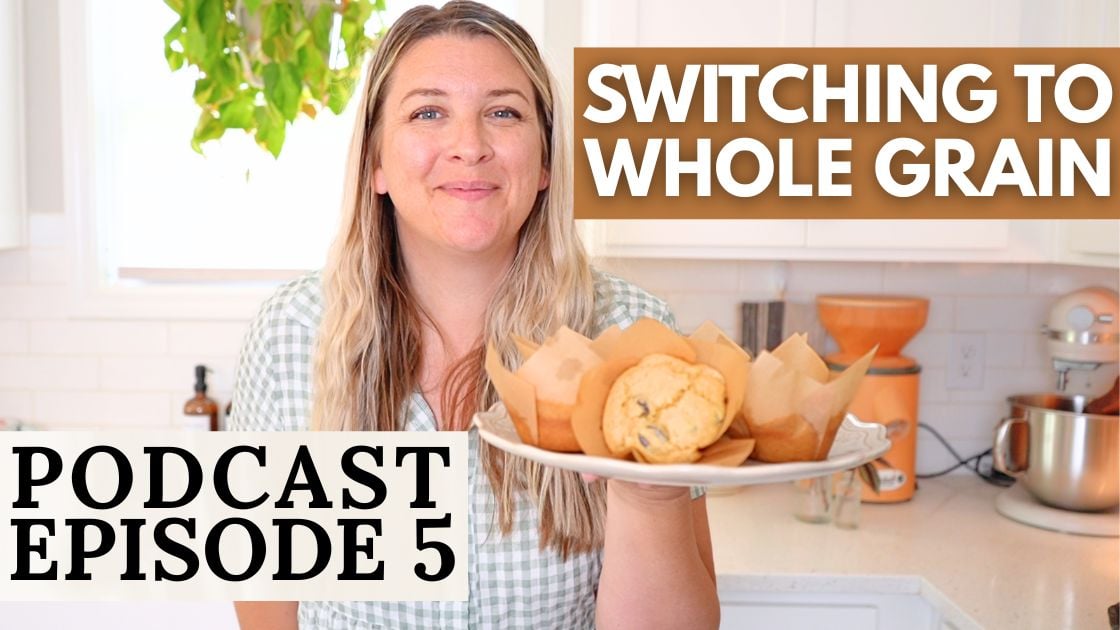
Fresh-milled flour doesn't have to be confusing. In this episode, I'm answering your most frequently asked questions about baking with freshly milled grains.
We'll cover how to choose a grain mill, how fresh flour affects sourdough, tips for storage, and what to do when things don't go quite right.
Whether you're just getting started or already milling at home, these tips will help you get better results-and more confidence in your kitchen.
Listen To the Episode
You can play the episode below or listen on your favorite podcast app.
Watch the Video
Prefer to watch instead of listen? Here's the original video version of this episode.

In This Episode
- Why grain mills are often hard to find
- How to feed your sourdough starter with fresh-milled flour
- Tips for adjusting bulk fermentation when using fresh flour
- What to do if your sourdough turns out dense or gummy
- Whether fresh flour can pass the windowpane test
- How to convert recipes using fresh-milled flour
- The grains I recommend keeping on hand
- How to store fresh-milled flour and where to buy wheat berries
Mentioned in This Episode
- Use this step-by-step guide to convert all-purpose flour to fresh-milled flour in any recipe.
- Read my full tutorial on how to mill your own flour at home.
- Learn how to do the windowpane test for your bread dough.
Let's Connect!
Enjoy the show? Don't forget to follow, rate, and review the podcast-it helps others discover these tips and resources! And if this episode helped you, share it with a fellow sourdough-loving friend.
Stay in the Loop: YouTube // Blog // Instagram // TikTok // Pinterest


